
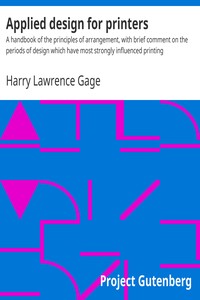
Applied design for printers : A handbook of the principles of arrangement,…
Forget algorithms and digital tools for a moment. Applied Design for Printers takes us back to the physical craft. Published in 1917, it's a straightforward, practical guide written by Harry Lawrence Gage for working printers and apprentices. This isn't a book about art theory; it's a shop-floor manual on the principles of arranging type, illustrations, and blank space to create clear, effective, and pleasing printed pieces.
The Story
There's no fictional plot, but there is a clear mission: to teach the 'why' behind good composition. Gage methodically walks through the core elements. He talks about balance (symmetrical and asymmetrical), the critical role of white space (which he calls 'breathing room'), and how to establish a clear focal point. He discusses typographic choices, not as fonts, but as tools for creating hierarchy and rhythm. The book is filled with specific examples—showcasing good and bad arrangements for things like title pages, advertisements, and book layouts. The 'story' is the logical progression from a blank sheet to a finished, functional design that serves its purpose and respects the reader's eye.
Why You Should Read It
Here's the magic: this century-old trade manual is incredibly relevant. Stripped of any modern software, it focuses purely on the fundamental, human decisions of design. Reading Gage's clear explanations makes you realize how many of our current 'best practices' are just rediscoveries of these basic principles. It's humbling and enlightening. You start to see the skeleton of good design in everything around you. His emphasis on clarity and purpose over decoration feels refreshingly modern. For anyone who creates layouts—whether for print, web, or social media—this book is a masterclass in first principles. It reminds you that tools change, but the goals of good communication do not.
Final Verdict
This book is a hidden gem for a specific reader. It's perfect for graphic designers, typographers, or anyone working in visual communications who wants to understand the historical roots of their craft. It's also fascinating for history buffs interested in early 20th-century technology and trade knowledge. If you're looking for a breezy read or lots of colorful pictures, this isn't it. But if you want a concise, no-nonsense foundation in the timeless rules of arrangement, written by a true practitioner, this handbook is surprisingly essential. Think of it as the sturdy, well-designed blueprint that many flashier modern books are built upon.
James Taylor
4 weeks agoHelped me clear up some confusion on the topic.







Jackson Martinez
1 year agoA bit long but worth it.