
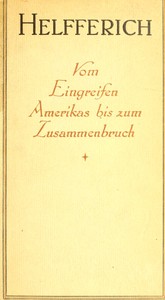
Der Weltkrieg, III. Band by Karl Helfferich
Karl Helfferich wasn't just an observer of World War I; he was a key player in the German government's financial machinery. In the third volume of his work, he turns his attention away from the early battles and focuses squarely on the economic war that raged behind the scenes from 1916 onward. This isn't a narrative of troop movements, but a detailed, insider account of fiscal policy, war loans, and the creeping shadow of inflation.
The Story
The book documents Germany's increasingly frantic efforts to finance a war that was lasting far longer and costing infinitely more than anyone predicted. Helfferich walks us through the government's strategies: issuing massive war bonds to the public, manipulating markets, and wrestling with the nightmare of paying for everything from shells to bread as resources dwindled. He explains the political battles over taxation and the grim reality of relying more and more on borrowed money. The central tension isn't between armies, but between the desperate need for funds and the crumbling economic foundation of the nation. It's the story of a financial system pushed to its absolute breaking point.
Why You Should Read It
This book changes the way you see World War I. It adds a crucial, often overlooked layer to the conflict. Reading Helfferich, you understand that the soldiers' fate was tied directly to decisions made in boardrooms and treasury departments. His perspective is fascinating because it's so personal and defensive; he's explaining and, in a way, justifying the choices he helped make. You get a real sense of the pressure, the limited options, and the gradual realization that even if the army held the line, the economy might not. It makes the eventual collapse of Germany feel less like a sudden military defeat and more like the inevitable result of an economic engine melting down.
Final Verdict
This is not a casual read. It's for the reader who already has a grasp on WWI's timeline and wants to dive deeper into its causes and mechanics. Perfect for history buffs and economics enthusiasts who are curious about the 'how' behind the history—how a modern state actually pays for a war of annihilation. Be prepared for dense financial detail, but within it lies a compelling and vital story of a war lost on the balance sheet long before the armistice was signed.
Sandra Thomas
1 year agoNot bad at all.









Linda Perez
1 year agoThe formatting on this digital edition is flawless.