About 76 minutes
Percy's holidays — Reading Notes
School Stories
17,396 recorded words. 14 minutes difference from this book's estimate.
View Gutenberg source #71823
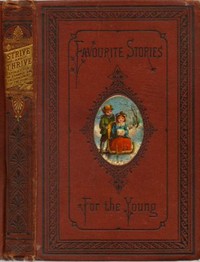
The catalog record for Strive and Thrive; or, Stories for the Example and Encouragement of the Young — Themes and Context provides practical reading context through 20,660 words, 1 hr 30 min estimated reading time, and 3 detected text sections.
The text analysis averages about 19.3 words per sentence, while the detected sections provide another way to judge how the source is divided.
Project Gutenberg metadata also associates the work with “Conduct of life -- Juvenile fiction,” connecting these edition facts with the source record’s subject description.
Explore this collection
These alternatives are selected using recorded categories and estimated reading time.
About 76 minutes
School Stories
17,396 recorded words. 14 minutes difference from this book's estimate.
View Gutenberg source #71823About 51 minutes
School Stories
11,591 recorded words. 39 minutes difference from this book's estimate.
View Gutenberg source #21278About 136 minutes
School Stories
31,143 recorded words. 46 minutes difference from this book's estimate.
View Gutenberg source #11595Search stored excerpts and compare books → Choose by your preferences →
Choices use stored catalog measurements. Estimates vary with reading speed. A shared category is a catalog label, not a claim that two books have the same argument or literary quality.
Search reads excerpt text stored with this catalog and links to its associated Gutenberg record. The connection is stored in the site database; this tool does not recheck that every excerpt is word-for-word identical to that external record. Excerpt search does not cover every chapter and does not verify historical publication dates.
Catalog snapshot checked: 2026-09-26. Coverage: 91 public books, 91 available source excerpts.
Calculated from edition completeness, EPUB availability, text structure and catalogue metadata. Not a user rating.
Total of 100 points, scaled to a 2.5-5.0 range. Editions with an empty description or a missing EPUB file are not scored.
Public-domain source text
The source text is kept in the dedicated reader, separate from this catalogue record and its commentary.
The anonymous author of Strive and Thrive (1875) does not simply advise good behavior; he stages crises. In the opening story, a boy breaks through ice, and the narrative contrasts two responses: Edward Jones flees screaming, while George Williams uses a pole to rescue him. The lesson is delivered through action, not precept. Yet the catalog subject 'Conduct of life' suggests a gentle guide; the excerpts show a world where a single wrong decision—playing cards for money—nearly destroys a young man. The book’s title promises striving and thriving, but the evidence points to narrow escapes and stern warnings.
The first tale, 'Courage and Presence of Mind,' hinges on a frozen pond. The narrator specifies that the ice had formed rapidly, and the parents assumed it was safe. When Henry Lee breaks through, the text dwells on the mechanics of drowning: the ice breaks with each attempt, the water is cold enough to benumb him. George Williams’s rescue is methodical—he lays a pole across the broken place so each end rests on solid ice. The story rewards calm, practical bravery, not impulsive heroism. Edward’s panic is treated as contemptible; he runs home screaming. The moral is clear, but it is earned through a detailed, almost instructional, rescue sequence.
In 'Learn to Say No,' Thomas Howland faces a card game. The tempter’s arguments are given full voice: 'Is not your money your own?' The excerpt shows Thomas’s internal debate—his hand in his pocket, his fingers on the coin—before he finally says 'No.' The narrative then reveals the scheme: to win his five pounds and involve him in debts. The story’s power lies in its specificity: the hotel room, the cigars, the pack of cards produced from a trunk. The catalog subject 'Children—Conduct of life' is illustrated not by a sermon but by a near-disaster. The anonymous author trusts that a vivid, narrow escape teaches more than a maxim.
The table of contents lists seven stories, each with a title that reads like a command: 'Try Again,' 'Learn to Say No,' 'The Boy Who Told the Truth.' The excerpts suggest a pattern: a child faces a temptation or danger, hesitates, and either succeeds or fails through a decisive action. The setting shifts from mill-pond to hotel room, but the structure remains constant. The catalog subjects emphasize 'Conduct of life' and 'Children’s stories,' but the excerpts show that the book is less about daily virtues than about moments of crisis. The anonymous author uses repetition of scenario—a rescue, a refusal—to drill the lesson home. The result is a collection that feels more like a series of cautionary tales than a gentle guide.
Readers approaching Strive and Thrive should expect stories that prioritize incident over character. The anonymous author is less interested in why a boy is honest than in what happens when he is not. The book’s value lies in its period detail—the mill-pond, the five-pound note, the hotel card game—and in its unflinching depiction of consequences. It is a document of Victorian moral instruction, but it is also a collection of tight, suspenseful narratives.
I found myself in that 1875 collection, noticing how the children never simply chose bravery—they were startled into it. Its warnings felt heavy, like frost on a morning window. Then my thoughts drifted to The Pearl Box Containing One Hundred Beautiful Stories for Young People, by a Pastor — Key Ideas to Explore, where the same lessons seem to bloom from kindness rather than fear. Both old friends, but only one truly warms the room afterward.
Save your reaction, strongest insight, and memorable passage.