About 201 minutes
Tiger and Tom and Other Stories for Boys — Edition Insights
School Stories
46,156 recorded words. 122 minutes difference from this book's estimate.
View Gutenberg source #12591
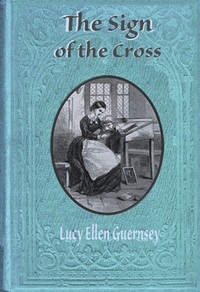
For The sign of the cross — Reading Notes, the stored edition analysis reports 74,114 words, 5 hr 23 min estimated reading time, and 6 detected text sections.
The text analysis averages about 19.8 words per sentence, while the detected sections provide another way to judge how the source is divided.
Project Gutenberg metadata also associates the work with “Children's stories,” connecting these edition facts with the source record’s subject description.
Explore this collection
These alternatives are selected using recorded categories and estimated reading time.
About 201 minutes
School Stories
46,156 recorded words. 122 minutes difference from this book's estimate.
View Gutenberg source #12591About 201 minutes
School Stories
46,216 recorded words. 122 minutes difference from this book's estimate.
View Gutenberg source #13126About 136 minutes
School Stories
31,143 recorded words. 187 minutes difference from this book's estimate.
View Gutenberg source #11595Search stored excerpts and compare books → Choose by your preferences →
Choices use stored catalog measurements. Estimates vary with reading speed. A shared category is a catalog label, not a claim that two books have the same argument or literary quality.
Search reads excerpt text stored with this catalog and links to its associated Gutenberg record. The connection is stored in the site database; this tool does not recheck that every excerpt is word-for-word identical to that external record. Excerpt search does not cover every chapter and does not verify historical publication dates.
Catalog snapshot checked: 2026-09-26. Coverage: 91 public books, 91 available source excerpts.
Calculated from edition completeness, EPUB availability, text structure and catalogue metadata. Not a user rating.
Total of 100 points, scaled to a 2.5-5.0 range. Editions with an empty description or a missing EPUB file are not scored.
Public-domain source text
The source text is kept in the dedicated reader, separate from this catalogue record and its commentary.
From its opening pages, Lucy Ellen Guernsey's The Sign of the Cross establishes a dual narrative voice: one that addresses the reader with earnest, homiletic directness, and another that unfolds through the spoken exchanges of its characters. The preface frames the story as a prompt for self-examination, asking readers whether they have been "ashamed to confess the faith of Christ crucified" in daily life. This question sets the moral stakes, but the fiction itself quickly moves into a more varied register. In the excerpted Sunday school scene, Edah Champlin leads children through a lesson on the Gospel, and the prose shifts from her measured, pedagogical questions to the children's literal-minded replies—"'I' should," says Mary Crampton when asked about heeding a father's letter. The interplay between Edah's doctrinal explanations and the children's concrete concerns creates a rhythm of abstraction and immediacy that defines the book's instructional method.
The excerpts reveal that Guernsey builds entire scenes around a question-and-answer structure borrowed from catechetical tradition. Edah's Sunday school lesson proceeds by a series of leading questions: "why have we come together here this afternoon?" and "what is the meaning of the word Gospel?" The children's responses—"To have a Sunday school," "To learn about God"—are corrected or expanded, not dismissed. This pattern gives the prose a deliberative pace, pausing for explanation before advancing. The narrator rarely intervenes; instead, the dialogue itself carries the instructional weight. The effect is that the story's forward motion is repeatedly interrupted by moments of explicit teaching, making the narrative feel less like a plotted adventure and more like a dramatized lesson. Readers accustomed to faster-paced children's fiction may find the rhythm deliberate, but it mirrors the book's stated aim: to prompt the reader's own self-questioning.
Guernsey's word choices in the excerpts carry precise theological and emotional weight. When Edah asks what becomes of souls that do not go to heaven, Selina Bostwick answers after a pause: "They are lost." The word lost is left unglossed, its starkness allowed to stand. Earlier, the preface uses combats to describe the Christian life—"How many combats have I ever fought under His banner"—a martial term that aligns with the baptismal language of fighting "under His banner against sin, the world, and the devil." The recurrence of cross, banner, and sacrifice creates a consistent lexical field. Even the children's vocabulary is carefully chosen: Pauline says the Gospel tells "how to be saved," and Selina corrects Jemmie's claim that all souls go to heaven. These are not casual utterances; they are the story's doctrinal architecture made audible.
The narrative pace in the excerpts is controlled by two devices: the parenthetical aside and the embedded parable. When Edah explains the Gospel's importance, she does not state it abstractly; she constructs a hypothetical: a father in Europe writes a letter promising money for a journey, and a child who ignores it will "starve to death" or "be carried away and made a slave." This miniature story-within-the-story slows the surface action but accelerates comprehension. The children respond with concrete objections—"people are not starved to death because they don't understand the Bible"—which Edah then redirects to the afterlife. The back-and-forth creates a Socratic rhythm: proposition, objection, refinement. Meanwhile, the narrator's own voice is nearly absent from these exchanges, appearing only to set the scene ("Edah requested all present to kneel") or to note a character's tone ("said Selina, modestly"). The result is a text that moves in fits and starts, its momentum coming not from plot events but from the resolution of each small intellectual challenge.
Readers approaching The Sign of the Cross should expect a work that prioritizes doctrinal instruction over narrative suspense. The story's pleasures lie in the precision of its dialogue and the careful calibration of its moral questions. Pay attention to the moments when the children's replies resist Edah's framing—those small frictions reveal the book's underlying drama: the effort of making faith intelligible to young minds. The pace is unhurried, but each exchange repays close reading.
Edah’s patient questions in that old Sunday school story reminded me how we learn faith best through quiet exchange, not answers handed down. It left me thinking about childhood’s gentler hours, and I found myself reaching for Rock A Bye Library: A Book of Fables Amusement for Good Little Children — Reading Companion, whose little fables feel like the same unhurried sunlight, only softer.
Your answers remain private and are stored only in this browser.