About 51 minutes
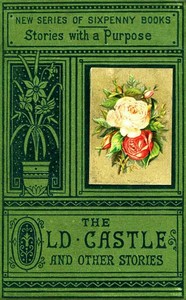
The Old Castle and Other Stories — Text and Context
School Stories
11,591 recorded words. 14 minutes difference from this book's estimate.
View Gutenberg source #21278

Before opening The Story of the White Mouse — A Reader’s Guide, the edition data offers a quick orientation: 8,496 words, 37 min estimated reading time, and 1 detected text section.
The text analysis averages about 30.8 words per sentence, while the detected sections provide another way to judge how the source is divided.
Project Gutenberg metadata also associates the work with “Conduct of life -- Juvenile fiction,” connecting these edition facts with the source record’s subject description.
Explore this collection
These alternatives are selected using recorded categories and estimated reading time.
About 51 minutes
School Stories
11,591 recorded words. 14 minutes difference from this book's estimate.
View Gutenberg source #21278About 21 minutes
School Stories
4,645 recorded words. 16 minutes difference from this book's estimate.
View Gutenberg source #22539About 20 minutes
School Stories
4,487 recorded words. 17 minutes difference from this book's estimate.
View Gutenberg source #22896Search stored excerpts and compare books → Choose by your preferences →
Choices use stored catalog measurements. Estimates vary with reading speed. A shared category is a catalog label, not a claim that two books have the same argument or literary quality.
Search reads excerpt text stored with this catalog and links to its associated Gutenberg record. The connection is stored in the site database; this tool does not recheck that every excerpt is word-for-word identical to that external record. Excerpt search does not cover every chapter and does not verify historical publication dates.
Catalog snapshot checked: 2026-09-26. Coverage: 91 public books, 91 available source excerpts.
Calculated from edition completeness, EPUB availability, text structure and catalogue metadata. Not a user rating.
Total of 100 points, scaled to a 2.5-5.0 range. Editions with an empty description or a missing EPUB file are not scored.
Public-domain source text
The source text is kept in the dedicated reader, separate from this catalogue record and its commentary.
The opening of The Story of the White Mouse immediately establishes a tone of playful hyperbole. Prince Bonbenin-bonbobbin-bonbobbinet is so accomplished that “he could tell the merit of a book by looking on the cover,” and his beauty makes the sun stop to admire him. The narrator’s deadpan delivery of these absurd claims—along with the observation that his subjects were “ready to acknowledge he possessed them all”—creates a satirical distance that persists throughout the first tale. The prose is deliberately ornate, with long, winding sentences that mimic the formal style of oriental tales while undercutting them with comic details, such as the prince’s inability to finish an acrostick.
The narrator of The White Mouse rarely lets a compliment stand without a qualifying joke. When the prince is described as “endowed with every accomplishment,” the text immediately adds that his subjects were “ready to acknowledge he possessed them all; and, for his own part, he knew nothing to the contrary.” This technique—praising with one hand and mocking with the other—gives the prose a knowing, almost conspiratorial quality. The same voice appears in the catalogue of seven hundred foreign princesses: each is “sufficient to make seven hundred ordinary men happy,” yet the prince finds fault with their eyebrows, fong-whangs, and makeup. The narrator never breaks character into outright sarcasm, but the accumulation of trivial objections makes the prince’s discernment seem ridiculous. Readers attuned to irony will recognize that the tale is as much a parody of royal panegyric as it is a story of a mouse.
The three tales in this collection move at markedly different speeds. The White Mouse opens with a leisurely, digressive description of the court, then accelerates once the mouse appears and the prince must solve riddles. The second tale, The Envious Man, is brisker: it begins with a direct command (“Go immediately,” says the king) and proceeds through a series of quick actions—payment, farewell, march—with little descriptive padding. The Golden Head shifts again, adopting the style of an adventure story. Tom Two-Shoes, the protagonist, is introduced with a concise backstory (“went to sea when he was a very little boy, and very poor”), and the narrative moves rapidly through shipwreck, taming a lion, and a journey to Utopia. The pacing here is driven by action rather than reflection, and the sentences become shorter and more direct. This variation suggests that the anonymous author or compiler tailored the narrative mode to each tale’s moral or comic purpose.
Each of the three stories hinges on a puzzle that requires interpretation. In The White Mouse, the prince must understand the mouse’s significance. In The Envious Man, the king’s judgment involves a test of character. In The Golden Head, the inscription “On May-day in the morning, when the sun rises, I shall have a Head of Gold” is explicitly called an “ænigma.” Tom Two-Shoes solves it not by waiting for magic but by measuring the statue’s shadow and digging for a chest of gold. The text emphasizes that “a philosopher never would expect a stone to be turned to gold,” rewarding practical wit over superstition. This pattern—presenting a seemingly supernatural claim and then resolving it through cleverness—unifies the collection. The repeated use of riddles also gives the reader a role: we are invited to guess the solution before it is revealed, making the tales interactive despite their age.
Because the excerpts cover only the beginnings of each tale, the full resolutions remain unknown. Readers should pay attention to how each story concludes its riddle: does the mouse transform, does the envious man reform, does Tom keep the gold? The shifts in narrative voice—from satirical to brisk to adventurous—may also shift again as each tale reaches its moral. Approach the collection as a set of variations on a theme, not a single continuous story, and note how the anonymous author adjusts tone and pace to suit each fable’s lesson.
That rainy afternoon, I kept returning to the White Mouse’s sly grin, wondering if the prince’s perfection was a joke or a promise. The book’s playfulness lingered, so I set it beside another on my shelf, Little Stories for Little Children — Edition Insights, and found the same warmth in its margins—a quiet companionship between old moral puzzles.
Save your reaction, strongest insight, and memorable passage.