About 20 minutes
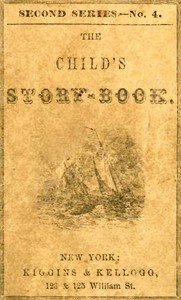
The Child's Story-Book. Second Series—No. 4 — Context and Discussion
Fairy Moral Tales
4,420 recorded words. 5 minutes difference from this book's estimate.
View Gutenberg source #37511
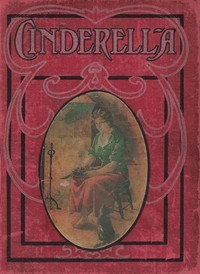
For Cinderella — A Closer Reading, the stored edition analysis reports 5,612 words, 25 min estimated reading time, and 4 detected text sections.
The text analysis averages about 21.1 words per sentence, while the detected sections provide another way to judge how the source is divided.
Project Gutenberg metadata also associates the work with “Fairy tales,” connecting these edition facts with the source record’s subject description.
Explore this collection
These alternatives are selected using recorded categories and estimated reading time.
About 20 minutes
Fairy Moral Tales
4,420 recorded words. 5 minutes difference from this book's estimate.
View Gutenberg source #37511About 40 minutes
Fairy Moral Tales
9,073 recorded words. 15 minutes difference from this book's estimate.
View Gutenberg source #43999About 59 minutes
Fairy Moral Tales
13,462 recorded words. 34 minutes difference from this book's estimate.
View Gutenberg source #74526Search stored excerpts and compare books → Choose by your preferences →
Choices use stored catalog measurements. Estimates vary with reading speed. A shared category is a catalog label, not a claim that two books have the same argument or literary quality.
Search reads excerpt text stored with this catalog and links to its associated Gutenberg record. The connection is stored in the site database; this tool does not recheck that every excerpt is word-for-word identical to that external record. Excerpt search does not cover every chapter and does not verify historical publication dates.
Catalog snapshot checked: 2026-09-26. Coverage: 91 public books, 91 available source excerpts.
Calculated from edition completeness, EPUB availability, text structure and catalogue metadata. Not a user rating.
Total of 100 points, scaled to a 2.5-5.0 range. Editions with an empty description or a missing EPUB file are not scored.
Public-domain source text
The source text is kept in the dedicated reader, separate from this catalogue record and its commentary.
John R. Neill's 1908 illustrated edition of Cinderella presents the classic tale with a narrative voice that shifts between formal exposition and colloquial dialogue. The opening paragraphs establish a measured, almost judicial tone: the stepmother is described as a “haughty and proud widow” who “began to show herself in her true colors.” This phrasing, with its moral clarity, sets up a clear dichotomy between virtue and vanity. Yet the voice soon relaxes into more conversational rhythms, particularly in the stepsisters' exchanges, where their vanity is rendered through direct, self-absorbed speech: “For my part,” said the eldest, “I will wear my red velvet.”
The transformation scene marks a notable shift in pacing. Up to this point, the narrative moves deliberately, detailing Cinderella's chores and the stepsisters' preparations. But when the fairy godmother appears, the tempo accelerates sharply. The godmother's commands are terse and immediate: “Run into the garden and bring me a pumpkin.” Cinderella obeys without question, and the magic unfolds in rapid succession—pumpkin to coach, mice to horses. The prose mirrors this speed: each transformation is described in a single sentence, with the wand's tap producing instant results. This compression contrasts with the earlier, more leisurely descriptions of the stepsisters' gowns and Cinderella's tears, creating a rhythmic jolt that underscores the miraculous nature of the intervention.
The stepsisters' dialogue reveals their characters through tone and content. The eldest sister's declaration, “I will wear my red velvet,” is not merely a statement of preference but a performance of status. The youngest's reply, “I shall wear my golden-flowered silk and diamond belt,” escalates the competition, each detail more extravagant than the last. When they mock Cinderella's desire to attend the ball, their cruelty is casual: “it would only make the people laugh to see a Cinderwench at a ball.” The word “Cinderwench” itself—a harsher variant of “Cinderella”—underscores their contempt. In contrast, Cinderella's speech is hesitant and self-effacing: “I wish I could—I wish I could”—broken by sobbing. The fairy godmother's voice is direct and reassuring: “be a good girl, and you shall go.”
The narrative uses repetition to evoke the monotony of Cinderella's labor. The opening paragraphs list her tasks in a series of parallel clauses: “She made her wash dishes, scrub floors and wait on her own daughters.” This accumulation of verbs—wash, scrub, wait—mirrors the endless cycle of chores. Later, when the stepsisters discuss their ball gowns, the repetition of “I will wear” and “I shall wear” reinforces their obsessive focus on appearance. Even Cinderella's name is a kind of repetition: derived from “cinder,” it ties her identity to the hearth. The fairy godmother's magic breaks this pattern, introducing a new rhythm of transformation and possibility. The contrast between the repetitive drudgery and the sudden, singular magic is central to the story's emotional arc.
Neill's edition rewards attention to its verbal textures—the shift from formal narration to brisk dialogue, the use of repetition to convey labor and longing, and the sudden acceleration of magic. Readers may find it useful to compare the pacing of the opening exposition with the transformation scene, noting how the fairy godmother's arrival alters the story's tempo. The stepsisters' dialogue, with its competitive boasts and casual cruelty, offers a window into the social dynamics of the household.
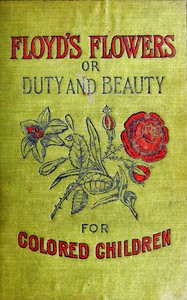
I’ve often lingered over that 1908 Cinderella, the way its godmother’s quiet power hums beneath the glitter. It reminds me of another volume, where dignity is woven through each small lesson. There’s a tender kinship there—both trusting that transformation begins in the steadfast heart. That Floyd's Flowers; Or, Duty and Beauty for Colored Children Being One Hundred Short Stories Gleaned from the Storehouse of Human Knowledge and Experience: Simple — Key Ideas to Explore knows it too.
Save your reaction, strongest insight, and memorable passage.