About 298 minutes
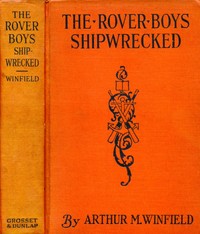
The Rover Boys Shipwrecked; or, A Thrilling Hunt for Pirates' Gold — Background and Themes
Fairy Moral Tales
68,368 recorded words. 66 minutes difference from this book's estimate.
View Gutenberg source #67893
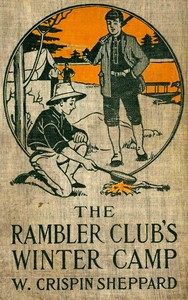
The source record for The Rambler Club's Winter Camp — Background and Themes measures this digital text at 53,339 words, 3 hr 52 min estimated reading time, and 7 detected text sections.
The text analysis averages about 11.9 words per sentence, while the detected sections provide another way to judge how the source is divided.
Project Gutenberg metadata also associates the work with “Snow camping -- Juvenile fiction,” connecting these edition facts with the source record’s subject description.
Explore this collection
These alternatives are selected using recorded categories and estimated reading time.
About 298 minutes
Fairy Moral Tales
68,368 recorded words. 66 minutes difference from this book's estimate.
View Gutenberg source #67893About 300 minutes
Fairy Moral Tales
68,891 recorded words. 68 minutes difference from this book's estimate.
View Gutenberg source #60109About 150 minutes
Fairy Moral Tales
34,405 recorded words. 82 minutes difference from this book's estimate.
View Gutenberg source #77569Search stored excerpts and compare books → Choose by your preferences →
Choices use stored catalog measurements. Estimates vary with reading speed. A shared category is a catalog label, not a claim that two books have the same argument or literary quality.
Search reads excerpt text stored with this catalog and links to its associated Gutenberg record. The connection is stored in the site database; this tool does not recheck that every excerpt is word-for-word identical to that external record. Excerpt search does not cover every chapter and does not verify historical publication dates.
Catalog snapshot checked: 2026-09-26. Coverage: 91 public books, 91 available source excerpts.
Calculated from edition completeness, EPUB availability, text structure and catalogue metadata. Not a user rating.
Total of 100 points, scaled to a 2.5-5.0 range. Editions with an empty description or a missing EPUB file are not scored.
Public-domain source text
The source text is kept in the dedicated reader, separate from this catalogue record and its commentary.
The Rambler Club's Winter Camp opens not in the snowy woods but in a warm study, where Bob Somers works an algebraic equation under a tower. This contrast between cozy interior and the cold outdoors becomes a structural pattern: the narrative moves repeatedly from the safety of Pembroke Hall or the camp cabin into the uncertain wilderness. The fire-bell that starts the story is the first of many alarms—literal and figurative—that punctuate the boys' winter adventure.
The book's first chapter establishes a rhythm of interior and exterior scenes. Bob Somers is introduced in his cozy little study with engravings and photographs, a space of order and comfort. The fire-bell shatters this calm, pulling the boys into the cold night. Later, the camp cabin serves a similar function: a warm refuge where the boys eat baked beans and venison steak, but from which they repeatedly venture into the snow. The trapper Yardsley's cabin, with its stove and cooking, becomes a new hearth. This back-and-forth movement—from warmth to cold, safety to danger—gives the narrative a pulse that keeps the reader oriented even as the plot thickens.
Two elements dominate the sensory landscape: fire and snow. The story begins with a fire-bell and a bucket brigade; later, the campfire and the cabin stove provide heat and light. Snow appears in nearly every outdoor scene—the road of ice, the pit filled with snow, the wolves in the snow. Sheppard often pairs these images: the warmth of the fire against the cold of the snow, the brightness of flames against the white expanse. The practical joke in Chapter XV, where Sladder and Musgrove tumble into a snow pit, is a comic fusion of both elements—the boys are plunged head first into a great pit filled to the brim with snow, a moment that is both startling and visually vivid.
Practical jokes are not mere comic relief; they form a structural thread that builds toward mystery. Yardsley tricks Sladder and Musgrove into falling into a snow pit, and Musgrove responds with a veiled threat: there's goin' ter be some fun 'round these diggin's 'fore I leave. This exchange sets up a cycle of retaliation and suspicion. The chapter titles themselves hint at this pattern: A Practical Joke, Who Took the Furs?, Suspicions, A Quarrel. The jokes escalate from harmless pranks to incidents that puzzle the boys, such as the note on the door and the missing furs. The reader is led to wonder whether each strange event is another joke or something more sinister.
The narrative frequently shifts focus between the Rambler Club members and the Stony Creek boys—Nat Wingate, John Hackett, Sladder, Musgrove, and the trapper Yardsley. These shifts create a sense of a larger social world beyond the club. The club's unity is tested by the presence of outsiders who bring their own grudges and humor. The race scene in Chapter XV, for example, involves both groups as spectators and participants. Sheppard uses these movements to keep the reader aware of multiple perspectives, and the mystery that develops—who took the furs?—depends on the reader's ability to track the whereabouts and motives of each character.
Readers attentive to structure will notice how Sheppard uses the winter setting not just as backdrop but as an active element that shapes the plot. The cold forces the boys indoors, where conversations and conflicts simmer; the snow conceals traps and tracks. The alternation between cozy interiors and hazardous exteriors mirrors the boys' own shifts from camaraderie to suspicion. This editorial note invites you to watch for these patterns as you read, and to consider how the physical environment of the camp becomes a character in its own right.
The rain kept time with the crackling fire in Sheppard’s alternating chapters, so when the snowbound boys turned to storytelling, I found myself reaching for an older tale of transformation. There, Cinderella — A Closer Reading waited quietly, its glass slipper fitting neatly beside the camp’s own small magic—the way warmth, even borrowed, can reshape a night.
Your answers remain private and are stored only in this browser.