About 40 minutes
Kitty's Picnic, and Other Stories — A Reader’s Guide
Fairy Moral Tales
9,073 recorded words. 19 minutes difference from this book's estimate.
View Gutenberg source #43999
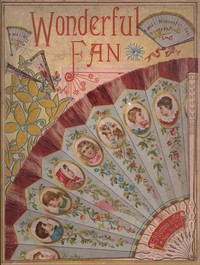
The source record for The wonderful fan — Story, Setting & Ideas measures this digital text at 13,462 words, 59 min estimated reading time, and 10 detected text sections.
The text analysis averages about 14.2 words per sentence, while the detected sections provide another way to judge how the source is divided.
Project Gutenberg metadata also associates the work with “Fantasy literature,” connecting these edition facts with the source record’s subject description.
Explore this collection
These alternatives are selected using recorded categories and estimated reading time.
About 40 minutes
Fairy Moral Tales
9,073 recorded words. 19 minutes difference from this book's estimate.
View Gutenberg source #43999About 89 minutes
Fairy Moral Tales
20,425 recorded words. 30 minutes difference from this book's estimate.
View Gutenberg source #77151About 25 minutes
Fairy Moral Tales
5,612 recorded words. 34 minutes difference from this book's estimate.
View Gutenberg source #77727Search stored excerpts and compare books → Choose by your preferences →
Choices use stored catalog measurements. Estimates vary with reading speed. A shared category is a catalog label, not a claim that two books have the same argument or literary quality.
Search reads excerpt text stored with this catalog and links to its associated Gutenberg record. The connection is stored in the site database; this tool does not recheck that every excerpt is word-for-word identical to that external record. Excerpt search does not cover every chapter and does not verify historical publication dates.
Catalog snapshot checked: 2026-09-26. Coverage: 91 public books, 91 available source excerpts.
Calculated from edition completeness, EPUB availability, text structure and catalogue metadata. Not a user rating.
Total of 100 points, scaled to a 2.5-5.0 range. Editions with an empty description or a missing EPUB file are not scored.
Public-domain source text
The source text is kept in the dedicated reader, separate from this catalogue record and its commentary.
The fan in Amy Ella Blanchard's 1882 story is not merely a prop but a portal. When Tina picks it up on a hot day, counting its slats and studying its decorations, a little face appears on the center slat, then grows into a girl who leads her on a swift journey. The fan reappears later, thrown away and retrieved, demanding a rose. This object-driven structure—where a mundane item repeatedly triggers fantasy—gives the narrative a mechanical, almost puzzle-like quality. The excerpts show a world where the fantastic emerges from the domestic: a bake-shop oven produces a black imp, a violoncello plays the Wind's Song, and flower children form themselves into a wreath. These episodes are linked less by a moral arc than by the fan's persistent return.
The excerpts offer two distinct fantasy encounters. In the first, Tina is whisked to a bake-shop where a baker's shovel carries a little black imp who announces he has been in the oven for a week. The imp's grin and the baker's frozen stare create a moment of comic menace, but the scene ends abruptly—the excerpt cuts off before any resolution. Later, in a house with a curtained doorway, Tina hears music like wind over harp-strings. A boy plays a violoncello, and the song's lyrics describe sweeping across the earth, through keyholes and down chimneys. The boy is named Eolus, a direct reference to the Greek god of winds. These two episodes share a sensory focus: the smell of bread, the wailing sound, the visual of a black imp on a shovel. They also share a pattern of incomplete explanation—the imp's origin and the wind's purpose are left hanging, suggesting the story prioritizes atmosphere over tidy closure.
A later excerpt introduces a garden full of flower children, whose bright dresses make them look like bunches of flowers. They play a game called the Wreath, forming a long chain that resembles a wreath, then a bouquet with Lily in the middle. When they hide, the garden becomes full of blooming flowers that look knowingly at Tina. This sequence blurs the line between children and flowers: the children's dresses mimic petals, and their hiding transforms them into actual blossoms. The game is described but not explained—Tina wonders how they do it. The scene ends with Tina fanning herself with a big leaf that turns into the same fan she used before. The fan's reappearance here, after being thrown away in a later excerpt, suggests a looping structure where the object cannot be discarded. The flower children episode is the most explicit link to the catalog subject of flowers, but it functions as a playful transformation rather than a lesson about nature.
In a later excerpt, Tina throws the fan over a wall, declaring she is tired of it. A little girl appears on the other side, claiming to have come out of the fan, and demands a rose as recompense. Tina plucks a rose, and the girl touches her with it, transporting her somewhere else—the text cuts off before revealing where. This episode reinforces the fan's agency: it cannot be discarded, and it exacts a price. The demand for a rose ties back to the flower children and the garden setting, suggesting a system of exchange or obligation. The fan's behavior—appearing, disappearing, reappearing—gives it a character-like quality. The excerpts do not reveal whether Tina learns a lesson or breaks the cycle, but the pattern of the fan's return is consistent. This mechanical repetition, combined with the abrupt transitions between scenes, gives the story a dreamlike logic where objects and rules shift without warning.
Readers should pay attention to the fan's appearances and the objects that accompany them—the rose, the leaf, the slats. The excerpts do not show a clear moral or resolution, so the interest lies in the pattern of transformation and return. The catalog subject of conduct of life is barely visible; instead, the story offers a series of sensory, often puzzling encounters. Approach it as a sequence of vivid tableaux rather than a linear lesson.
That grey afternoon, tracing Tina’s fan through its whimsical perils, I kept noticing how gently Blanchard let wonder linger without lecturing. Later, drifting toward another faded spine on the shelf, I found the same quiet touch in The Child's Story-Book. Second Series—No. 4 — Context and Discussion, where the world simply opened, unhurried, like rain on a windowpane.
Save your reaction, strongest insight, and memorable passage.