About 27 minutes
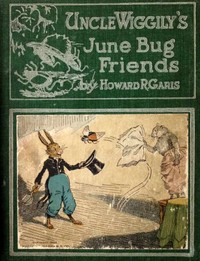
Uncle Wiggily's June Bug friends — Key Ideas to Explore
Young Readers
6,195 recorded words. 39 minutes difference from this book's estimate.
View Gutenberg source #70627
This digital edition of Arthur Hamilton, and His Dog — Background and Themes is described by source-level measurements including 15,084 words, 1 hr 6 min estimated reading time, and 2 detected text sections.
The text analysis averages about 22.2 words per sentence, while the detected sections provide another way to judge how the source is divided.
Project Gutenberg metadata also associates the work with “Children's stories,” connecting these edition facts with the source record’s subject description.
Explore this collection
These alternatives are selected using recorded categories and estimated reading time.
About 27 minutes
Young Readers
6,195 recorded words. 39 minutes difference from this book's estimate.
View Gutenberg source #70627About 26 minutes
Young Readers
5,851 recorded words. 40 minutes difference from this book's estimate.
View Gutenberg source #72607About 25 minutes
Young Readers
5,683 recorded words. 41 minutes difference from this book's estimate.
View Gutenberg source #70783Search stored excerpts and compare books → Choose by your preferences →
Choices use stored catalog measurements. Estimates vary with reading speed. A shared category is a catalog label, not a claim that two books have the same argument or literary quality.
Search reads excerpt text stored with this catalog and links to its associated Gutenberg record. The connection is stored in the site database; this tool does not recheck that every excerpt is word-for-word identical to that external record. Excerpt search does not cover every chapter and does not verify historical publication dates.
Catalog snapshot checked: 2026-09-26. Coverage: 91 public books, 91 available source excerpts.
Calculated from edition completeness, EPUB availability, text structure and catalogue metadata. Not a user rating.
Total of 100 points, scaled to a 2.5-5.0 range. Editions with an empty description or a missing EPUB file are not scored.
Public-domain source text
The source text is kept in the dedicated reader, separate from this catalogue record and its commentary.
Arthur Hamilton, and His Dog opens with a specific, domestic scene: a boy and his brother playing with a trained dog named Rover in front of a brown cottage one October evening. The dog performs tricks like bowing and "begging for money" with a chip, which the boys interpret as a thank-you. This detailed, playful moment contrasts sharply with the mother's hidden sorrow, as the narrative immediately reveals that the family faces poverty and the father's desertion. The story, published in 1851 by the Massachusetts Sabbath School Society, is framed as approved religious literature, yet the excerpts focus more on material hardship and emotional resilience than on overt doctrinal instruction.
The catalog subjects list "Children and death" and "Sunday school literature," but the excerpts do not depict any death. Instead, the central crisis is economic: Mrs. Hamilton must sell her home and separate her children because of accumulated debts. The text dwells on her emotional attachment to "every foot of the green meadow, the orchard on the hill, and the pasture lying beyond," and the pain of seeing them "pass into other hands." Arthur is sent to live with a farmer, Mr. Martin, and his wife. The story treats this not as a tragedy but as a necessary trial, with Mrs. Hamilton hoping farm work will give Arthur "tone and vigor." The dog Rover, however, remains a constant companion, suggesting that the bond with the pet provides continuity amid upheaval.
Arthur is consistently described in terms of softness and vulnerability. At school, he is called "Little Arthur Hamilton" not because of his size but because of his "gentleness and timid softness," which makes even the roughest boy refrain from pushing him. This characterization aligns with the Sunday school genre's emphasis on moral exemplars, but it also creates a specific, almost fragile protagonist. When Arthur visits home, he leads younger siblings by the hand and picks wildflowers, while Rover bounds alongside. The narrative contrasts his delicacy with the robust Henry, who walks ten miles to see his mother and is described as "glowing with health and strength." Arthur's physical limitations are acknowledged—Mr. Martin notes he "could not endure so much as most boys of his age"—but the story frames this as a challenge to overcome through outdoor labor.
Rover appears in both excerpts as a source of joy and a symbol of home. The opening frolic establishes the dog's trained antics and the boys' delight. Later, when Arthur returns for a spring visit, Rover is "petted and caressed" by all, and the dog sleeps in Arthur's room despite Mrs. Martin's disapproval. The dog's presence persists through the family's dispersal, linking the scattered children to their former life. Notably, the catalog subject "Children and death" does not manifest in the provided text; instead, the dog's vitality and the children's survival are emphasized. The story uses Rover to maintain emotional continuity, even as the human family fractures. This suggests that the dog functions less as a plot device and more as a stabilizing emotional anchor in a narrative of loss and adaptation.
Readers approaching Arthur Hamilton, and His Dog should set aside expectations of a conventional pet story or a death-focused moral tale. The excerpts reveal a work more concerned with economic hardship, maternal sacrifice, and the quiet endurance of a sensitive boy. The dog Rover is a consistent but secondary presence, underscoring the theme of loyalty amid separation. The text's religious framework is understated, appearing mainly in Mrs. Hamilton's "Christian's hope" and Henry's "Christian principle." This is a story of resilience through labor and faith, anchored by small, concrete details of rural life.
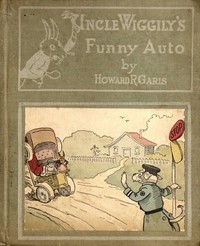
There’s a particular ache in that old Sunday school story—Arthur’s quiet loyalty to Rover, the weight of a child’s faith in hard times. It reminds me of afternoons when imagination softened a gray day, much like the gentle oddness in Uncle Wiggily's funny auto — Story, Setting & Ideas. I think we never quite outgrow needing that kind of comfort.
A brief reflection can help important ideas stay with you longer.