About 332 minutes
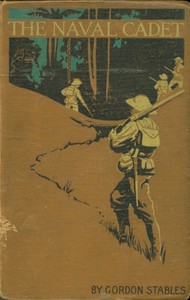
The naval cadet: A story of adventures on land and sea — Edition Insights
Young Readers
76,219 recorded words. 37 minutes difference from this book's estimate.
View Gutenberg source #68480
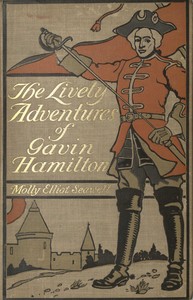
The catalog record for The lively adventures of Gavin Hamilton — Reading Notes provides practical reading context through 67,720 words, 4 hr 55 min estimated reading time, and 18 detected text sections.
The text analysis averages about 19.6 words per sentence, while the detected sections provide another way to judge how the source is divided.
Project Gutenberg metadata also associates the work with “Historical fiction,” connecting these edition facts with the source record’s subject description.
Explore this collection
These alternatives are selected using recorded categories and estimated reading time.
About 332 minutes
Young Readers
76,219 recorded words. 37 minutes difference from this book's estimate.
View Gutenberg source #68480About 202 minutes
Young Readers
46,251 recorded words. 93 minutes difference from this book's estimate.
View Gutenberg source #1361About 193 minutes
Young Readers
44,198 recorded words. 102 minutes difference from this book's estimate.
View Gutenberg source #951Search stored excerpts and compare books → Choose by your preferences →
Choices use stored catalog measurements. Estimates vary with reading speed. A shared category is a catalog label, not a claim that two books have the same argument or literary quality.
Search reads excerpt text stored with this catalog and links to its associated Gutenberg record. The connection is stored in the site database; this tool does not recheck that every excerpt is word-for-word identical to that external record. Excerpt search does not cover every chapter and does not verify historical publication dates.
Catalog snapshot checked: 2026-09-26. Coverage: 91 public books, 91 available source excerpts.
Calculated from edition completeness, EPUB availability, text structure and catalogue metadata. Not a user rating.
Total of 100 points, scaled to a 2.5-5.0 range. Editions with an empty description or a missing EPUB file are not scored.
Public-domain source text
The source text is kept in the dedicated reader, separate from this catalogue record and its commentary.
The opening chapter of The Lively Adventures of Gavin Hamilton establishes a grim historical setting—"frightful cold, of icy winds, of sunless days" in Silesia during the autumn of 1757—before the narrative quickly narrows to the personal. The author, Molly Elliot Seawell, moves from panoramic devastation to intimate drawing-room confrontations, a pattern that recurs throughout the excerpts. The prose is brisk and declarative, with short paragraphs that accelerate during action sequences and lengthen during moments of social tension. Seawell’s narrator occasionally interjects with knowing asides, such as noting that Gavin "had never yet hit upon any course of action" when anticipating a meeting between his estranged parents. This editorial voice, combined with the rapid shifts between battlefield and ballroom, gives the story a distinctive rhythm that rewards attention to pacing.
Seawell’s narrator adopts a tone of confident authority, especially when situating events within the Seven Years’ War. The opening paragraph names Frederick the Great and Maria Theresa directly, and the author’s note insists that "few, or no liberties have been taken with history and chronology." This claim is supported by the excerpts: Chancellor Kaunitz appears as a character, and the supper-table scene includes specific references to the Empress Queen’s ten children and the dispatch work of state. Yet the narrator also indulges in theatrical commentary—describing Kaunitz’s "elfish spirit" and noting that Lady Hamilton’s hand on Gavin’s shoulder was "eloquent." This blend of historical specificity and novelistic omniscience creates a voice that is both instructive and playful, guiding the reader through the political landscape while heightening the emotional stakes.
The excerpts reveal a careful manipulation of pace, particularly in the supper-table scene. The narrative slows to a near-halt when Sir Gavin Hamilton enters: "A clock ticking in the room seemed a loud noise, so utter was the stillness." Seawell uses short, fragmented sentences to stretch the moment—"Seconds passed, which seemed minutes"—and then reverses the power dynamic as Lady Hamilton’s color returns while Sir Gavin’s fades. This technique contrasts with the rapid, almost breathless action implied by the chapter titles and illustrations (e.g., "Gavin Throws Away His Trooper’s Sabre"). The story appears to alternate between set-piece confrontations and swifter military episodes, a rhythm that keeps the reader off-balance and engaged.
Several motifs recur in the excerpts. The color of faces—"scarlet," "deadly pale," "crimson"—serves as a barometer of emotion, especially in scenes of social danger. The hand on the shoulder appears twice: once when Lady Hamilton touches Gavin, and once in the illustration list ("The King Dragged Gavin Out of the Closet"). Physical objects also carry weight: the dress sword that Sir Gavin touches, the glass of champagne raised for a toast, and the mirror that reveals his entrance. These details are not merely decorative; they anchor the characters’ internal states in tangible actions. The theme of earning one’s bread, voiced by Kaunitz in a jest about the Emperor’s work, echoes the catalog subject of inheritance and succession, suggesting that Gavin’s adventures may test his worth beyond his title.
Readers attentive to Seawell’s narrative craft will find a story that rewards close attention to its verbal texture. The author’s habit of italicizing key gestures and her use of the present tense in moments of high drama ("She rose, too, but the smile froze on her lips") create a cinematic immediacy. The excerpts offer only a partial view of Gavin’s arc, but they suggest a novel that balances historical fidelity with theatrical flair. Approach the text as a performance as much as a chronicle, and note how Seawell’s shifts in pace and perspective shape the reader’s experience of the Seven Years’ War through one young man’s eyes.
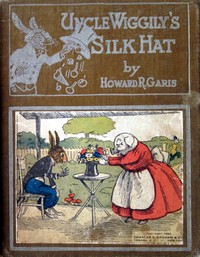
That rain kept drumming on the windows while Gavin dodged redcoats and hid his heart behind stiff manners. I closed the book, still hearing his quiet, stubborn loneliness. The hours stretched, so I reached for something lighter, and found Uncle Wiggily's silk hat — Reading Companion beside it. Odd, how even a rabbit’s silly hat can hold the same gentle ache of wanting to belong somewhere.
A brief reflection can help important ideas stay with you longer.