About 27 minutes
Uncle Wiggily's June Bug friends — Key Ideas to Explore
Young Readers
6,195 recorded words. 1 minutes difference from this book's estimate.
View Gutenberg source #70627
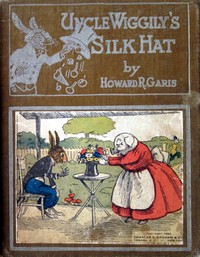
This digital edition of Uncle Wiggily's silk hat — Reading Companion is described by source-level measurements including 5,851 words, 26 min estimated reading time, and 5 detected text sections.
The text analysis averages about 15.8 words per sentence, while the detected sections provide another way to judge how the source is divided.
Project Gutenberg metadata also associates the work with “Humorous stories,” connecting these edition facts with the source record’s subject description.
Explore this collection
These alternatives are selected using recorded categories and estimated reading time.
About 27 minutes
Young Readers
6,195 recorded words. 1 minutes difference from this book's estimate.
View Gutenberg source #70627About 25 minutes
Young Readers
5,683 recorded words. 1 minutes difference from this book's estimate.
View Gutenberg source #70783About 21 minutes
Young Readers
4,628 recorded words. 5 minutes difference from this book's estimate.
View Gutenberg source #10981Search stored excerpts and compare books → Choose by your preferences →
Choices use stored catalog measurements. Estimates vary with reading speed. A shared category is a catalog label, not a claim that two books have the same argument or literary quality.
Search reads excerpt text stored with this catalog and links to its associated Gutenberg record. The connection is stored in the site database; this tool does not recheck that every excerpt is word-for-word identical to that external record. Excerpt search does not cover every chapter and does not verify historical publication dates.
Catalog snapshot checked: 2026-09-26. Coverage: 91 public books, 91 available source excerpts.
Calculated from edition completeness, EPUB availability, text structure and catalogue metadata. Not a user rating.
Total of 100 points, scaled to a 2.5-5.0 range. Editions with an empty description or a missing EPUB file are not scored.
Public-domain source text
The source text is kept in the dedicated reader, separate from this catalogue record and its commentary.
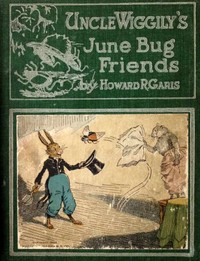
Uncle Wiggily, a rabbit gentleman in a tall silk hat, sets out for an adventure and immediately puts his hat to practical use. When Susie Littletail's milk pail springs a leak, he pours the milk into his hat, proving his claim that a silk hat can be both stylish and useful. The story introduces a pattern of problem-solving through everyday objects, with Uncle Wiggily's pink nose twinkling as he devises solutions.
The book contains three linked tales, each showing the bunny's ingenuity. In the second story, he brings home company without telling Nurse Jane, and in the third, he attempts to make salt water taffy—with sticky results. The excerpts reveal a playful voice, with characters like Uncle Butter the goat gentleman and animal children who assist in the taffy cleanup using shovels and croquet mallets.
The opening story establishes the hat as both a fashion statement and a tool. Uncle Wiggily's rhyming retort—"A tall silk hat may stylish be, and also useful, as you shall see"—sets a tone of playful practicality. When he saves Susie's milk, the goat gentleman's shocked bleat underscores the absurdity. The hat reappears throughout the book, but the excerpts show it is not merely a prop; it drives the plot. Readers should note how Garis uses a single object to create a series of small crises and resolutions.
Garis employs a distinctive narrative voice that mixes prose with occasional rhymes. Uncle Wiggily often speaks in couplets, and the text includes repeated phrases like "jolly Uncle Wiggily" and "twinkled his pink nose." This rhythmic quality suits reading aloud. The excerpts also show a pattern of three-part adventures, each with a clear problem, a creative solution, and a humorous outcome. The taffy-making episode, for instance, ends with Uncle Wiggily stuck to the floor, requiring warm water and help from animal children.
The cast includes a goat gentleman who "never cared much for style," a rabbit girl with a leaky pail, and Nurse Jane, who appears to manage the household. Each character has a distinct trait: Uncle Butter is skeptical, Susie is distressed, and Nurse Jane is practical. The animal children who help with the taffy cleanup wield shovels, hoes, and croquet mallets—a detail that adds visual humor. These characters recur in the series, but the excerpts provide enough context to understand their roles without prior knowledge.
The book contains three stories, each with its own title. The first story, about the silk hat, moves quickly from question to demonstration. The second, about bringing home company without telling Nurse Jane, is only partially excerpted but suggests a domestic complication. The third, the taffy-making attempt, escalates from a simple recipe to a sticky disaster. The pacing relies on short sentences and immediate action. Readers should expect each story to resolve neatly, often with Uncle Wiggily learning a small lesson—like buying taffy instead of making it.
These excerpts offer a clear sense of the book's tone and mechanics. Uncle Wiggily's adventures are built on small, everyday problems solved with wit and a bit of absurdity. The rhyming speech, the recurring hat, and the animal community all work together to create a cheerful, predictable world. First-time readers will find the stories self-contained and easy to follow, with enough repetition to feel familiar and enough invention to stay engaging.
I kept thinking about how Uncle Wiggily’s silk hat just made everything alright, never fussing, never failing. It reminded me of that other quiet charm in Uncle Wiggily's funny auto — Story, Setting & Ideas, where his odd little car bumps along the same gentle way. Something about his calm, rhymed confidence sticks with me long after the pages close.
Answer a few questions and save a private reflection on this device.