About 66 minutes
Arthur Hamilton, and His Dog — Background and Themes
Young Readers
15,084 recorded words. 41 minutes difference from this book's estimate.
View Gutenberg source #10888
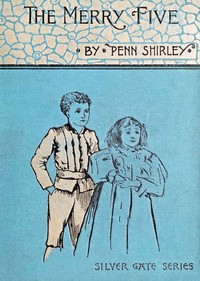
Before opening The Merry Five — Key Ideas to Explore, the edition data offers a quick orientation: 24,577 words, 1 hr 47 min estimated reading time, and 19 detected text sections.
The text analysis averages about 13.3 words per sentence, while the detected sections provide another way to judge how the source is divided.
Project Gutenberg metadata also associates the work with “Conduct of life -- Juvenile fiction,” connecting these edition facts with the source record’s subject description.
Explore this collection
These alternatives are selected using recorded categories and estimated reading time.
About 66 minutes
Young Readers
15,084 recorded words. 41 minutes difference from this book's estimate.
View Gutenberg source #10888About 27 minutes
Young Readers
6,195 recorded words. 80 minutes difference from this book's estimate.
View Gutenberg source #70627About 26 minutes
Young Readers
5,851 recorded words. 81 minutes difference from this book's estimate.
View Gutenberg source #72607Search stored excerpts and compare books → Choose by your preferences →
Choices use stored catalog measurements. Estimates vary with reading speed. A shared category is a catalog label, not a claim that two books have the same argument or literary quality.
Search reads excerpt text stored with this catalog and links to its associated Gutenberg record. The connection is stored in the site database; this tool does not recheck that every excerpt is word-for-word identical to that external record. Excerpt search does not cover every chapter and does not verify historical publication dates.
Catalog snapshot checked: 2026-09-26. Coverage: 91 public books, 91 available source excerpts.
Calculated from edition completeness, EPUB availability, text structure and catalogue metadata. Not a user rating.
Total of 100 points, scaled to a 2.5-5.0 range. Editions with an empty description or a missing EPUB file are not scored.
Public-domain source text
The source text is kept in the dedicated reader, separate from this catalogue record and its commentary.
Penn Shirley's The Merry Five opens with a domestic luncheon scene that quickly establishes the group's dynamics: Molly's eagerness, Kirke's enthusiasm, Weezy's playful mispronunciations, and baby Donald's mimicry. The narrative then shifts to the beach, camp, and mining landscapes, using each setting to introduce new activities—swimming, fishing, camping, and gold-panning. This movement between indoor and outdoor spaces is a structural pattern that recurs throughout the book, often punctuated by mealtime conversations that blend family banter with historical exposition.
The book's first chapter begins with a family meal, a device Shirley uses repeatedly to gather the characters and advance the plot. The luncheon scene introduces the central conflict—the family's impending trip to Santa Luzia—through a letter read aloud. Later, a dinner at Captain Bradstreet's camp serves a similar function, allowing Mrs. Davidson to recount her family's gold-mining past. These meals are not mere filler; they are structural anchors that provide natural pauses for reflection and storytelling. The contrast between the formal dining room and the rustic camp table underscores the children's transition from everyday life to adventure.
Water appears repeatedly, from the beach setting to the description of gold-panning. In the mining anecdote, Mrs. Davidson explains how miners used cradles with tin pans full of holes, washing dirt to leave gold behind. Weezy's literal-minded questions—"What did the babies do without them?" and "Wasn't the gold good for anything?"—highlight the gap between adult knowledge and childhood logic. The image of washing recurs in the swimming lessons and beach scenes, where water becomes both a source of play and a metaphor for discovery. Shirley uses these moments to gently educate readers about historical practices while maintaining the children's perspective.
Each child speaks in a distinct voice. Molly is practical and eager; Kirke is playful and sly; Weezy is literal and curious; Paul and Pauline are supportive but less individuated in the excerpts. Weezy's malapropisms—"exquit" for exquisite, "curious store" for curio store—provide humor and mark her as the youngest. Kirke's teasing question about whether Indians are gay, and his joke about the blankets, shows his quick wit. These verbal tics make the characters memorable without relying on extensive description. The dialogue also drives the plot: Molly's plea to help with packing, Paul's announcement of dinner, and Weezy's interruptions all move the story forward.
Mrs. Davidson's account of placer mining is the most extended historical passage in the excerpts. She describes her father's adobe house, the heavy shutters, and the process of using cradles to separate gold from dirt. This anecdote is framed as a story requested by Pauline, making it a natural part of the campfire conversation. Shirley does not lecture; instead, she embeds historical details within character interaction. The children's reactions—Weezy's confusion, Kirke's silence, Molly's smoothing of Weezy's hair—keep the focus on the listeners rather than the information. This technique allows the book to educate without sacrificing narrative momentum.
Readers attentive to structure will notice how Shirley balances action with conversation, using meals and storytelling to link episodes. The recurring water imagery and the distinct voices of the children reward careful reading. While the excerpts do not reveal the full arc of the plot, they suggest a book that values both adventure and the quiet moments between adventures.
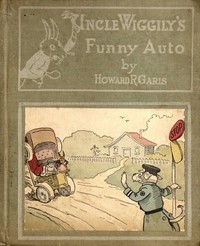
Reading about the Merry Five’s shifting between parlor and forest made me think of my grandmother’s porch, where we’d flip through Uncle Wiggily’s funny auto — Story, Setting & Ideas. That book had the same unhurried pulse—small talk turning into escape, then back to lemonade. Both felt like watching light move across a room, never needing to rush. Uncle Wiggily's funny auto — Story, Setting & Ideas still hums faintly, like a tune I half-remember.
Build a private reading journal entry for this title.