About 26 minutes
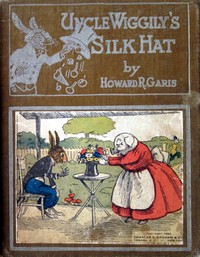
Uncle Wiggily's silk hat — Reading Companion
Young Readers
5,851 recorded words. 1 minutes difference from this book's estimate.
View Gutenberg source #72607
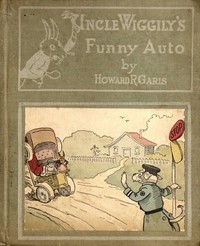
This digital edition of Uncle Wiggily's funny auto — Story, Setting & Ideas is described by source-level measurements including 5,683 words, 25 min estimated reading time, and 6 detected text sections.
The text analysis averages about 15.6 words per sentence, while the detected sections provide another way to judge how the source is divided.
Project Gutenberg metadata also associates the work with “Animals -- Juvenile fiction,” connecting these edition facts with the source record’s subject description.
Explore this collection
These alternatives are selected using recorded categories and estimated reading time.
About 26 minutes
Young Readers
5,851 recorded words. 1 minutes difference from this book's estimate.
View Gutenberg source #72607About 27 minutes
Young Readers
6,195 recorded words. 2 minutes difference from this book's estimate.
View Gutenberg source #70627About 21 minutes
Young Readers
4,628 recorded words. 4 minutes difference from this book's estimate.
View Gutenberg source #10981Search stored excerpts and compare books → Choose by your preferences →
Choices use stored catalog measurements. Estimates vary with reading speed. A shared category is a catalog label, not a claim that two books have the same argument or literary quality.
Search reads excerpt text stored with this catalog and links to its associated Gutenberg record. The connection is stored in the site database; this tool does not recheck that every excerpt is word-for-word identical to that external record. Excerpt search does not cover every chapter and does not verify historical publication dates.
Catalog snapshot checked: 2026-09-26. Coverage: 91 public books, 91 available source excerpts.
Calculated from edition completeness, EPUB availability, text structure and catalogue metadata. Not a user rating.
Total of 100 points, scaled to a 2.5-5.0 range. Editions with an empty description or a missing EPUB file are not scored.
Public-domain source text
The source text is kept in the dedicated reader, separate from this catalogue record and its commentary.
The opening of 'Uncle Wiggily's funny auto' immediately establishes a pattern of movement between domestic comfort and outdoor adventure. Nurse Jane Fuzzy Wuzzy calls from the hollow stump bungalow, but Uncle Wiggily is found beneath his automobile, tinkering. This scene sets up a recurring structural device: the story alternates between the safety of home and the unpredictability of the road. The automobile itself becomes a central image, not merely a vehicle but a source of mechanical mishaps and sudden transformations, as when it 'reared up on its hi' (the excerpt cuts off). The narrative moves briskly from preparation to departure, hinting at the episodic structure that follows.
The book's title page announces three distinct tales: how the Skillery Skallery Alligator was bumped, Uncle Wiggily and his snow plow, and how the bunny rabbit gentleman watered the garden. This tripartite structure is typical of the series, as noted in the publisher's list of other titles, each containing three stories. The framing device—a single automobile ride that spawns multiple adventures—allows for quick shifts in setting and conflict. The first excerpt shows the ride beginning smoothly before a sudden interruption, suggesting that each story will introduce a new obstacle or encounter. The alligator, snow plow, and garden watering are likely separate episodes, linked by the auto's presence. This structure prioritizes variety over continuity, inviting young readers to enjoy self-contained incidents.
The automobile is more than transportation; it is a source of comedy and transformation. Uncle Wiggily 'fixes' it to go faster, but it soon 'reared up,' implying a will of its own. The title itself emphasizes the car's personality: 'funny auto.' In the snow plow story, the auto likely adapts to winter conditions, while in the garden story, it may be repurposed for watering. This mechanical mutability echoes the series' other titles, such as 'Uncle Wiggily's Auto Sled' and 'Uncle Wiggily's Water Spout,' where vehicles and objects take on unexpected functions. The auto's behavior—bucking, bumping, or plowing—drives the plot, making it a central character alongside the bunny rabbit gentleman.
The narrative moves fluidly between the hollow stump bungalow and the open road. Nurse Jane's call from the door and Uncle Wiggily's emergence from under the car establish a threshold between home and adventure. The muskrat lady's desire for a ride signals a transition from domestic routine to potential 'adventures.' The auto enables this movement, but it also introduces wild elements: the Skillery Skallery Alligator, a trickster figure, and later snow and garden settings. The catalog subjects list animals such as foxes, wolves, and alligators, suggesting encounters with predators. Yet the tone remains light, with the auto often serving as a buffer or tool. This back-and-forth between safety and risk is a structural rhythm, each adventure ending with a return to the bungalow or a resolution.
Garis uses repetitive, rhythmic dialogue to create a playful voice. Nurse Jane calls 'Wiggy! Oh, Wiggy!' and later asks 'Where in the world are you, Wiggy?' This repetition reinforces character and builds anticipation. Uncle Wiggily's response from beneath the car—'I have been fixing the car so it would ride faster and better'—shows his practical, slightly absent-minded nature. The dialogue is simple and direct, suited for early readers. The phrase 'Skillery Skallery Alligator' exemplifies the author's fondness for alliteration and nonsense words, a hallmark of the series. These verbal patterns give the stories a sing-song quality, making them memorable for oral reading. The excerpts suggest that dialogue drives the action, with characters announcing their intentions and reacting to events in real time.
Readers approaching 'Uncle Wiggily's funny auto' will find a series of linked vignettes rather than a single plot. Pay attention to how the automobile changes function with each story—it is a car, a snow plow, and a watering device. The book rewards those who notice the recurring call-and-response between home and road, and the way mechanical trouble sparks adventure. For the fullest experience, read the three stories in order, observing how the auto's personality evolves.
That rainy afternoon, Uncle Wiggily’s funny auto felt less like a story than a weather system—the bunny’s restless engine humming through puddles, wild woods politely yielding to his porch. I closed it, stared at the window, and somehow reached for an older, quieter volume: The lively adventures of Gavin Hamilton — Reading Notes. Different roads, same hush between stops.
Create a short personal record of your experience with this book.