About 295 minutes
The lively adventures of Gavin Hamilton — Reading Notes
Young Readers
67,720 recorded words. 37 minutes difference from this book's estimate.
View Gutenberg source #68630
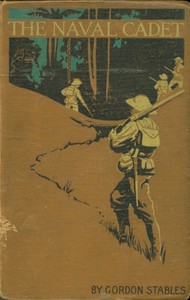
Before opening The naval cadet: A story of adventures on land and sea — Edition Insights, the edition data offers a quick orientation: 76,219 words, 5 hr 32 min estimated reading time, and 7 detected text sections.
The text analysis averages about 17.8 words per sentence, while the detected sections provide another way to judge how the source is divided.
Project Gutenberg metadata also associates the work with “Conduct of life -- Juvenile fiction,” connecting these edition facts with the source record’s subject description.
Explore this collection
These alternatives are selected using recorded categories and estimated reading time.
About 295 minutes
Young Readers
67,720 recorded words. 37 minutes difference from this book's estimate.
View Gutenberg source #68630About 202 minutes
Young Readers
46,251 recorded words. 130 minutes difference from this book's estimate.
View Gutenberg source #1361About 193 minutes
Young Readers
44,198 recorded words. 139 minutes difference from this book's estimate.
View Gutenberg source #951Search stored excerpts and compare books → Choose by your preferences →
Choices use stored catalog measurements. Estimates vary with reading speed. A shared category is a catalog label, not a claim that two books have the same argument or literary quality.
Search reads excerpt text stored with this catalog and links to its associated Gutenberg record. The connection is stored in the site database; this tool does not recheck that every excerpt is word-for-word identical to that external record. Excerpt search does not cover every chapter and does not verify historical publication dates.
Catalog snapshot checked: 2026-09-26. Coverage: 91 public books, 91 available source excerpts.
Calculated from edition completeness, EPUB availability, text structure and catalogue metadata. Not a user rating.
Total of 100 points, scaled to a 2.5-5.0 range. Editions with an empty description or a missing EPUB file are not scored.
Public-domain source text
The source text is kept in the dedicated reader, separate from this catalogue record and its commentary.
The narrative voice in Gordon Stables's The Naval Cadet is unusually present. From the opening chapter, the author steps in to introduce his hero directly—"stay, though, till I present my young hero to you, reader"—and this habit of breaking the fourth wall persists throughout. The story follows Creggan M'Vayne, a kilted Skye lad whose independence irks a colonial ex-secretary, but the real focus is the texture of life at sea: the roll of a ship in a storm, the plaintive calls of gulls that "look upon ships as their own," and the camaraderie or tension among officers.
Stables does not let the reader forget there is a storyteller at work. He addresses "reader mine" directly, offers opinions on naval discipline, and even apologizes for digressions: "I must heave ahead with my story, instead of hauling my fore-yard aback." This rhetorical presence shapes the reading experience, making the narrator a character in his own right. The tone is avuncular, opinionated, and occasionally moralizing—as when he warns that some ships are "known on the station as 'floating hells'" depending on the captain. These asides are not mere decoration; they frame the action and guide the reader's sympathies.
Storms recur as set pieces that test both vessel and crew. In one vivid passage, the narrator describes how "the best sailors on board cannot keep their feet" as the ship rolls and yaws, with seas "dashing over her, high as the conning tower." The language emphasizes the puniness of human engineering against the ocean: "the strongest works of man are, compared to those of God." These moments are not just action—they are philosophical anchors. The storm scenes are built from specific, physical details: machinery breaking down, furniture becoming "one chaotic heap," and the ship being "at the mercy of the waves." The effect is to ground the adventure in a tangible, dangerous reality.
The book's structure alternates between land-based episodes and sea voyages. Early chapters are set on the Isle of Skye, where Creggan is introduced as a boy known "on land or at sea, all along the wild rocky shores." Later, the narrative shifts to the gunboat Rattler and then to the Osprey, whose sealed orders point toward Venezuela. The table of contents reveals a pattern: chapters titled "The Storm," "Lost in a Highland Mist," and "On Board the Gunboat Rattler" give way to "In the Wilds of Venezuela" and "Adventure in a Papuan Lake-Village." This movement is not random; each new setting brings a different kind of peril—from mist to battle to court-martial—and a fresh set of descriptive opportunities.
Certain images appear repeatedly, stitching the episodic plot together. Gulls are a persistent motif: they "kept sailing around the ship, tack and half-tack in the air" and follow vessels "trying, as it were, by their plaintive calls, to get them to return." Fire appears in chapter titles ("St. Elmo's Fire," "The Burning Ship") and in the frontispiece description of a "Ju-Ju king" springing up. The sea itself is never static; it is "blue" and "rippled by balmy winds" or dark and overwhelming. These recurring elements give the book a sensory coherence that transcends its varied geography.
Stables writes with the authority of someone who knows naval life from the inside. He explains technical details—paddles thrown out of gear, beam winds, sealed orders—and offers insider observations about the chain of command: "The ward-room officers take their cue from him, the gun-room follows the example." This expertise lends weight to the adventure. Even when the plot veers into exotic territory (Venezuela, Papua New Guinea), the reader trusts the narrator's grasp of the shipboard world. The result is a hybrid: a boys' adventure story that doubles as a sailor's memoir.
Readers should pay attention to the chapter titles, which function as a map of the book's shifting terrain. The narrative does not always follow a straight line—Stables frequently pauses to moralize or describe—but the journey from Skye to the South Seas is held together by the steady presence of the sea itself. Approach this as a period adventure where the telling matters as much as the tale.
There’s something comforting about old books like The Naval Cadet, with its wild storms and lonely gulls—how small we feel against the sea. It reminds me of evenings spent with gentler tales, where a child’s questions are answered softly, like in Child's New Story Book; Or, Tales and Dialogues for Little Folks — Inside the Classic. Both hold a quiet awe, just pitched differently.
Save your reaction, strongest insight, and memorable passage.