About 124 minutes
Incidents of childhood — Edition Insights
Childrens Adventures
28,417 recorded words. 3 minutes difference from this book's estimate.
View Gutenberg source #68080
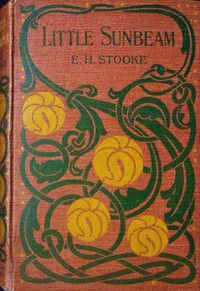
This digital edition of Little Sunbeam — Background and Themes is described by source-level measurements including 28,982 words, 2 hr 7 min estimated reading time, and 3 detected text sections.
The text analysis averages about 15.8 words per sentence, while the detected sections provide another way to judge how the source is divided.
Project Gutenberg metadata also associates the work with “Christian life -- Juvenile fiction,” connecting these edition facts with the source record’s subject description.
Explore this collection
These alternatives are selected using recorded categories and estimated reading time.
About 124 minutes
Childrens Adventures
28,417 recorded words. 3 minutes difference from this book's estimate.
View Gutenberg source #68080About 120 minutes
Childrens Adventures
27,522 recorded words. 7 minutes difference from this book's estimate.
View Gutenberg source #71759About 119 minutes
Childrens Adventures
27,266 recorded words. 8 minutes difference from this book's estimate.
View Gutenberg source #70279Search stored excerpts and compare books → Choose by your preferences →
Choices use stored catalog measurements. Estimates vary with reading speed. A shared category is a catalog label, not a claim that two books have the same argument or literary quality.
Search reads excerpt text stored with this catalog and links to its associated Gutenberg record. The connection is stored in the site database; this tool does not recheck that every excerpt is word-for-word identical to that external record. Excerpt search does not cover every chapter and does not verify historical publication dates.
Catalog snapshot checked: 2026-09-26. Coverage: 91 public books, 91 available source excerpts.
Calculated from edition completeness, EPUB availability, text structure and catalogue metadata. Not a user rating.
Total of 100 points, scaled to a 2.5-5.0 range. Editions with an empty description or a missing EPUB file are not scored.
Public-domain source text
The source text is kept in the dedicated reader, separate from this catalogue record and its commentary.
Eleanora H. Stooke's Little Sunbeam opens with a child named Peggy Pringle standing before a toy shop window, unable to see the display but urging her brother Billy to describe it. This early scene establishes a pattern: Peggy's blindness is not a barrier to engagement but a filter through which the world is translated into sound, touch, and the words of others. The narrative moves between cramped urban streets and the open spaces of Lower Brimley, a Cornish flower-farm, using these shifts to mirror Peggy's emotional journey. Stooke's prose is attentive to physical detail—the feel of a serge coat, the weight of a Tam o' Shanter cap—and to the rhythms of conversation, which carry much of the story's moral weight.
The story's geography is sharply divided. The first chapter places Peggy and Billy in a poor London street, where they are jostled by pedestrians and ignored by passers-by. Later, the action moves to Lower Brimley, a flower-farm in Cornwall, where Peggy stays with her aunt. These transitions are not merely scenic; they alter the texture of the narrative. In London, sensory information is chaotic—noise, crowds, cold—while at the farm, sounds become distinct: the rustle of flowers, the quiet of country lanes. Stooke uses these contrasts to underscore Peggy's adaptability. She navigates both environments with confidence, relying on memory and routine. The journey itself—by train or carriage—is often elided, so that the reader experiences the shift as a sudden change in atmosphere rather than a logistical process.
Peggy's blindness is treated with unusual specificity. Her eyes are described as 'clear as crystal' and 'bits of Heaven's blue,' yet she cannot see. Stooke avoids sentimentality by focusing on how Peggy compensates: she listens to her brother's descriptions of a toy shop window, she knows the way home by keeping to the road, and she interprets tone of voice with precision. When she speaks to the servant Barnes, she picks up on sadness that others miss. The narrative does not grant her supernatural insight; instead, it shows her building knowledge through careful attention. This is most evident in her conversation with Aunt Caroline about Barnes's family, where Peggy's empathy arises from her own experience of affliction, not from any special intuition.
Stooke relies heavily on dialogue to advance character and plot. The excerpted scenes are almost entirely conversational: Peggy and Billy at the shop, Peggy and Aunt Caroline at the farm. These exchanges are not merely expository; they reveal social dynamics and emotional undercurrents. Aunt Caroline's sharp questions ('Why should she think that?') expose her own discomfort, while Peggy's gentle persistence ('I'm not' afraid) shows her lack of awe. The dialogue also carries the story's moral lessons. When Peggy tells Barnes she will pray for her brother, the servant's response—that she fears it will never be in this world—introduces a note of realism that tempers the book's Christian optimism. The conversations feel natural, with interruptions and hesitations that mimic real speech.
The title Little Sunbeam is echoed throughout the text. Peggy's father nicknamed her 'Little Sunbeam' years before, and the narrative reinforces this image by associating her with warmth and cheerfulness. Yet Stooke also introduces the metaphor of the cross. Peggy herself says of Barnes's brother, 'His cross is so much heavier than mine,' linking her own blindness to a broader Christian framework of suffering. Light imagery appears in descriptions of Peggy's eyes and in the setting of the flower-farm, which is bathed in sunlight. These images are not heavy-handed; they are woven into the fabric of the story, appearing in moments of reflection or transition. The contrast between light and burden gives the book a quiet tension, as Peggy's brightness exists alongside the knowledge of hardship.
Readers approaching Little Sunbeam should attend to the way Stooke builds meaning through small, concrete details: the feel of a coat, the sound of a voice, the shape of a conversation. The book rewards attention to its structure of movement and stillness, and to the way Peggy's blindness shapes not only her own experience but the moral landscape of those around her. It is a work that earns its sentiment through precision.
I keep thinking about how Little Sunbeam taught me that light isn’t always something you see—sometimes it’s a voice, a familiar wall, a morning smell. That quiet way of finding warmth in the everyday lingered long after I closed it. This other one, Lily's birthday — Text and Context, reminded me of that same gentle hum, a small day made big by who shares it.
Build a private reading journal entry for this title.