About 208 minutes
Bunny Brown and his sister Sue on the rolling ocean — Themes and Context
Childrens Adventures
47,817 recorded words. 2 minutes difference from this book's estimate.
View Gutenberg source #71175
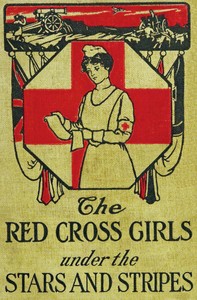
The source record for The Red Cross girls with the Stars and Stripes — Inside the Classic measures this digital text at 48,137 words, 3 hr 30 min estimated reading time, and 24 detected text sections.
The text analysis averages about 19.8 words per sentence, while the detected sections provide another way to judge how the source is divided.
Project Gutenberg metadata also associates the work with “War stories,” connecting these edition facts with the source record’s subject description.
Explore this collection
These alternatives are selected using recorded categories and estimated reading time.
About 208 minutes
Childrens Adventures
47,817 recorded words. 2 minutes difference from this book's estimate.
View Gutenberg source #71175About 207 minutes
Childrens Adventures
47,476 recorded words. 3 minutes difference from this book's estimate.
View Gutenberg source #71244About 213 minutes
Childrens Adventures
48,923 recorded words. 3 minutes difference from this book's estimate.
View Gutenberg source #73976Search stored excerpts and compare books → Choose by your preferences →
Choices use stored catalog measurements. Estimates vary with reading speed. A shared category is a catalog label, not a claim that two books have the same argument or literary quality.
Search reads excerpt text stored with this catalog and links to its associated Gutenberg record. The connection is stored in the site database; this tool does not recheck that every excerpt is word-for-word identical to that external record. Excerpt search does not cover every chapter and does not verify historical publication dates.
Catalog snapshot checked: 2026-09-26. Coverage: 91 public books, 91 available source excerpts.
Calculated from edition completeness, EPUB availability, text structure and catalogue metadata. Not a user rating.
Total of 100 points, scaled to a 2.5-5.0 range. Editions with an empty description or a missing EPUB file are not scored.
Public-domain source text
The source text is kept in the dedicated reader, separate from this catalogue record and its commentary.
The novel opens with Barbara Thornton in her New York drawing-room, surrounded by red, white, and blue flowers—a deliberate patriotic display. This domestic image quickly gives way to the war effort in France, where the narrative splits between two Red Cross nurses: Barbara, who shifts her focus from nursing to organizing a grand entertainment for American soldiers, and Nona Davis, who becomes absorbed in caring for Lieutenant Jack Martin. The excerpts reveal a pattern of characters redefining their roles: Barbara insists her work is vital, yet her sister-in-law Mildred worries she is over-fatigued; Nona finds herself annoyed when her patient makes romantic advances, a situation she has faced before. These early tensions—between duty and personal desire, between official Red Cross work and unofficial projects—set the stage for conflicts that are as much about identity as about service.
The opening chapter establishes a motif of carefully arranged symbols: the red, white, and blue flowers from the Thornton estate, the frosted glasses instead of teacups, the summer setting that contrasts with the war overseas. Barbara herself is dressed in white, a color that suggests both nursing and purity. Yet her later actions reveal a tension between symbolic patriotism and practical service. She devotes herself to planning a soldiers' entertainment, corresponding with a distinguished French actress and securing a piano for the camp. Her sister-in-law Mildred suspects she is not herself, and Barbara insists she has never been more interested in anything. The text notes that she has altered the nature of her Red Cross duties, implying a shift from direct care to managerial work. This redefinition of service raises questions about what counts as contribution during wartime—a theme the excerpts develop without resolving.
Nona Davis’s storyline offers a counterpoint to Barbara’s public ambitions. She is entirely absorbed in nursing Lieutenant Jack Martin, to the point of being separated from knowledge of events outside the hospital. The chapter titled “The Undertow” suggests a hidden current pulling her away from her usual composure. When the lieutenant makes romantic advances, Nona feels annoyed and surprised, yet the text notes that convalescing men often make love to their nurses from sentimentality and gratitude. This observation generalizes her experience, but the lieutenant’s private remark—“But I shall not always be your patient, my lady”—hints at a future shift in their relationship. The excerpts do not reveal how Nona responds, but the pattern of personal feelings intruding on professional duty is clearly established.
Barbara’s entertainment project brings its own set of pressures. Rehearsals take place in the evenings, consuming time and strength. She persuades Mildred to play piano accompaniments and induces Eugenia to purchase a piano for the soldiers’ pleasure. The text lists the performers: a French actress, a recitation by Berthe Bonnèt, a chorus trained by Lieutenant Kelley, and Mollie Drew’s Irish ballads—though Mollie vacillates between agreeing to sing and refusing. Barbara endures the trials of a theatrical manager, and her nervousness is attributed to this role. Yet the narrative also notes that she has insisted her husband’s work must not be interrupted, and she has promised not to interfere. This self-imposed constraint adds to the strain, as she balances her own ambitions with the expectations of her marriage and her Red Cross identity.
The excerpts present a world where service is constantly negotiated: between direct nursing and organizing, between personal feelings and professional boundaries, between patriotic symbols and the messy realities of camp life. Readers attentive to these tensions will find a story less about heroism than about the quiet conflicts that arise when individuals try to serve in their own way. The novel’s structure—alternating between Barbara’s public efforts and Nona’s private struggles—invites comparison between two modes of wartime contribution, neither of which is presented as wholly straightforward.
I keep thinking about Barbara in that Red Cross story, how duty and longing got so tangled. It reminded me of another old book where that same quiet ache lives. Something about wartime service strips away pretense, leaving only what matters. The Wolf-slayer; [Margaret Kaurner] — A Closer Reading carries that same gentle heaviness, like a letter you unfold twice.
Build a private reading journal entry for this title.