About 119 minutes
Bertha Weisser's wish — Text and Context
Childrens Adventures
27,266 recorded words. 1 minutes difference from this book's estimate.
View Gutenberg source #70279
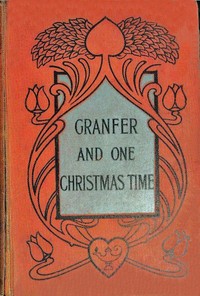
This digital edition of Granfer, and One Christmas time — Inside the Classic is described by source-level measurements including 27,522 words, 2 hr estimated reading time, and 3 detected text sections.
The text analysis averages about 14.9 words per sentence, while the detected sections provide another way to judge how the source is divided.
Project Gutenberg metadata also associates the work with “Christian life -- Juvenile fiction,” connecting these edition facts with the source record’s subject description.
Explore this collection
These alternatives are selected using recorded categories and estimated reading time.
About 119 minutes
Childrens Adventures
27,266 recorded words. 1 minutes difference from this book's estimate.
View Gutenberg source #70279About 124 minutes
Childrens Adventures
28,417 recorded words. 4 minutes difference from this book's estimate.
View Gutenberg source #68080About 127 minutes
Childrens Adventures
28,982 recorded words. 7 minutes difference from this book's estimate.
View Gutenberg source #72200Search stored excerpts and compare books → Choose by your preferences →
Choices use stored catalog measurements. Estimates vary with reading speed. A shared category is a catalog label, not a claim that two books have the same argument or literary quality.
Search reads excerpt text stored with this catalog and links to its associated Gutenberg record. The connection is stored in the site database; this tool does not recheck that every excerpt is word-for-word identical to that external record. Excerpt search does not cover every chapter and does not verify historical publication dates.
Catalog snapshot checked: 2026-09-26. Coverage: 91 public books, 91 available source excerpts.
Calculated from edition completeness, EPUB availability, text structure and catalogue metadata. Not a user rating.
Total of 100 points, scaled to a 2.5-5.0 range. Editions with an empty description or a missing EPUB file are not scored.
Public-domain source text
The source text is kept in the dedicated reader, separate from this catalogue record and its commentary.
The first chapter of Granfer opens in the kitchen of Lowercoombe Farm, where the March sun shines on spotless china and a simmering stew. The narrator lingers on the scrubbed deal table, the polished oak settles, and the copper warming pan, establishing a world where order and industry are virtues. Mrs. Maple, the farmer's wife, is introduced through her actions—ironing shirts, stirring the crock—and through her husband's reported opinion that she always finds good in people. This domestic precision, combined with the entrance of Granfer Jabez Norris, a stern old man of nearly eighty, sets up a contrast between warmth and hardness that runs through the tale.
The farm-kitchen description does more than set a scene; it establishes a moral atmosphere. Every object is placed with care: the china is spotless, the tin ware glistens, the floor is scrupulously clean. This is a household where work is done thoroughly, and the narrator’s approval is implicit. Mrs. Maple’s kindness is shown through her habit of looking kindly upon everyone, while her father’s sternness is signaled by his dark eyes and reputation as a hard man. The reader is thus prepared for a story in which character is revealed through domestic routine and small gestures. The opening paragraph, with its inventory of polished surfaces, functions as a visual index of the values that will be tested and affirmed.
In the second story, One Christmas Time, the middle excerpt shows Jim Blewett buying a doll for a street child. The scene is set in a shop, where the assistant wraps the doll in paper and string, and the child’s longing eyes are contrasted with Jim’s cheerful practicality. The assistant, weary and cross, is cheered by the sale. Jim refuses thanks and tells the child to run home. This episode mirrors the opening’s concern with kindness: Jim’s impulsive generosity is set against the button-hole maker’s struggle in the following chapter. The narrative shifts from rural farm to urban London, but the moral thread—small acts of goodness in hard circumstances—remains constant. The reader is guided to see how the two stories, though separate, share a thematic focus on charity and domestic virtue.
The later excerpt introduces Mrs. Blundell, a button-hole maker working by candlelight, her eyes aching. She fears losing her sight, which would leave her two children unprovided for. The narrator notes that she is not usually a grumbler, and that she puts a stout heart to a stiff hill. This phrase, along with her murmured quotation from scripture, reveals a character sustained by faith and endurance. The contrast with the earlier, more comfortable farm setting is deliberate: the reader sees a different kind of struggle, one of poverty and precariousness. The narrative does not resolve her situation in the excerpts, but the pattern of the book—alternating between rural and urban, comfort and want—suggests that the stories will eventually connect, perhaps through acts of kindness like Jim’s.
The book is divided into two distinct stories, Granfer and One Christmas Time, each with its own set of characters and settings. The first story is set in the spring at Lowercoombe Farm, the second in London at Christmas. The reader is not told how or if the stories intersect, but the catalog subjects—Christian life, Christmas, conduct of life—provide a clue. The opening’s emphasis on domestic order and the middle’s focus on generosity suggest that the book will reward attention to small moral choices. The later excerpt’s depiction of hardship invites the reader to watch for moments of help or rescue. The structure, with its separate but parallel narratives, encourages a comparative reading: how do characters in different circumstances embody the same virtues?
As you read, note how the narrator uses physical details—a polished settle, a wrapped parcel, a single candle—to signal moral states. The two stories may be read independently, but their juxtaposition invites reflection on how kindness operates in different spheres. Pay attention to the role of Granfer himself, introduced in the first chapter as a stern figure; his heart’s desire, hinted at in the table of contents, may provide the link between the tales.
That kitchen warmth in Granfer always makes me think of quieter winters, where small kindnesses mattered more than the grand gestures. The doll-purchase scene stays with me—how a child’s moral weighing feels so enormous at the time. I found that same tender gravity echoed in Nelly — Context and Discussion, and it made me glad these old stories still breathe.
Save your reaction, strongest insight, and memorable passage.