About 19 minutes
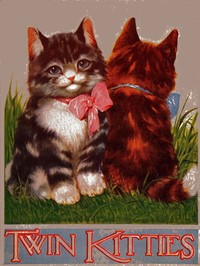
My twin kitties — A Reader’s Guide
Childrens Adventures
4,323 recorded words. 0 minutes difference from this book's estimate.
View Gutenberg source #68248
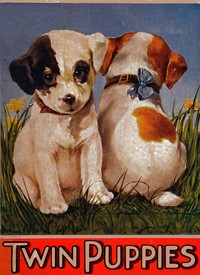
This digital edition of My twin puppies — Inside the Classic is described by source-level measurements including 4,172 words, 19 min estimated reading time, and 1 detected text section.
The text analysis averages about 18.0 words per sentence, while the detected sections provide another way to judge how the source is divided.
Project Gutenberg metadata also associates the work with “Dogs -- Juvenile fiction,” connecting these edition facts with the source record’s subject description.
Explore this collection
These alternatives are selected using recorded categories and estimated reading time.
About 19 minutes
Childrens Adventures
4,323 recorded words. 0 minutes difference from this book's estimate.
View Gutenberg source #68248About 24 minutes
Childrens Adventures
5,305 recorded words. 5 minutes difference from this book's estimate.
View Gutenberg source #68563About 33 minutes
Childrens Adventures
7,418 recorded words. 14 minutes difference from this book's estimate.
View Gutenberg source #76014Search stored excerpts and compare books → Choose by your preferences →
Choices use stored catalog measurements. Estimates vary with reading speed. A shared category is a catalog label, not a claim that two books have the same argument or literary quality.
Search reads excerpt text stored with this catalog and links to its associated Gutenberg record. The connection is stored in the site database; this tool does not recheck that every excerpt is word-for-word identical to that external record. Excerpt search does not cover every chapter and does not verify historical publication dates.
Catalog snapshot checked: 2026-09-26. Coverage: 91 public books, 91 available source excerpts.
Calculated from edition completeness, EPUB availability, text structure and catalogue metadata. Not a user rating.
Total of 100 points, scaled to a 2.5-5.0 range. Editions with an empty description or a missing EPUB file are not scored.
Public-domain source text
The source text is kept in the dedicated reader, separate from this catalogue record and its commentary.
From the opening pages, Edna Groff Deihl establishes a pattern of contrast between the twin puppies. The black-eyed puppy chews Jimmy's shoe and is promptly named Troubles, while the brown-eyed one, whose eyes shine like bubbles, is called Bubbles. This naming sets up a recurring dynamic: one puppy is associated with mischief, the other with gentler qualities. The story's structure relies on such paired oppositions—inside versus outside, fear versus bravery, awkward versus graceful—that give the simple narrative a clear, rhythmic shape.
The names Troubles and Bubbles are not arbitrary; they emerge directly from the puppies' actions and appearance. Troubles is first seen chewing Jimmy's shoe, prompting Daddy's prediction that he will make trouble. Bubbles, meanwhile, is linked to the little girl blowing bubbles next door, whose bubbles shine like the puppy's eyes. This naming strategy gives each puppy a distinct identity from the start, and the story reinforces these traits through later episodes. For instance, when the puppies encounter a big black cat, both bark furiously but then run back pell-mell, showing that even Troubles is not truly fierce. The names thus serve as shorthand for the puppies' personalities, but the narrative complicates them by showing both puppies sharing moments of fear and cooperation.
The training sequences are built on specific physical details. Bubbles cannot hold his front paws as gracefully as Troubles when begging, and the puppies struggle with walking: Bubbles seems bow-legged, Troubles pigeon-toed. These observations ground the story in observable, slightly awkward movements rather than idealized pet behavior. The circus training—jumping through a barrel hoop—initially meets resistance, but the puppies soon find it heaps of fun. The narrative emphasizes the effort required: it was so hard to teach them to walk, and they succeed in taking ten steps at a time. This focus on incremental progress and physical quirks gives the training scenes a concrete, humorous quality that avoids sentimentality.
A key episode pits the puppies against a big black cat. The text renders the puppies' barking in a string of onomatopoeic sounds: Bow, Wow, Bow, Wow, Woo-woo-woo-woo-woo, Bow-wow. The cat responds with Meow and a hissing P-f-f-f-f-f-f-f. This vocal contrast highlights the different temperaments of the animals. Jimmy laughs when the twins run back pell-mell, knowing they were afraid. The moment undercuts any pretense of bravery, showing the puppies as comically timid. The episode also reinforces the story's pattern of opposition: the cat's arched back and hiss versus the puppies' chaotic barking, and the controlled line they usually maintain versus their wild dash across the street.
Readers may notice how Deihl uses repetition and variation: the phrase “Oh, Daddy!” appears twice, and the puppies' names are echoed in commands and descriptions. The story's brevity—under 4,200 words—means each scene carries weight. Pay attention to the small physical details, like the puppies' eye colors or their gaits, which do more work than any moralizing. The result is a compact, observation-driven tale that rewards close reading of its patterned language and comic timing.
I keep thinking about how those puppies were named for their little quirks—Troubles and Bubbles—and how those names became a kind of shorthand. There’s something tender in that, naming what you love for its oddities. A tale of three weeks — Context and Discussion made me feel that same quiet ache, the way the ordinary details of a life hold more than they seem to.
Answer a few questions and save a private reflection on this device.