About 110 minutes
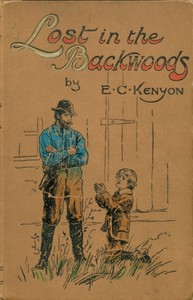
Lost in the backwoods — Reading Notes
Childrens Adventures
25,145 recorded words. 2 minutes difference from this book's estimate.
View Gutenberg source #68584
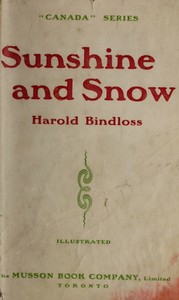
The source record for Sunshine and snow — Key Ideas to Explore measures this digital text at 25,587 words, 1 hr 52 min estimated reading time, and 3 detected text sections.
The text analysis averages about 25.0 words per sentence, while the detected sections provide another way to judge how the source is divided.
Project Gutenberg metadata also associates the work with “Brothers -- Juvenile fiction,” connecting these edition facts with the source record’s subject description.
Explore this collection
These alternatives are selected using recorded categories and estimated reading time.
About 110 minutes
Childrens Adventures
25,145 recorded words. 2 minutes difference from this book's estimate.
View Gutenberg source #68584About 119 minutes
Childrens Adventures
27,266 recorded words. 7 minutes difference from this book's estimate.
View Gutenberg source #70279About 120 minutes
Childrens Adventures
27,522 recorded words. 8 minutes difference from this book's estimate.
View Gutenberg source #71759Search stored excerpts and compare books → Choose by your preferences →
Choices use stored catalog measurements. Estimates vary with reading speed. A shared category is a catalog label, not a claim that two books have the same argument or literary quality.
Search reads excerpt text stored with this catalog and links to its associated Gutenberg record. The connection is stored in the site database; this tool does not recheck that every excerpt is word-for-word identical to that external record. Excerpt search does not cover every chapter and does not verify historical publication dates.
Catalog snapshot checked: 2026-09-26. Coverage: 91 public books, 91 available source excerpts.
Calculated from edition completeness, EPUB availability, text structure and catalogue metadata. Not a user rating.
Total of 100 points, scaled to a 2.5-5.0 range. Editions with an empty description or a missing EPUB file are not scored.
Public-domain source text
The source text is kept in the dedicated reader, separate from this catalogue record and its commentary.
The story opens on a December day at Firdene School, where Charley Gordon has just won prizes and a special certificate for all-round excellence. The narrative quickly shifts from the enclosed valley of the North Country to the open prairie of Canada, a movement that sets the pattern for the book: scenes of controlled, competitive activity give way to wild, elemental challenges. Bindloss uses the paper-chase—a school tradition—as a prelude to later pursuits across snow-covered plains, linking the boys' training in physical endurance to the survival skills demanded by frontier life.
The book's structure hinges on a sharp geographical and emotional transition. The first chapter is set entirely within the ordered world of Firdene: the prize-giving in a stone hall that was once part of an ancient abbey, the paper-chase across furzy downs, and the quiet pride of Charley's brother Arthur, an artillery officer. The language here is measured, with details of "clean-limbed, vigorous English boy" and the school's emphasis on health. By contrast, the prairie scenes are dominated by speed, noise, and disorientation: "the wind screamed past him, there was a haze of falling snow". The shift from the abbey's stone walls to the "thick whirling whiteness" of a blizzard is abrupt, mirroring the brothers' own displacement.
Bindloss repeatedly returns to images of frozen water as both a barrier and a threat. The school's river is mentioned only in passing, but on the prairie the creek becomes a central hazard. The sleigh chase culminates in a desperate crossing of ice that "yielded beneath" Arthur's horse, leaving a hole "under which the current had doubtless sucked the unfortunate horse". The ice is described as "black ice streaked with snow", and the sleigh "bounced clear of the earth" as it rushes toward the river. These details create a sensory pattern: the hiss of steel runners, the crackle of breaking ice, and the sudden disappearance of solid ground. The river is not just a setting but an active force that tests the characters' judgment and nerve.
The narrative alternates between scenes of deliberate action and moments of near-total sensory overload. In the paper-chase, Charley runs with "the empty bag which had held the torn paper fluttering behind his shoulders", a controlled pursuit with known rules. On the prairie, the chase is chaotic: the sleigh "went on as though uninjured" after Miss Armadale sinks down, and Charley drives his horse through a willow bush, "birch-twigs lashed his face like whips". Bindloss often reduces visibility—mist, snow, darkness—so that characters must rely on instinct. At the climax, Charley "could not even see the trees, and let the horse go its own way". This movement from clarity to confusion is a structural device that keeps the reader off balance, mirroring the characters' loss of control.
The narrative voice is close to Charley's perspective but occasionally shifts to include Arthur's commands. Arthur speaks in short, urgent phrases: "Hold fast for your life, Lilly; you cannot turn them now!" and "Charley—let go!". Charley, by contrast, is described through his physical actions—"clutched at and gripped one horse's head"—and his internal relief after the crisis. The brothers are not fully characterized beyond their roles: Arthur as the decisive protector, Charley as the obedient learner. Bindloss uses their interactions to dramatize the transfer of skill from one generation to the next, but the excerpts leave their relationship largely implicit. The voice remains matter-of-fact even in danger, reporting events without emotional commentary, which heightens the tension.
The prairie setting is not merely a backdrop but an active participant in the plot. Bindloss emphasizes its dangers through specific, physical details: the "steep, tree-cumbered descent", the "muddy creek, like most prairie streams", and the sudden gale that fills the air with "driving snow" and "broken twigs". The environment resists human control; horses go their own way, ice breaks without warning, and visibility vanishes. Charley's earlier training at Firdene—swimming, running, riding—is directly tested here, but the prairie demands more than physical fitness. It requires quick obedience and the willingness to let go, as when Arthur orders Charley to release the reins. The book suggests that frontier survival depends on adapting school-learned discipline to a world that follows no rules.
Readers should pay attention to how Bindloss uses the weather as a narrative device: the gentle south-west wind of the English valley gives way to a prairie blizzard that "deadened his hearing, and almost took his breath away". The contrast between the two landscapes is not just geographical but structural, shaping the pace and tension of each scene. The excerpts offer a vivid sense of physical action, but the brothers' inner lives remain largely unspoken, leaving room for inference about their bond and the costs of emigration.
Sometimes, rereading the blizzard scene in Sunshine and Snow — the brothers’ raw effort against that cold — brings back a quieter memory. Incidents of childhood — Edition Insights holds a different kind of weather: the small, private storms of growing up. Both are about finding footing when the ground shifts, though one is snow and one is simply time.
Capture what you thought, learned, and would like to remember.