About 112 minutes
Sunshine and snow — Key Ideas to Explore
Childrens Adventures
25,587 recorded words. 2 minutes difference from this book's estimate.
View Gutenberg source #69277
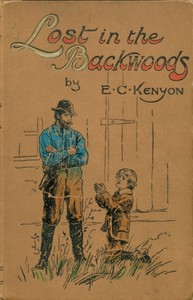
Lost in the backwoods — Reading Notes can be approached with a clearer sense of reading commitment from its source measurements: 25,145 words, 1 hr 50 min estimated reading time, and 3 detected text sections.
The text analysis averages about 13.9 words per sentence, while the detected sections provide another way to judge how the source is divided.
Project Gutenberg metadata also associates the work with “Christian life -- Juvenile fiction,” connecting these edition facts with the source record’s subject description.
Explore this collection
These alternatives are selected using recorded categories and estimated reading time.
About 112 minutes
Childrens Adventures
25,587 recorded words. 2 minutes difference from this book's estimate.
View Gutenberg source #69277About 119 minutes
Childrens Adventures
27,266 recorded words. 9 minutes difference from this book's estimate.
View Gutenberg source #70279About 100 minutes
Childrens Adventures
22,924 recorded words. 10 minutes difference from this book's estimate.
View Gutenberg source #71476Search stored excerpts and compare books → Choose by your preferences →
Choices use stored catalog measurements. Estimates vary with reading speed. A shared category is a catalog label, not a claim that two books have the same argument or literary quality.
Search reads excerpt text stored with this catalog and links to its associated Gutenberg record. The connection is stored in the site database; this tool does not recheck that every excerpt is word-for-word identical to that external record. Excerpt search does not cover every chapter and does not verify historical publication dates.
Catalog snapshot checked: 2026-09-26. Coverage: 91 public books, 91 available source excerpts.
Calculated from edition completeness, EPUB availability, text structure and catalogue metadata. Not a user rating.
Total of 100 points, scaled to a 2.5-5.0 range. Editions with an empty description or a missing EPUB file are not scored.
Public-domain source text
The source text is kept in the dedicated reader, separate from this catalogue record and its commentary.
The opening chapter of Lost in the Backwoods plunges readers into a train robbery in Michigan, where twelve-year-old Cyril Morton watches a masked brigand demand his father's money or life. The father's calm defiance and quick action—wresting the pistol from the robber—set the tone for a story that balances peril with moral resolve. The narrative voice is direct and sentimental, emphasizing Cyril's emotional reactions: he screams in agony, later feels consolation through others' apologies. The catalog subjects list Christian life, family reunions, and frontier life, but the excerpts reveal a stronger focus on captivity, moral transformation, and the boy's internal growth than on wilderness survival.
Despite the catalog subject 'Frontier and pioneer life,' the excerpts devote little space to wilderness skills or landscape description. The opening robbery occurs on a train, and later scenes take place in a saw-mill settlement and a bedroom. The frontier functions as a backdrop for moral tests rather than a physical challenge. Cyril's ordeal includes being lost in snow and attacked by bears (chapter titles), but the text dwells on his emotional state: 'his heart too sore to allow him to join in the usual fun.' The adventure is framed by Christian lessons—Cyril's defense of Indians leads to a beating, then apologies, and his father's reunion is marked by prayers of thanks.
The catalog lists 'Brigands and robbers' as a subject, and the excerpts show these figures are central to the plot. However, they are not merely villains. The robber Whiterock, condemned to die, seeks out Cyril's father to confess and reveal the boy's location. The narrative emphasizes contrition: 'they apologised for thrashing him, and promised that in future they would respect the rights even of poor Indians.' This pattern—wrongdoing followed by repentance—structures the story. The brigands are instruments of moral instruction, their crimes leading to opportunities for forgiveness and Christian redemption.
The excerpts build toward a highly emotional reunion. Cyril's father, thought dead, arrives at the saw-mill: 'Then Cyril flew across the boarded floor and flung himself into the open arms of the new-comer.' The dialogue is laden with religious gratitude: 'Thank God! Oh, thank God!' The father's backstory—he survived the robbery, testified against the brigands, and learned Cyril's location from a dying criminal—is revealed in a bedside conversation. This scene, not the wilderness, is the climax. The catalog subject 'Family reunions' accurately reflects the story's heart, but the excerpts suggest the reunion is earned through moral trials rather than mere search.
Readers should approach Lost in the Backwoods as a didactic adventure where physical dangers serve moral lessons. The excerpts show a narrative more concerned with character reform and Christian faith than with detailed frontier life. Pay attention to how the author uses the brigands' repentance and Cyril's suffering to reinforce the theme of divine providence. The story's structure—robbery, separation, trials, reunion—follows a pattern common in Victorian children's literature, but the specific setting in Michigan's pine forests gives it a distinct regional flavor.
That twelve-year-old boy, Cyril, waiting out the long Michigan woods with only faith to hold, always reminded me of the quiet hearth in Granfer, and One Christmas time — Inside the Classic. Both stories understand how a child’s patience is its own kind of courage. I often shelve them near each other, for they share a gentle, unshakeable belief that home is simply where the heart waits.
Your answers remain private and are stored only in this browser.