About 305 minutes
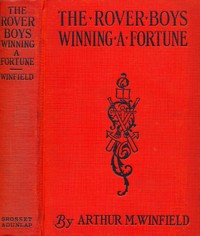
The Rover Boys winning a fortune; or, Strenuous days ashore and afloat — Edition Insights
Childrens Adventures
69,997 recorded words. 16 minutes difference from this book's estimate.
View Gutenberg source #69463
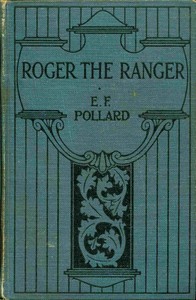
For Roger the ranger: A story of border life among the Indians — Edition Insights, the stored edition analysis reports 73,705 words, 5 hr 21 min estimated reading time, and 35 detected text sections.
The text analysis averages about 18.9 words per sentence, while the detected sections provide another way to judge how the source is divided.
Project Gutenberg metadata also associates the work with “Friendship -- Juvenile fiction,” connecting these edition facts with the source record’s subject description.
Explore this collection
These alternatives are selected using recorded categories and estimated reading time.
About 305 minutes
Childrens Adventures
69,997 recorded words. 16 minutes difference from this book's estimate.
View Gutenberg source #69463About 301 minutes
Childrens Adventures
69,126 recorded words. 20 minutes difference from this book's estimate.
View Gutenberg source #76142About 349 minutes
Childrens Adventures
80,145 recorded words. 28 minutes difference from this book's estimate.
View Gutenberg source #71181Search stored excerpts and compare books → Choose by your preferences →
Choices use stored catalog measurements. Estimates vary with reading speed. A shared category is a catalog label, not a claim that two books have the same argument or literary quality.
Search reads excerpt text stored with this catalog and links to its associated Gutenberg record. The connection is stored in the site database; this tool does not recheck that every excerpt is word-for-word identical to that external record. Excerpt search does not cover every chapter and does not verify historical publication dates.
Catalog snapshot checked: 2026-09-26. Coverage: 91 public books, 91 available source excerpts.
Calculated from edition completeness, EPUB availability, text structure and catalogue metadata. Not a user rating.
Total of 100 points, scaled to a 2.5-5.0 range. Editions with an empty description or a missing EPUB file are not scored.
Public-domain source text
The source text is kept in the dedicated reader, separate from this catalogue record and its commentary.
The novel opens not with Roger but with his uncle Charles Langlade, a New England hunter who insists on leaving his family to join the French and Indian cause, despite his mother's comparison to Esau selling his birthright. This biblical parallel, the physical struggle with his sister Loïs, and the quiet presence of “Father Nat” establish a domestic drama that quickly gives way to border warfare. The first chapter thus frames the central tension between family loyalty and the pull of the wilderness—a tension that will define Roger's own path when he later appears as a ranger.
The opening chapter introduces the Langlade household through a heated farewell. Charles Langlade, described as “a tall, handsome man of four- or five-and-twenty, in the picturesque dress of the New England hunter,” argues with his mother Martha, who accuses him of selling his birthright like Esau. His retort—“Then even as Esau I shall be a great hunter before the Lord”—reveals a character who reinterprets scripture to justify his choices. The scene is crowded with family members: the weeping sister Loïs, the younger brother Marcus, and the grey-headed “Father Nat,” who remains a silent observer. This domestic conflict sets up a pattern of divided loyalties that will recur throughout the narrative, as characters must choose between home and the frontier, between English and French alliances. The mother’s black ribbon, “token of her widowhood,” hints at prior loss, and Charles’s departure echoes an earlier absence. Readers should note how this family dynamic contrasts with the later camaraderie among the Rangers.
Later excerpts shift to the campaign of 1758, focusing on the death of Lord Howe and the disastrous attack on Ticonderoga. The narrative interweaves tactical detail with personal loss: “The death of this one man,” a contemporary observes, “was the ruin of fifteen thousand!” The description of Montcalm’s abattis—a barricade of trees “eight or nine feet high”—and the repeated assaults by the English are rendered with a historian’s precision. Yet the rangers themselves are peripheral to this set piece; Roger and his comrades “had taken no active part in the attack upon Ticonderoga,” instead remaining in the woods for border warfare. This distancing effect is noteworthy: the novel embeds its hero in a larger historical canvas without making him the center of every major event. The capture of Putman, his rescue by a French officer, and his friendship with Colonel Schuyler in captivity illustrate how the story uses real figures to anchor its fictional plot.
Pollard’s narrator frequently steps back from the action to cite contemporary observers or provide geographical context. For instance, the peninsula of Ticonderoga is described as “a rocky plateau, with low grounds on each side,” and the building of the abattis is explained in a single, efficient sentence. This documentary tone coexists with more dramatic passages, such as the French soldiers shouting “Long live our King! Long live our General!” while Montcalm works “with his coat off.” The narrator also editorializes: “The soul of Abercromby’s army expired with this young officer; an almost general languor crept over the men.” Such commentary gives the novel a pedagogical quality, as if written for young readers to learn history through adventure. The blend of direct quotation, summary, and moral judgment is consistent throughout the excerpts, suggesting that Pollard valued historical accuracy as much as narrative momentum.
Despite the title, Roger appears only indirectly in the provided excerpts—first as a name in the contents, then as part of “Roger and his Rangers” in the Ticonderoga section. The novel’s subtitle, “A Story of Border Life among the Indians,” and catalog subjects emphasize friendship and the French and Indian War. The excerpts show that the rangers operate as a band, with Roger and Putman “keeping up a border warfare, pursuing the French and shooting any who came in his way.” The capture of Putman and his kind treatment by Montcalm and Schuyler introduces a theme of honorable conduct between enemies. Readers should watch for how Roger’s friendships—with fellow rangers, with Native characters like Nadjii (a chapter title), and with historical figures—shape his decisions. The novel’s structure, with chapters like “A New Friendship” and “Silent Influence,” suggests that personal bonds are as central as battlefield action.
First-time readers will benefit from noting how Pollard balances family drama, historical exposition, and frontier adventure. The early chapters establish a moral framework—loyalty, sacrifice, and the cost of war—that the later battle scenes test. Pay attention to the role of secondary characters like Marcus and Loïs, who may reappear, and to the recurring motif of biblical allusion. The novel’s pace varies between intimate conversations and sweeping military descriptions; treat the historical passages as integral to the story, not as interruptions.
Reading about Roger’s loyalty to his friends at Ticonderoga made me think of a summer I spent following a scout through the woods in my mind. The Forest Pilot: A Story for Boy Scouts — Story, Setting & Ideas gave me that same quiet ache of wanting to be braver, just by watching someone else choose steadfastness. It’s a familiar, gentle feeling.
Create a short personal record of your experience with this book.