About 19 minutes
My twin kitties — A Reader’s Guide
Childrens Adventures
4,323 recorded words. 5 minutes difference from this book's estimate.
View Gutenberg source #68248
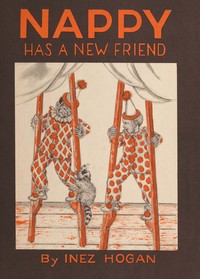
The catalog record for Nappy has a new friend — Themes and Context provides practical reading context through 5,305 words, 24 min estimated reading time, and 3 detected text sections.
The text analysis averages about 14.7 words per sentence, while the detected sections provide another way to judge how the source is divided.
Project Gutenberg metadata also associates the work with “Friendship -- Juvenile fiction,” connecting these edition facts with the source record’s subject description.
Explore this collection
These alternatives are selected using recorded categories and estimated reading time.
About 19 minutes
Childrens Adventures
4,323 recorded words. 5 minutes difference from this book's estimate.
View Gutenberg source #68248About 19 minutes
Childrens Adventures
4,172 recorded words. 5 minutes difference from this book's estimate.
View Gutenberg source #68254About 33 minutes
Childrens Adventures
7,418 recorded words. 9 minutes difference from this book's estimate.
View Gutenberg source #76014Search stored excerpts and compare books → Choose by your preferences →
Choices use stored catalog measurements. Estimates vary with reading speed. A shared category is a catalog label, not a claim that two books have the same argument or literary quality.
Search reads excerpt text stored with this catalog and links to its associated Gutenberg record. The connection is stored in the site database; this tool does not recheck that every excerpt is word-for-word identical to that external record. Excerpt search does not cover every chapter and does not verify historical publication dates.
Catalog snapshot checked: 2026-09-26. Coverage: 91 public books, 91 available source excerpts.
Calculated from edition completeness, EPUB availability, text structure and catalogue metadata. Not a user rating.
Total of 100 points, scaled to a 2.5-5.0 range. Editions with an empty description or a missing EPUB file are not scored.
Public-domain source text
The source text is kept in the dedicated reader, separate from this catalogue record and its commentary.
Inez Hogan’s Nappy has a new friend opens with a direct, conversational exchange: Nappy spots the Trashman and immediately proposes a ride to the dump. The narrative voice is lean, relying almost entirely on dialogue and simple action tags. Hogan lets the characters’ words carry the story, with minimal description of setting or emotion. The pace is brisk from the first page, as Nappy’s eagerness and the Trashman’s easygoing replies establish a rhythm of call-and-response that continues throughout the excerpt.
The story moves almost exclusively through spoken lines. Hogan rarely uses narration to explain what characters feel or think; instead, Nappy’s excitement and Tommy’s wariness emerge from what they say. For example, when Nappy asks “What’s collecting?” the Trashman’s answer—“That’s what I’m doing. I’m collecting trash.”—defines the term through action, not definition. The boys’ first exchange at the dump follows the same pattern: “Hello,” said Nappy. “Have you found anything?” “I found a brown jug,” said the boy. The dialogue is clipped, each line a short burst that keeps the scene moving. This technique gives the text a theatrical quality, as if the reader is overhearing a real conversation between children.
The dump setting turns scavenging into a game with its own rules. Nappy and Tommy immediately establish a code: “Finders keepers” governs ownership, and they trade items like door knobs, marbles, and a wagon wheel. The objects are modest—cracked jugs, dented tin boxes—but they matter deeply to the boys. Hogan uses these items to create small conflicts and negotiations. When Nappy offers a trade, Tommy refuses because “My big brother is building me a wagon and we need another wheel.” This line reveals Tommy’s home life without any direct exposition. The rivalry is friendly but real, grounded in the specific value each boy places on his finds.
The excerpt shows three distinct movements: the ride to the dump, the scavenging interlude, and the ride back. Each section has a different tempo. The opening ride is quick, built on Nappy’s eager questions and the Trashman’s short answers. At the dump, the pace slows as the boys explore and talk, with longer stretches of dialogue and more detailed descriptions of objects. The return ride picks up speed again, with the boys trading and bumping along. Hogan signals these shifts through changes in sentence length and the rhythm of the dialogue. The dump itself is a neutral ground where the boys meet as equals, their differences in background (suggested by the catalog subjects) hinted at only through passing remarks about siblings.
Readers should pay attention to how Hogan uses the Trashman as a quiet adult presence who enables the children’s independence without directing it. The story’s brevity—just over 5,000 words—means every line of dialogue and every object found carries weight. Notice how the boys’ relationship develops not through stated feelings but through shared activity and the small negotiations over their treasures.
There’s something tender about how those two boys in Nappy has a new friend find common ground in what others toss away—it reminded me of another quiet kind of sharing, the sort that lingers in Granfer, and One Christmas time — Inside the Classic. Old things, old stories, passed between hands. We don’t always notice the moment a friendship starts. But we remember the little objects that were there when it did.
Build a private reading journal entry for this title.