About 301 minutes
Children of the moor — Story, Setting & Ideas
Childrens Adventures
69,126 recorded words. 4 minutes difference from this book's estimate.
View Gutenberg source #76142
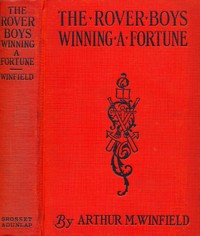
The Rover Boys winning a fortune; or, Strenuous days ashore and afloat — Edition Insights can be approached with a clearer sense of reading commitment from its source measurements: 69,997 words, 5 hr 5 min estimated reading time, and 44 detected text sections.
The text analysis averages about 15.8 words per sentence, while the detected sections provide another way to judge how the source is divided.
Project Gutenberg metadata also associates the work with “Sea stories,” connecting these edition facts with the source record’s subject description.
Explore this collection
These alternatives are selected using recorded categories and estimated reading time.
About 301 minutes
Childrens Adventures
69,126 recorded words. 4 minutes difference from this book's estimate.
View Gutenberg source #76142About 321 minutes
Childrens Adventures
73,705 recorded words. 16 minutes difference from this book's estimate.
View Gutenberg source #68694About 273 minutes
Childrens Adventures
62,744 recorded words. 32 minutes difference from this book's estimate.
View Gutenberg source #71750Search stored excerpts and compare books → Choose by your preferences →
Choices use stored catalog measurements. Estimates vary with reading speed. A shared category is a catalog label, not a claim that two books have the same argument or literary quality.
Search reads excerpt text stored with this catalog and links to its associated Gutenberg record. The connection is stored in the site database; this tool does not recheck that every excerpt is word-for-word identical to that external record. Excerpt search does not cover every chapter and does not verify historical publication dates.
Catalog snapshot checked: 2026-09-26. Coverage: 91 public books, 91 available source excerpts.
Calculated from edition completeness, EPUB availability, text structure and catalogue metadata. Not a user rating.
Total of 100 points, scaled to a 2.5-5.0 range. Editions with an empty description or a missing EPUB file are not scored.
Public-domain source text
The source text is kept in the dedicated reader, separate from this catalogue record and its commentary.
The story opens not with action but with a financial crisis: a Wall Street hold-up has stolen securities vital to The Rover Company. The first excerpt immediately establishes the stakes—possible bankruptcy and loss of fortunes built over years—and introduces Jack Rover in a serious, introspective mood. The narrative voice is direct, focusing on practical worries and emotional reactions, such as Jack’s choked voice when offered help by Uncle Randolph. This opening orients the reader toward a problem-driven plot rather than a leisurely adventure.
The excerpts ground the crisis in concrete figures: the company faces obligations of three hundred thousand dollars due within six weeks. This specificity gives weight to the characters’ anxiety. The text also reveals a layered family business structure—Dick, Tom, and Sam Rover are the senior partners, while their sons (Jack, Randy, Andy, Fred) are the younger generation. The hold-up threatens not just money but the family’s reputation and future. The author uses business terminology (securities, banks, creditors, extensions) to create a sense of realism, contrasting with the more fantastical treasure-hunt hinted at in the catalog subjects. Readers familiar with earlier Rover Boys books will recognize this blend of domestic and commercial peril.
As the excerpts progress, the focus narrows from the company’s fate to Jack’s personal anxieties. Alone in his room, he dwells on the photograph of Ruth Stevenson and worries about her father’s reaction and his own romantic prospects. The text introduces a rival, Joe Sedley, described as a “rich chap,” adding a layer of romantic tension. Jack’s internal monologue—wondering if Ruth will write, if he has a right to ask her to wait—reveals a vulnerable side. This shift from collective business crisis to individual emotional turmoil is a key structural move, showing how the financial disaster reverberates through personal relationships. The author uses this to deepen character and maintain reader engagement beyond the plot mechanics.
In the later excerpt, the four younger Rovers—Jack, Randy, Andy, and Fred—hold their own conference while the adults meet separately. This generational split is significant: the boys are not passive observers but active discussants of the crisis. Randy reports that his father cautioned him not to alarm his mother, highlighting the gendered emotional labor in the family. Fred notes his mother looks “as if somebody in the family had died,” a simile that underscores the severity. The boys’ discussion mirrors the adults’ in tone but is more direct, with Jack summarizing the financial obligations. This section positions the younger Rovers as protagonists-in-training, ready to take action. The series’ formula often involves the boys solving problems independently, and this scene sets up that expectation.
The excerpts reveal several hallmarks of the Rover Boys series: a large extended family, a mix of business and adventure, and a clear moral framework (hard work, loyalty, family solidarity). The introduction mentions that this is the tenth volume in the Second Series, and the author’s note assures readers it is “a complete story in itself.” However, the text assumes familiarity with previous characters and relationships—for instance, the mention of Uncle Randolph and the history of Anderson Rover’s health. New readers may need to infer backstory from context. The narrative voice is omniscient but focuses tightly on Jack’s perspective in key moments, a technique that builds empathy. The pacing is deliberate, with long paragraphs of introspection alternating with dialogue-driven scenes.
These excerpts suggest that the novel balances financial thriller elements with coming-of-age concerns. The opening crisis is not resolved quickly; instead, the author uses it to explore character and family dynamics. Readers should expect a plot that alternates between business negotiations and personal dilemmas, with the younger Rovers likely taking a more active role as the story progresses. The treasure trove hinted at in the catalog may emerge later, but the initial focus is firmly on recovery and resilience.
Sometimes I think of the Rover boys’ frantic pursuit of fortune, and how every splash and shout settles into the same quiet rhythm as other old friends. The royal banner — Edition Insights carries that same weathered patience—stories that know their own footsteps, content to walk them again, unhurried, like dust motes in afternoon light.
Use these questions to collect your thoughts before moving on.