About 39 minutes
Uncle Ben — Key Ideas to Explore
Childrens Adventures
8,789 recorded words. 6 minutes difference from this book's estimate.
View Gutenberg source #72325
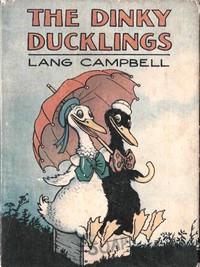
The dinky ducklings — A Closer Reading can be approached with a clearer sense of reading commitment from its source measurements: 7,418 words, 33 min estimated reading time, and 6 detected text sections.
The text analysis averages about 17.2 words per sentence, while the detected sections provide another way to judge how the source is divided.
Project Gutenberg metadata also associates the work with “Birds -- Juvenile fiction,” connecting these edition facts with the source record’s subject description.
Explore this collection
These alternatives are selected using recorded categories and estimated reading time.
About 39 minutes
Childrens Adventures
8,789 recorded words. 6 minutes difference from this book's estimate.
View Gutenberg source #72325About 24 minutes
Childrens Adventures
5,305 recorded words. 9 minutes difference from this book's estimate.
View Gutenberg source #68563About 42 minutes
Childrens Adventures
9,546 recorded words. 9 minutes difference from this book's estimate.
View Gutenberg source #72363Search stored excerpts and compare books → Choose by your preferences →
Choices use stored catalog measurements. Estimates vary with reading speed. A shared category is a catalog label, not a claim that two books have the same argument or literary quality.
Search reads excerpt text stored with this catalog and links to its associated Gutenberg record. The connection is stored in the site database; this tool does not recheck that every excerpt is word-for-word identical to that external record. Excerpt search does not cover every chapter and does not verify historical publication dates.
Catalog snapshot checked: 2026-09-26. Coverage: 91 public books, 91 available source excerpts.
Calculated from edition completeness, EPUB availability, text structure and catalogue metadata. Not a user rating.
Total of 100 points, scaled to a 2.5-5.0 range. Editions with an empty description or a missing EPUB file are not scored.
Public-domain source text
The source text is kept in the dedicated reader, separate from this catalogue record and its commentary.
The story opens with a four-line verse that establishes a rhythmic pattern: "Peter was a white duck, Puddle was black: / Peter could waddle / And Puddle could quack." This couplet-like structure immediately sets up a contrast between the two brothers—one white, one black—that recurs throughout the narrative. The verse form returns only at the very end, creating a frame. The prose that follows describes their physical features in precise, child-friendly terms: "shiny eyes that looked like yellow shoe buttons" and "yellow bills to pick up their food." The description of their webbed feet as "cunning toes on each foot, all joined together so they could swim" shows attention to anatomical detail while maintaining a playful tone.
The narrative structure is episodic, moving the ducklings from one encounter to the next. After the opening swimming lesson, the plot is set in motion by an invitation to visit Aunt Daffy and Uncle Dilly. The journey is punctuated by meetings with Mrs. Hen, Mrs. Bunny-Brown, and old Toby Turtle. Each encounter provides a small adventure or lesson, and the fox serves as a recurring threat. The journey's endpoint is clearly signaled: "Duckville on the Ditch." The episodes are linked by the ducklings' repeated retelling of their adventures to each new character, reinforcing the story's events for young readers.
Peter and Puddle are distinguished not only by color but by temperament. During the swimming lesson, Peter exclaims, "See how easy it is!" while Puddle sputters, "My feet want to stay up and my head down." This contrast continues throughout: Peter is confident, Puddle more hesitant. The father duck helps Puddle by taking his wing, showing a gentle teaching moment. The brothers' unity is emphasized when they both offer their toy duck Red Pepper to Toby Turtle as a gift, acting "unselfishly." The black-and-white pairing is a simple but effective device for young readers to identify with one or the other.
Red Pepper, a toy duck on wheels, is introduced as a possession but becomes a character in his own right. Described as having "painted eyes" that "never so much as blinked," he is the only one awake during Toby Turtle's long stories. At the end, Red Pepper "sat up on the bank and kept guard" while the turtle slept in the mud. The ducklings give him away to Toby, who appreciates that the toy will "just sit and listen to my stories and never interrupt." This silent observer adds a layer of whimsy and continuity, as he is present for all the later events without participating.
The story's movement alternates between hurried travel and restful pauses. The ducklings "had been hurrying and they were tired out" when they meet Toby Turtle. He advocates a "slow steady pace," saying "one could last mighty near all day and night at that rate." This contrast in tempo is mirrored in the prose: short, action-filled sentences during chases, and longer, descriptive passages during meals or storytelling. The final scene shows Uncle Daffy checking windows and doors, blowing out a candle, and tiptoeing to bed—a quiet, secure ending that slows the pace to a close.
Readers may notice how the story's frame—from verse to verse—and its episodic structure make it suitable for reading aloud in segments. The recurring motif of storytelling within the story (the ducklings recounting their adventures, Toby telling tales) invites children to participate in the narrative. The illustrations mentioned in the foreword—ducks eating strawberries, diving with Toby, bouncing in a little red wagon—are not present in the text but are referenced, suggesting the book was designed as a visual as well as a verbal experience.
The rain drummed on the windowsill that day, and I kept returning to the quiet patience of Red Pepper, watching Peter and Puddle bicker their way toward Auntie’s house. There is something comforting about a witness who never interrupts. That same hush seems to hover over the nursery in Nappy has a new friend — Themes and Context, where adjustments happen softly, without drama, like sunlight moving across a floor.
Your answers remain private and are stored only in this browser.