About 178 minutes
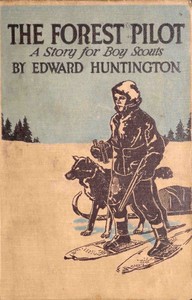
The Forest Pilot: A Story for Boy Scouts — Story, Setting & Ideas
Childrens Adventures
40,864 recorded words. 0 minutes difference from this book's estimate.
View Gutenberg source #68506
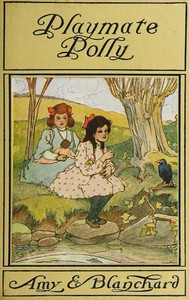
The catalog record for Playmate Polly — Context and Discussion provides practical reading context through 40,890 words, 2 hr 58 min estimated reading time, and 17 detected text sections.
The text analysis averages about 14.2 words per sentence, while the detected sections provide another way to judge how the source is divided.
Project Gutenberg metadata also associates the work with “Friendship -- Juvenile fiction,” connecting these edition facts with the source record’s subject description.
Explore this collection
These alternatives are selected using recorded categories and estimated reading time.
About 178 minutes
Childrens Adventures
40,864 recorded words. 0 minutes difference from this book's estimate.
View Gutenberg source #68506About 183 minutes
Childrens Adventures
41,934 recorded words. 5 minutes difference from this book's estimate.
View Gutenberg source #73660About 186 minutes
Childrens Adventures
42,647 recorded words. 8 minutes difference from this book's estimate.
View Gutenberg source #70295Search stored excerpts and compare books → Choose by your preferences →
Choices use stored catalog measurements. Estimates vary with reading speed. A shared category is a catalog label, not a claim that two books have the same argument or literary quality.
Search reads excerpt text stored with this catalog and links to its associated Gutenberg record. The connection is stored in the site database; this tool does not recheck that every excerpt is word-for-word identical to that external record. Excerpt search does not cover every chapter and does not verify historical publication dates.
Catalog snapshot checked: 2026-09-26. Coverage: 91 public books, 91 available source excerpts.
Calculated from edition completeness, EPUB availability, text structure and catalogue metadata. Not a user rating.
Total of 100 points, scaled to a 2.5-5.0 range. Editions with an empty description or a missing EPUB file are not scored.
Public-domain source text
The source text is kept in the dedicated reader, separate from this catalogue record and its commentary.
Jessie Loomis measures her world in landmarks: Bridge, Railroad, Hill. On her way to school she recites them forward; on the way home, backward. The railroad crossing is guarded by Ezra Limpett, who once let her hold the red flag when a train was late. The opening chapter establishes a child's geography of ritual and small permissions, where a flag held tight and a stone to stand on become moments of thrilling responsibility.
But the same chapter introduces a tension: Walter, home from boarding school, dismisses Jessie's plans and calls her 'sneaky.' The book's early pages set up a pattern of contested spaces—the grotto by the brook, the yellow house, the apple basket for Ezra—where Jessie must negotiate her place among siblings, new friends, and the rules of home.
The three stations of Jessie's walk—Bridge, Railroad, Hill—are more than directions. They form a private code that orders her day and gives her a sense of control. On the bridge she peeps at running water; at the railroad she greets Ezra, whose red flag and knowledge of engine numbers ("589 ain't came along yet") turn a crossing into a theater of near-danger. The hill itself is both a physical climb and a boundary between home and school.
These landmarks also mark where Jessie is allowed to be independent. Her father trusts Ezra to watch for her; the flag-holding episode is a rare privilege. Yet the same landscape becomes contested when Walter returns. He dismisses her plan to bring apples to Ezra, claiming he and Max can carry a bigger basket. Jessie's mother intervenes, arranging for a phaeton ride, but the friction shows how the same familiar route can become a site of sibling rivalry.
Adele, the neighbor in the yellow house, offers Jessie a refuge from Walter's teasing. The two girls create a secret grotto by the brook, a space they must protect from the boys. When Max and Walter discover them, the girls quickly cover the grotto and retreat. Jessie explains: "if he knew about Playmate Polly and Peter Pan's grotto he would be sure to do something to them just to pay me back."
The grotto and the imaginary Playmate Polly are Jessie's inventions, a private world that contrasts with the public, rule-bound spaces of home and school. The back porch and summer-house become alternative playgrounds. The book repeatedly sets up pairs of spaces—the yellow house versus Jessie's home, the grotto versus the boys' territory—and shows how Jessie navigates between them, sometimes by retreat, sometimes by negotiation.
Walter's return from boarding school shifts the household dynamics. He asserts dominance by claiming the apple-errand and calling Jessie "sneaky" and "tattletale." Jessie's response—"Pff!" with a toss of her head—is a child's gesture of defiance, but she also seeks her mother's support. Mrs. Loomis listens and arranges a solution that honors Jessie's original plan, telling her husband at supper to select the finest apples.
The family scenes show a pattern: Jessie appeals to her mother, Walter appeals to his sense of seniority, and the parents mediate. Jessie's father is asked to choose apples; her mother drives the phaeton. The book does not resolve the rivalry quickly—Jessie still avoids Walter by spending time at the yellow house—but it shows a household where grievances are aired at the supper table and small victories are won through parental attention.
Readers may notice how often Jessie's world is organized in threes: the three landmarks, the three siblings (including Max), the three main settings of home, school, and the yellow house. The grotto and Playmate Polly are never fully explained in the excerpts, but they function as a counterweight to the everyday rules. Pay attention to how Jessie's voice shifts when she talks to her mother versus when she talks to Walter—the same girl who holds a flag at the railroad also knows when to retreat to a summer-house.
Reading about Jessie’s grotto by the brook, I remembered my own childhood hiding spot behind the garage, where I’d whisper secrets to no one. Playmate Polly holds that same quiet ache of invented company. Pages of The Wolf-slayer; [Margaret Kaurner] — A Closer Reading once gave me that familiar hush, a solitary world that felt more real than the lawn outside.
Build a private reading journal entry for this title.