About 189 minutes
The Ranch Girls and the silver arrow — A Closer Reading
Childrens Adventures
43,453 recorded words. 3 minutes difference from this book's estimate.
View Gutenberg source #69649
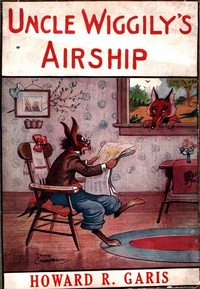
This digital edition of Uncle Wiggily's Airship — Edition Insights is described by source-level measurements including 42,647 words, 3 hr 6 min estimated reading time, and 47 detected text sections.
The text analysis averages about 13.8 words per sentence, while the detected sections provide another way to judge how the source is divided.
Project Gutenberg metadata also associates the work with “Animals -- Juvenile fiction,” connecting these edition facts with the source record’s subject description.
Explore this collection
These alternatives are selected using recorded categories and estimated reading time.
About 189 minutes
Childrens Adventures
43,453 recorded words. 3 minutes difference from this book's estimate.
View Gutenberg source #69649About 183 minutes
Childrens Adventures
41,934 recorded words. 3 minutes difference from this book's estimate.
View Gutenberg source #73660About 178 minutes
Childrens Adventures
40,864 recorded words. 8 minutes difference from this book's estimate.
View Gutenberg source #68506Search stored excerpts and compare books → Choose by your preferences →
Choices use stored catalog measurements. Estimates vary with reading speed. A shared category is a catalog label, not a claim that two books have the same argument or literary quality.
Search reads excerpt text stored with this catalog and links to its associated Gutenberg record. The connection is stored in the site database; this tool does not recheck that every excerpt is word-for-word identical to that external record. Excerpt search does not cover every chapter and does not verify historical publication dates.
Catalog snapshot checked: 2026-09-26. Coverage: 91 public books, 91 available source excerpts.
Calculated from edition completeness, EPUB availability, text structure and catalogue metadata. Not a user rating.
Total of 100 points, scaled to a 2.5-5.0 range. Editions with an empty description or a missing EPUB file are not scored.
Public-domain source text
The source text is kept in the dedicated reader, separate from this catalogue record and its commentary.
Howard R. Garis builds his bedtime stories around a distinctive verbal rhythm, where characters speak in polite, elaborate phrases that contrast sharply with mundane problems. In the excerpt, Uncle Wiggily addresses his housekeeper as “Nurse Jane” and uses formal constructions like “Pray pardon and excuse me” even when asking about supper. This elevated diction, paired with the rabbit’s repeated “sad and disappointed like” refrain, creates a comic tension between the character’s dignity and the triviality of a delayed meal.
Garis also relies on sensory details that are deliberately mismatched: the “nice smell of ice cream frying on the stove” and “peanuts boiling in the tea kettle” describe a supper that never arrives. These impossible culinary images signal that the story operates in a playful, illogical world where domestic rules are bent for humor.
Garis uses repetition not only for emphasis but to shape the narrative’s pacing. In the carpet-beating episode, Uncle Wiggily “waited and waited” while Nurse Jane “kept on beating the dusty carpet with her long tail.” The phrase “dusty carpet” recurs four times in a short span, reinforcing the obstacle that delays supper. Similarly, the rabbit’s exclamation “Oh, my!” appears as a verbal tic, signaling his growing impatience. This technique mirrors the oral tradition of bedtime stories, where repeated phrases help young listeners follow the plot and anticipate the resolution.
The author also repeats narrative formulas across stories. The closing line of the first excerpt—“if the ivy vine doesn’t climb up in my window and pull the clothes off the rubber doll’s bed I’ll tell you next about…”—is a whimsical conditional that links episodes. Such patterned endings create a sense of continuity while inviting the reader to expect another absurd interruption.
Uncle Wiggily’s speech is marked by excessive politeness and self-conscious formality. He says “Ahem! Pray pardon and excuse me” and “I have an idea!” with theatrical emphasis. Nurse Jane, by contrast, uses a more direct, practical tone: “I can not give you your supper, Wiggy, until I have beaten all the dust out of this dusty carpet.” The nickname “Wiggy” (used “for short, because she was very busy”) hints at a familiar relationship beneath the formal address.
The animal boys speak in the clipped, energetic language of a baseball game: “That’s the way to run! Throw the ball! Slide to home base!” Garis renders their shouts without quotation marks, blending them into the narrative as a sudden burst of noise. This contrast between the rabbit’s measured sentences and the boys’ exclamations highlights the different social spheres within the story.
The airship itself is introduced with a deadpan description that mixes the mundane and the fantastical: it is “made from one of Nurse Jane’s old clothes baskets, some toy circus balloons to lift it in the air.” Garis never explains how such a contraption works; instead, he treats it as a normal mode of transport. In the second excerpt, Uncle Wiggily is “putting a new hair ribbon on his airship, so that it might flutter in the wind and look pretty.” This detail—a ribbon for decoration—underscores the story’s logic, where aesthetics matter as much as function.
The airship appears only briefly in the provided text, but its presence reframes everyday errands. When Nurse Jane asks for bread, sugar, and milk, Uncle Wiggily volunteers to fly to the store. The juxtaposition of a fantastical vehicle with a grocery list is typical of Garis’s humor: the extraordinary is treated as routine, while ordinary tasks become adventures.
Garis frequently addresses the reader with phrases like “You see he said tea to be more polite like” and “You see she called him Wiggy for short.” These asides create an intimate, explanatory tone, as if the narrator is confiding in the child listener. The narrator also inserts mild evaluations: “the rabbit gentleman” is a recurring epithet that maintains a respectful distance, while “sad and disappointed like” softens the emotion with a colloquial tag.
The author uses parenthetical clarifications to define unfamiliar terms or behaviors. For example, when Uncle Wiggily says “tea,” the narrator adds “You see he said tea to be more polite like.” This technique ensures that young readers grasp social nuances without breaking the story’s flow. The narrator’s voice is consistently warm and slightly old-fashioned, matching the Edwardian setting implied by the rabbit’s “tall silk hat.”
Readers attentive to Garis’s word choices will notice how he balances repetition with variation, formal speech with colloquial asides, and fantastical elements with domestic details. The excerpts suggest that the airship functions less as a plot device than as a symbol of the stories’ imaginative freedom—where a clothes basket can fly and a ribbon is a necessary adornment. These authorial choices reward a slow reading that savors the rhythm of each sentence.
There’s something about Garis's odd, rhythmic repetitions in Uncle Wiggily’s Airship that stays with you—the way familiar words become a quiet comfort. It reminded me of that same lingering warmth in The Y. M. C. A. boys on Bass Island — Inside the Classic, where simple scenes hold a tender, almost domestic absurdity. I still think about those quiet moments.
A brief reflection can help important ideas stay with you longer.