About 152 minutes
Four little Blossoms through the holidays — Edition Insights
Childrens Adventures
34,884 recorded words. 4 minutes difference from this book's estimate.
View Gutenberg source #69776
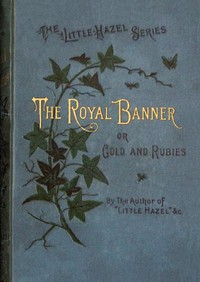
The source record for The royal banner — Edition Insights measures this digital text at 35,758 words, 2 hr 36 min estimated reading time, and 3 detected text sections.
The text analysis averages about 21.6 words per sentence, while the detected sections provide another way to judge how the source is divided.
Project Gutenberg metadata also associates the work with “Christian life -- Juvenile fiction,” connecting these edition facts with the source record’s subject description.
Explore this collection
These alternatives are selected using recorded categories and estimated reading time.
About 152 minutes
Childrens Adventures
34,884 recorded words. 4 minutes difference from this book's estimate.
View Gutenberg source #69776About 152 minutes
Childrens Adventures
34,782 recorded words. 4 minutes difference from this book's estimate.
View Gutenberg source #74793About 149 minutes
Childrens Adventures
34,154 recorded words. 7 minutes difference from this book's estimate.
View Gutenberg source #70614Search stored excerpts and compare books → Choose by your preferences →
Choices use stored catalog measurements. Estimates vary with reading speed. A shared category is a catalog label, not a claim that two books have the same argument or literary quality.
Search reads excerpt text stored with this catalog and links to its associated Gutenberg record. The connection is stored in the site database; this tool does not recheck that every excerpt is word-for-word identical to that external record. Excerpt search does not cover every chapter and does not verify historical publication dates.
Catalog snapshot checked: 2026-09-26. Coverage: 91 public books, 91 available source excerpts.
Calculated from edition completeness, EPUB availability, text structure and catalogue metadata. Not a user rating.
Total of 100 points, scaled to a 2.5-5.0 range. Editions with an empty description or a missing EPUB file are not scored.
Public-domain source text
The source text is kept in the dedicated reader, separate from this catalogue record and its commentary.
The opening chapter introduces Nora and Eric, orphaned siblings visiting their aunt in a Highland mansion, where Nora admires a diadem of gold and rubies left by their late mother. The mother’s parting words—that there is something “better than gold and above rubies”—set up a moral framework, but the excerpt dwells more on the children’s sensory delight in the jewels and the aunt’s guarded response. The catalog subjects list Christian life and conduct of life as primary, yet the early pages focus on material beauty and sibling banter rather than explicit piety.
The gold-and-ruby diadem is the most concrete object in the excerpts, yet its role is ambiguous. Nora wishes she were old enough to wear it; Eric covets the gold. The aunt immediately locks it away, and the mother’s moral is left unexplained. The catalog subject “Christian life” might connect to the idea of valuing spiritual riches over material ones, but the text itself does not develop this beyond a single line. The diadem appears only in Chapter I and is not mentioned again in the later excerpts, suggesting it may function more as a symbolic hook than a sustained plot element.
The excerpts contain two distinct settings: the old-fashioned country mansion and the ascent of Schiehallion. The mountain climb is described in detail—mist, a guide, a picnic abandoned for the summit, and a shepherd who lifts his cap at a psalm. The children are “mountain-bred” and enjoy the heather. This physical adventure contrasts with the catalog subject “Families,” which is present only through the siblings’ interactions. The setting is specific and well-observed, but the moralizing is sparse; the shepherd’s reverence is the closest the text comes to explicit Christian teaching.
The excerpts introduce several characters: Nora, Eric, their aunt, cousins, and a boy named Pedro. Eric writes home that his cousins “think a great deal about dress” and attend evening parties, while he prefers school and games. Pedro is described as “a splendid little fellow” who sometimes reminds Eric of Ronald. These contrasts suggest a theme of worldly versus godly living, but the excerpts do not show any conflict or resolution. The catalog subject “Conduct of life” is implied but not dramatized; the reader sees only Eric’s letter and the climb, not the moral choices that might follow.
The excerpts from The Royal Banner offer a vivid Highland setting and a clear symbolic object, but the promised moral framework remains largely implicit. Readers interested in how the diadem’s lesson unfolds—or whether the cousins’ frivolity is ever challenged—will need to consult the full text. The catalog subjects point toward a didactic story, but the available evidence suggests a narrative that balances adventure with only occasional piety.
Holding that old copy of The Royal Banner, I kept thinking about the ruby diadem’s promise—so much weight placed on a lesson barely shown. Then my mind wandered to another orphan, Ruth, whose Alaska trek taught worth through action, not inheritance. It felt like the same quiet question, asked differently. Ruth Fielding in Alaska — Text and Context lingers with me like a half-remembered footnote to that childhood picnic.
Save your reaction, strongest insight, and memorable passage.