About 186 minutes
Uncle Wiggily's Airship — Edition Insights
Childrens Adventures
42,647 recorded words. 3 minutes difference from this book's estimate.
View Gutenberg source #70295
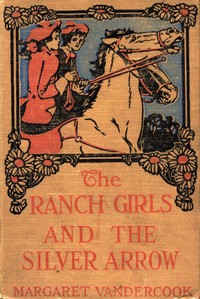
The source record for The Ranch Girls and the silver arrow — A Closer Reading measures this digital text at 43,453 words, 3 hr 9 min estimated reading time, and 22 detected text sections.
The text analysis averages about 14.9 words per sentence, while the detected sections provide another way to judge how the source is divided.
Project Gutenberg metadata also associates the work with “Western stories,” connecting these edition facts with the source record’s subject description.
Explore this collection
These alternatives are selected using recorded categories and estimated reading time.
About 186 minutes
Childrens Adventures
42,647 recorded words. 3 minutes difference from this book's estimate.
View Gutenberg source #70295About 183 minutes
Childrens Adventures
41,934 recorded words. 6 minutes difference from this book's estimate.
View Gutenberg source #73660About 196 minutes
Childrens Adventures
44,965 recorded words. 7 minutes difference from this book's estimate.
View Gutenberg source #74082Search stored excerpts and compare books → Choose by your preferences →
Choices use stored catalog measurements. Estimates vary with reading speed. A shared category is a catalog label, not a claim that two books have the same argument or literary quality.
Search reads excerpt text stored with this catalog and links to its associated Gutenberg record. The connection is stored in the site database; this tool does not recheck that every excerpt is word-for-word identical to that external record. Excerpt search does not cover every chapter and does not verify historical publication dates.
Catalog snapshot checked: 2026-09-26. Coverage: 91 public books, 91 available source excerpts.
Calculated from edition completeness, EPUB availability, text structure and catalogue metadata. Not a user rating.
Total of 100 points, scaled to a 2.5-5.0 range. Editions with an empty description or a missing EPUB file are not scored.
Public-domain source text
The source text is kept in the dedicated reader, separate from this catalogue record and its commentary.
The novel opens with four sisters leading ponies through a narrow canyon, lost and anxious about being late for their father's return with a new stepmother. The oldest, Lina, recites a line of poetry—"We yearned beyond the sky-line, where the strange roads go down"—to deflect tension. The girls are identified as daughters of Jim Colter of the Rainbow Ranch, ages eight to fifteen. The catalog subjects list "Western stories" and "Ranch life," but the excerpt focuses less on landscape description and more on the sisters' internal dynamics and their reluctance toward the new marriage.
The second excerpt depicts a lawn-party election for a new club. Cecil and Eric Lawton distribute ballots, and Jeanette Colter receives eight votes to the boys' six each. Instead of accepting, Jeanette "absolutely decline[s]" in an excited, tearful manner unusual for her. She insists a boy should be president and blurts out that she hopes to leave the neighborhood soon—a surprise to her sisters. The scene reveals Jeanette's strong aversion to leadership and hints at a private plan. The silver arrow, mentioned as a prize for a riding contest, is not yet awarded; the club decides to wait for adult input. This episode shows how the narrative uses social rituals to expose character conflict.
Though the book is titled The Ranch Girls and the Silver Arrow, the arrow itself appears only in the club's discussion. Martha Putnam tells Jeanette that after winning a racing contest, there was talk of awarding her the silver arrow, but the club postponed the decision until officers were elected. The arrow is thus presented as a token of courage and honor, not yet earned. The catalog subject "Young women -- Juvenile fiction" aligns with this focus on character tests, but the excerpt does not show the arrow's origin or significance beyond the club's rules. Readers must infer its value from the characters' reverence.
The opening chapter establishes a hierarchy among the four sisters: Lina is the anxious oldest, Jeanette the defiant second, and the younger two, Via and Eda, are less defined. Jeanette's outburst at the election reveals a rift—she has not told her family about her intention to leave. Lina's interjection ("Why, Jeanette, what in the world do you mean?") underscores the secrecy. The catalog subject "Ranch life -- Juvenile fiction" is present in setting, but the excerpts emphasize emotional conflict over ranch work. The sisters' relationships, particularly Jeanette's isolation, drive the early plot more than the Wyoming landscape.
Readers should note that the excerpts cover only the first two chapters and a later election scene; the complete novel likely develops Jeanette's secret, the silver arrow's fate, and the stepmother's integration. The catalog subjects provide a broad frame, but the text itself prioritizes character psychology over Western action. Pay attention to how the sisters' voices differ and how the arrow functions as a narrative device rather than a literal treasure.
There’s something tender about those four sisters reciting poetry while lost, that ache of wanting both home and escape. It reminded me of another quiet book, Milly's errand — Reading Notes, where a similar longing lingers in the margins. I keep thinking how those old novels understood that we’re often most honest when we’re pretending to be somewhere else.
Create a short personal record of your experience with this book.