About 76 minutes
Whilst father was fighting — A Closer Reading
Childrens Adventures
17,402 recorded words. 9 minutes difference from this book's estimate.
View Gutenberg source #70920
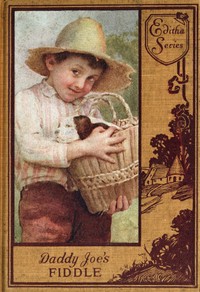
For Daddy Joe's fiddle — A Closer Reading, the stored edition analysis reports 19,346 words, 1 hr 25 min estimated reading time, and 19 detected text sections.
The text analysis averages about 14.4 words per sentence, while the detected sections provide another way to judge how the source is divided.
Project Gutenberg metadata also associates the work with “Orphans -- Juvenile fiction,” connecting these edition facts with the source record’s subject description.
Explore this collection
These alternatives are selected using recorded categories and estimated reading time.
About 76 minutes
Childrens Adventures
17,402 recorded words. 9 minutes difference from this book's estimate.
View Gutenberg source #70920About 76 minutes
Childrens Adventures
17,388 recorded words. 9 minutes difference from this book's estimate.
View Gutenberg source #72998About 94 minutes
Childrens Adventures
21,610 recorded words. 9 minutes difference from this book's estimate.
View Gutenberg source #74703Search stored excerpts and compare books → Choose by your preferences →
Choices use stored catalog measurements. Estimates vary with reading speed. A shared category is a catalog label, not a claim that two books have the same argument or literary quality.
Search reads excerpt text stored with this catalog and links to its associated Gutenberg record. The connection is stored in the site database; this tool does not recheck that every excerpt is word-for-word identical to that external record. Excerpt search does not cover every chapter and does not verify historical publication dates.
Catalog snapshot checked: 2026-09-26. Coverage: 91 public books, 91 available source excerpts.
Calculated from edition completeness, EPUB availability, text structure and catalogue metadata. Not a user rating.
Total of 100 points, scaled to a 2.5-5.0 range. Editions with an empty description or a missing EPUB file are not scored.
Public-domain source text
The source text is kept in the dedicated reader, separate from this catalogue record and its commentary.
From its opening chapter, Daddy Joe's Fiddle establishes a pattern of movement between constrained domestic spaces and moments of musical release. The narrative follows Chee, a mixed-race orphan, as she navigates the household of her Aunt Mean, where the fiddle—her late father's instrument—becomes both a secret treasure and a source of conflict. The story's structure alternates between interior scenes of hushed rebellion and outdoor episodes where Chee's connection to music deepens. This note traces three specific structural and imagistic patterns: the contrast between stairways and open windows, the fiddle as a vessel for memory, and the way Chee's voice shifts between silence and song.
The novel repeatedly places Chee on stairways and at windows—thresholds between obedience and defiance. In Chapter I, she climbs the stairs at midnight, then sits by an open window to unbraid her hair, her "brown hands" clenched in frustration. The stairway is creaking, the window frames a moonlit road; both are transitional spaces where Chee can voice thoughts she suppresses elsewhere. Later, when Cousin Gertrude calls her downstairs to meet Mr. Farrar, Chee peers "through the parlor blinds" before reluctantly descending. These architectural details mirror her social position: she is always between worlds, never fully inside or outside. The window recurs as a site of longing—she watches the road, listens for wheels, and dreams of the concert hall. Each threshold scene advances the central tension between Aunt Mean's strictures and Chee's yearning for music.
Daddy Joe's fiddle is not merely a prop but a charged object that carries the father's presence and the child's defiance. Chee recalls that her father "made music on one" and called it his "dear old fiddle." The instrument becomes a secret she guards from Aunt Mean, who calls music "wicked." In Chapter I, Chee resolves: "I just won't let any one hurt it, either, I won't." The fiddle is linked to heaven and flight—"It made me want to fly right up to heaven"—contrasting with Aunt Mean's earthbound scrutiny of "different kinds of stuffs" on bonnets. Later, the illustration caption describes "all the plaintive story of a dying race" stored in the little red case, suggesting the fiddle carries cultural memory beyond Chee's personal loss. The object thus structures the plot: it is hidden, protected, and eventually played, each action marking a step in Chee's growth.
Chee's speech alternates between near-silence and sudden, artless outpourings. The narrator notes early that "older people than Chee have learned to be silent; in her case, lessons had been unnecessary." Yet when she does speak, her voice is direct and uncalculating. To Mr. Farrar she says, "I don't know just what to call you yet," then proposes "Cousin Herman" with a logic that disarms adults. Her whispered rebellion in Chapter I—"Oh, the music! The music!"—is a torrent of feeling that contrasts with her usual reticence. This vocal pattern mirrors the fiddle itself: silent when hidden, expressive when played. The narrative voice also shifts, moving from close third-person focalization through Chee to broader commentary, as when it remarks on her "artlessness" and "open confidence." These modulations keep the reader attuned to what Chee cannot or will not say aloud.
The story's scenes are linked by characters moving through the house and grounds: from the upstairs bedroom to the parlor, from the veranda to the carriage block. Each shift in setting corresponds to a change in social dynamics. In Chapter X, Chee descends from her room to meet Mr. Farrar on the veranda, a semi-public space where Aunt Mean's surveillance is visible through lace curtains. The carriage ride that follows takes Chee and Gertrude away from the house entirely, allowing freer conversation. Bickford uses these movements to control the flow of information and emotion. The reader, like Chee, is always aware of who is listening—Aunt Mean's "steel blue" eyes, the servants, the neighbors. The result is a narrative that feels both intimate and constrained, its structure echoing Chee's own predicament: she can move, but only within limits set by others.
Readers attentive to the novel's architecture will notice how Bickford builds meaning through small, repeated gestures: a hand clenched, a glance toward a window, a fiddle case hidden under a bed. These details reward close attention without requiring knowledge of the full plot. The story's power lies not in dramatic events but in the quiet accumulation of such moments, each one a note in a melody that Chee is learning to play for herself.
Reading about Chee’s fiddle as both cage and escape, I found myself drifting to that other story where the wolf-slayer’s blade works the same way—a tool that binds even as it frees. Both books seem to whisper that objects carry our contradictions. The quiet ache of that connection lingered, like a half-remembered tune. The Wolf-slayer; [Margaret Kaurner] — A Closer Reading surfaced unbidden, and I simply sat with the thought.
Your answers remain private and are stored only in this browser.