About 61 minutes
A tale of three weeks — Context and Discussion
Childrens Adventures
13,945 recorded words. 4 minutes difference from this book's estimate.
View Gutenberg source #70935
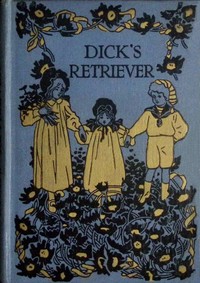
This digital edition of Dick's retriever — Inside the Classic is described by source-level measurements including 12,946 words, 57 min estimated reading time, and 2 detected text sections.
The text analysis averages about 15.9 words per sentence, while the detected sections provide another way to judge how the source is divided.
Project Gutenberg metadata also associates the work with “Christian life -- Juvenile fiction,” connecting these edition facts with the source record’s subject description.
Explore this collection
These alternatives are selected using recorded categories and estimated reading time.
About 61 minutes
Childrens Adventures
13,945 recorded words. 4 minutes difference from this book's estimate.
View Gutenberg source #70935About 45 minutes
Childrens Adventures
10,211 recorded words. 12 minutes difference from this book's estimate.
View Gutenberg source #73659About 45 minutes
Childrens Adventures
10,187 recorded words. 12 minutes difference from this book's estimate.
View Gutenberg source #74051Search stored excerpts and compare books → Choose by your preferences →
Choices use stored catalog measurements. Estimates vary with reading speed. A shared category is a catalog label, not a claim that two books have the same argument or literary quality.
Search reads excerpt text stored with this catalog and links to its associated Gutenberg record. The connection is stored in the site database; this tool does not recheck that every excerpt is word-for-word identical to that external record. Excerpt search does not cover every chapter and does not verify historical publication dates.
Catalog snapshot checked: 2026-09-26. Coverage: 91 public books, 91 available source excerpts.
Calculated from edition completeness, EPUB availability, text structure and catalogue metadata. Not a user rating.
Total of 100 points, scaled to a 2.5-5.0 range. Editions with an empty description or a missing EPUB file are not scored.
Public-domain source text
The source text is kept in the dedicated reader, separate from this catalogue record and its commentary.
The story opens on a wild, dark night with the wind howling and rain lashing against a tiny cottage. Inside, Widow Wilkins and her twelve-year-old son Dick crouch over a dying fire. The sound of scratching at the door leads them to admit a shivering, soaked retriever. This arrival sets the pattern for the narrative: each chapter introduces a new challenge or encounter that propels the plot forward, often triggered by a sound or a sudden appearance. The stormy setting recurs as a backdrop for key moments, reinforcing the precariousness of the characters' lives.
The book's eight chapters follow a clear rhythm: an arrival or discovery prompts a confrontation that tests Dick's character. Chapter I begins with the dog's arrival; Chapter II sends Dick on an errand; Chapter III pits him against the bully Stephen Filmer. Each chapter title—'The Arrival,' 'Dick Runs an Errand,' 'Dick's Encounter with the Bully'—announces the next event. The structure is episodic, with each segment resolving enough to move forward while building toward the climax. The excerpts show that the plot advances through direct encounters rather than extended reflection, keeping the focus on action and dialogue.
The opening storm is not merely atmospheric; it recurs as a motif. The wind 'creak[s]' in the elm branches, and the door becomes a threshold of uncertainty—Dick must unbolt it to admit the dog, and later, the bully's threats hinge on the mother's employment at the Manor House. Fire appears in the 'dying embers' of the hearth, a symbol of the family's fragile warmth and security. These images tie the domestic setting to the larger world of risk and rescue. The dog itself, 'soaked to the skin,' embodies the vulnerability that Dick himself feels as a 'delicate looking boy.'
The narrative shifts frequently between the cottage interior and outdoor locations: the farm, the post-office, the road where Dick meets the colonel. This movement underscores the widening of Dick's world. In Chapter V, he and Colonel Flamank walk to Farmer Smerdon's gate, and the colonel goes inside alone, leaving Dick waiting. The post-office scene in Chapter VI shows Dick proudly paying his dog-tax, a public act that affirms his responsibility. These transitions are marked by simple directional phrases—'set out,' 'went down,' 'came face to face'—that keep the reader oriented while emphasizing the boy's growing independence.
Dick's speech is marked by contractions and colloquialisms: 'ain't a bit afraid,' 'P'raps it's the wind,' 'I'm 'fraid he'll do some mischief.' This contrasts with Colonel Flamank's formal, measured tone: 'You are telling me a deliberate falsehood!' The bully Stephen Filmer uses aggressive, manipulative language—'I only lent it to Dick Wilkins'—revealing his character through dialogue alone. The widow's nervous interjections ('Who's to tell that it isn't some drunken body playing a trick') establish her protective anxiety. These vocal distinctions carry the moral weight of the story without authorial commentary.
Readers attentive to the book's structure will notice how each chapter's title foreshadows its central event, and how the storm motif returns at key turning points. The dog, Stranger, remains a silent presence whose arrival sets the plot in motion but whose role is largely passive. The story's brevity—under 13,000 words—makes it a swift read, but the careful placement of sounds, thresholds, and confrontations rewards close attention to how the narrative builds tension through simple, concrete details.
I remember how Dick’s quiet honesty, tested by that lost match-box, reminded me of another child’s steady heart aboard the rolling ocean. Both stories share a gentle trust in doing right when no one watches. That old kinship lingers with me still, like a warm shelf on a rainy afternoon. Bunny Brown and his sister Sue on the rolling ocean — Themes and Context holds the same tender undertow.
Answer a few questions and save a private reflection on this device.