About 207 minutes
Nelly — Context and Discussion
Childrens Adventures
47,476 recorded words. 1 minutes difference from this book's estimate.
View Gutenberg source #71244
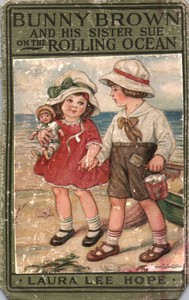
The source record for Bunny Brown and his sister Sue on the rolling ocean — Themes and Context measures this digital text at 47,817 words, 3 hr 28 min estimated reading time, and 38 detected text sections.
The text analysis averages about 12.6 words per sentence, while the detected sections provide another way to judge how the source is divided.
Project Gutenberg metadata also associates the work with “Islands -- Juvenile fiction,” connecting these edition facts with the source record’s subject description.
Explore this collection
These alternatives are selected using recorded categories and estimated reading time.
About 207 minutes
Childrens Adventures
47,476 recorded words. 1 minutes difference from this book's estimate.
View Gutenberg source #71244About 210 minutes
Childrens Adventures
48,137 recorded words. 2 minutes difference from this book's estimate.
View Gutenberg source #68624About 205 minutes
Childrens Adventures
47,043 recorded words. 3 minutes difference from this book's estimate.
View Gutenberg source #71176Search stored excerpts and compare books → Choose by your preferences →
Choices use stored catalog measurements. Estimates vary with reading speed. A shared category is a catalog label, not a claim that two books have the same argument or literary quality.
Search reads excerpt text stored with this catalog and links to its associated Gutenberg record. The connection is stored in the site database; this tool does not recheck that every excerpt is word-for-word identical to that external record. Excerpt search does not cover every chapter and does not verify historical publication dates.
Catalog snapshot checked: 2026-09-26. Coverage: 91 public books, 91 available source excerpts.
Calculated from edition completeness, EPUB availability, text structure and catalogue metadata. Not a user rating.
Total of 100 points, scaled to a 2.5-5.0 range. Editions with an empty description or a missing EPUB file are not scored.
Public-domain source text
The source text is kept in the dedicated reader, separate from this catalogue record and its commentary.
The story begins with a runaway horse, a sudden crisis that immediately establishes Bunny Brown as a resourceful and impulsive child. The opening chapter, 'The Runaway Horse,' shows Bunny acting quickly to stop a horse that has bolted, a moment that reveals his courage and sets the tone for the adventures to come. The narrative voice is direct and action-oriented, with short sentences that mirror the urgency of the situation. This early scene also introduces the family dynamic, with Bunny's sister Sue and their parents reacting to the commotion. The reader is drawn into a world where everyday events can quickly turn into exciting challenges, a pattern that recurs throughout the excerpts.
The middle excerpt, in which Bunny gets locked in the ship's pantry, echoes the structure of the opening runaway horse incident. Both scenes involve a sudden, unexpected problem—a horse bolting, a door slamming shut—and both are resolved through a combination of the child's own actions and adult intervention. In the pantry scene, Bunny's curiosity leads him into trouble, but he also shows composure: he eats cookies while waiting and calls out for help. The adults, including the stewards and his family, respond with concern but also with a matter-of-fact efficiency. This pattern of mishap and rescue is a key feature of the narrative, suggesting that the story will continue to present small crises that test Bunny and Sue's resourcefulness.
The excerpts establish the ocean liner Beacon as a contained but unpredictable environment. The pantry door that 'has a habit of sliding shut and locking itself' is a detail that gives the ship a personality, hinting at hidden quirks and potential dangers. The later excerpt, with the 'terrific blast' and the ship trembling, introduces a more serious threat, moving from minor mishaps to a possible emergency. The setting shifts from the domesticity of the Brown family's home life to the confined spaces of the ship—staterooms, pantries, decks—each with its own rules and risks. This gradual escalation from a locked pantry to a ship-wide alarm prepares the reader for larger adventures, such as being stranded on an island, as hinted by the chapter titles.
The dialogue in the excerpts is natural and childlike, with Bunny and Sue speaking in short, direct sentences. Bunny's line, 'I didn't lock myself in. The door slammed shut and I couldn't get it open again,' shows his straightforward honesty and lack of guile. Sue's reaction to the alarm—'Oh! Oh! What's that terrible noise?'—captures her immediate fear. The adults, like Mr. Wynn and Mr. Jobson, speak in explanatory tones, often providing practical information. This contrast between the children's spontaneous exclamations and the adults' measured responses creates a rhythm that keeps the story moving. The narrative voice itself is simple and clear, rarely using complex sentences, which makes the story accessible and fast-paced.
The excerpts end with the ship's alarm and Sue's frightened question, leaving the nature of the emergency unknown. The reader is left to wonder what caused the 'terrific blast' and whether the ship is in danger. This cliffhanger is typical of the series' chapter endings, which often promise more excitement to come. The earlier chapters, such as 'A Strange Story' and 'Wonderful News,' suggest that the family's ocean voyage is motivated by some intriguing event, but the excerpts do not reveal what that is. A first reader must rely on the chapter titles—'Overboard,' 'An Island Hut,' 'The Wild Man'—to anticipate the adventures ahead. The excerpts thus serve as a teaser, offering enough action to engage the reader while withholding the full plot.
For a first reading, pay attention to how each chapter introduces a new problem and resolves it quickly, often within the same chapter. The excerpts show that Bunny and Sue are active participants in their own adventures, not just passive observers. The shipboard setting adds a layer of novelty and potential danger, but the family's presence ensures that no crisis lasts too long. The story moves at a brisk pace, with dialogue and action driving the narrative forward. Readers who enjoy episodic adventures with likable, resourceful children will find this book engaging from the very first page.
That rainy afternoon, Bunny Brown and his sister Sue on the rolling ocean kept me company, its pantry mishap making me smile even as thunder grumbled outside. I found myself thinking about how small domestic moments quietly prepare us for larger alarms. Later, reaching for something equally patient, I picked up The Hartley brothers — A Closer Reading, and felt that same unhurried attention to everyday turning points, only darker.
A brief reflection can help important ideas stay with you longer.