About 45 minutes
Lily's birthday — Text and Context
Childrens Adventures
10,211 recorded words. 0 minutes difference from this book's estimate.
View Gutenberg source #73659
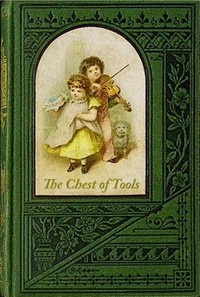
This digital edition of The chest of tools — Text and Context is described by source-level measurements including 10,187 words, 45 min estimated reading time, and 2 detected text sections.
The text analysis averages about 15.7 words per sentence, while the detected sections provide another way to judge how the source is divided.
Project Gutenberg metadata also associates the work with “Conduct of life -- Juvenile fiction,” connecting these edition facts with the source record’s subject description.
Explore this collection
These alternatives are selected using recorded categories and estimated reading time.
About 45 minutes
Childrens Adventures
10,211 recorded words. 0 minutes difference from this book's estimate.
View Gutenberg source #73659About 42 minutes
Childrens Adventures
9,546 recorded words. 3 minutes difference from this book's estimate.
View Gutenberg source #72363About 39 minutes
Childrens Adventures
8,789 recorded words. 6 minutes difference from this book's estimate.
View Gutenberg source #72325Search stored excerpts and compare books → Choose by your preferences →
Choices use stored catalog measurements. Estimates vary with reading speed. A shared category is a catalog label, not a claim that two books have the same argument or literary quality.
Search reads excerpt text stored with this catalog and links to its associated Gutenberg record. The connection is stored in the site database; this tool does not recheck that every excerpt is word-for-word identical to that external record. Excerpt search does not cover every chapter and does not verify historical publication dates.
Catalog snapshot checked: 2026-09-26. Coverage: 91 public books, 91 available source excerpts.
Calculated from edition completeness, EPUB availability, text structure and catalogue metadata. Not a user rating.
Total of 100 points, scaled to a 2.5-5.0 range. Editions with an empty description or a missing EPUB file are not scored.
Public-domain source text
The source text is kept in the dedicated reader, separate from this catalogue record and its commentary.
The opening scene of The Chest of Tools establishes a pattern of disobedience and injury that drives the entire narrative. When Henry and Ernest cut themselves while meddling with Mr. Drake's forbidden tool chest, the father's first reaction is not concern but anger: "How came my tool chest open?" The boys' silence in response sets off a chain of lies and cover-ups. The story, published in 1867 as part of Aunt Hattie's Library, uses a carpenter's shop and a schoolroom as stages for a moral drama about truthfulness. The epigraph from Solomon—"The lip of truth shall be established forever"—signals the didactic intent, but the excerpts reveal a more nuanced portrait of family dynamics and the psychological weight of deception.
The narrative opens with a direct cause-and-effect: the boys open the forbidden chest and Ernest cuts his fingers badly. Mr. Drake's harsh question—"Which of you presumed to unlock it?"—shows that authority figures in this world prioritize rule-breaking over injury. The boys' silence is telling: Henry "dared not confess the truth," while Ernest is too faint to speak. This moment of shared disobedience quickly fractures into individual moral choices. The tool chest, a symbol of adult craft and order, becomes a site of transgression. The physical wound—three fingers cut to the bone—is matched by the wound of broken trust. Mrs. Monroe's calm examination of the injury contrasts with Mr. Drake's anger, hinting at differing parental responses that will recur throughout the story.
A second object, a knife, becomes the focus of a more deliberate deception. Henry claims he "found" the knife and pressures Ernest into silence. The teacher, Miss Fosdick, suspects theft and confronts Ernest, who eventually confesses what he knows. The language of the excerpts emphasizes the weight of reputation: Miss Fosdick tells Ernest, "You can never imagine how much pain I felt when I feared temptation had proved too powerful for you." The contrast between the two boys sharpens: Ernest, though complicit in silence, is described as blushing and quivering, while Henry hides in the barn and avoids accountability. The knife, like the tool chest, is a concrete object that triggers moral testing. The teacher's threat to bar Henry from school unless he confesses raises the stakes beyond the family circle.
The conflict extends beyond the boys to the adults. Mr. Monroe, Ernest's father, threatens to send Henry to the Reform School, saying "If he goes on so, he will come to the gallows." Mrs. Drake, Henry's mother, weeps and pleads with her son, but fears her husband's violent temper. The phrase "break every bone in his body" suggests a harsh domestic discipline. The adults are divided: Mr. Monroe wants strict punishment, while the mothers urge leniency. The story's setting—a carpenter's shop and a clock-maker's home—grounds these moral struggles in everyday labor. The repeated references to keys, locks, and tools underscore themes of access, trust, and ownership. The excerpts do not reveal the resolution, but they show a community struggling with how to correct a child's lies without breaking him.
Readers should pay attention to how objects—the tool chest, the knife, the keys—function as both plot devices and moral symbols. The story's short chapters and direct dialogue make it suitable for reading aloud, but the tensions between the adult characters add a layer of complexity. Notice how each lie Henry tells creates a new problem rather than solving the old one, and how Ernest's gradual movement toward truth-telling is portrayed as a difficult, painful process.
There’s something tender about watching Henry’s lies pile up in The Chest of Tools, knowing each one makes the truth heavier for Ernest to carry. It reminds me of afternoons curled up with my grandfather’s old books, where consequences felt gentler and time moved slower. That same quiet ache reappears in Granfer, and One Christmas time — Inside the Classic, and I found myself missing those long, still evenings.
Build a private reading journal entry for this title.