About 196 minutes
Three girl chums at Laurel Hall — Reading Companion
Childrens Adventures
44,866 recorded words. 0 minutes difference from this book's estimate.
View Gutenberg source #75068
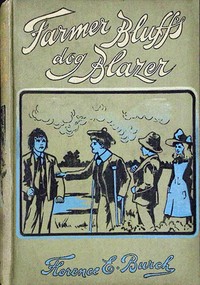
The source record for Farmer Bluff's dog Blazer — Themes and Context measures this digital text at 44,965 words, 3 hr 16 min estimated reading time, and 6 detected text sections.
The text analysis averages about 16.5 words per sentence, while the detected sections provide another way to judge how the source is divided.
Project Gutenberg metadata also associates the work with “Christian life -- Juvenile fiction,” connecting these edition facts with the source record’s subject description.
Explore this collection
These alternatives are selected using recorded categories and estimated reading time.
About 196 minutes
Childrens Adventures
44,866 recorded words. 0 minutes difference from this book's estimate.
View Gutenberg source #75068About 201 minutes
Childrens Adventures
46,229 recorded words. 5 minutes difference from this book's estimate.
View Gutenberg source #73681About 202 minutes
Childrens Adventures
46,413 recorded words. 6 minutes difference from this book's estimate.
View Gutenberg source #70697Search stored excerpts and compare books → Choose by your preferences →
Choices use stored catalog measurements. Estimates vary with reading speed. A shared category is a catalog label, not a claim that two books have the same argument or literary quality.
Search reads excerpt text stored with this catalog and links to its associated Gutenberg record. The connection is stored in the site database; this tool does not recheck that every excerpt is word-for-word identical to that external record. Excerpt search does not cover every chapter and does not verify historical publication dates.
Catalog snapshot checked: 2026-09-26. Coverage: 91 public books, 91 available source excerpts.
Calculated from edition completeness, EPUB availability, text structure and catalogue metadata. Not a user rating.
Total of 100 points, scaled to a 2.5-5.0 range. Editions with an empty description or a missing EPUB file are not scored.
Public-domain source text
The source text is kept in the dedicated reader, separate from this catalogue record and its commentary.
The story opens with Dick Crozier grumbling along a lane, his father's prohibition against going near the river already chafing. The March morning is described with precise natural detail—birds singing, humble-bees buzzing—but Dick's internal rebellion undercuts the peace. Burch establishes a pattern of movement between enclosed and open spaces: the lane, the common, the riverbank. These settings are not mere backdrops; they become moral territories. The dog Blazer, though named in the title, does not appear in the first chapter; instead, the narrative circles around human choices and their consequences before introducing the animal that will become central.
The novel's geography is built from lanes, fields, and hedges that characters cross or respect. Dick's initial disobedience is framed as a boundary violation: his father forbids the river, and Dick immediately resolves to go there. Later, the Squire's grandsons move through the same landscape, and the dog Blazer's actions are tied to farm boundaries. Burch uses gates and pathways as recurring props—characters are often seen striking the ground importantly with his cane or sauntering along the lane. The physical movement from one space to another (the common to the river, the farmyard to the village) parallels the moral journey from obedience to transgression and back.
A striking structural element is the introduction of Grantley, the Squire's grandson, who paints a portrait of Bill Mumby. The painting becomes evidence in a dispute over a goose—the Squire declares, “The portrait does you credit, Grantley. You'll be a great man yet.” Burch uses the visual arts as a plot device: the artist-detective observes and records, turning a likeness into proof. This scene, set in the farmhouse with a gold-headed cane tapping on a red-brick floor, contrasts with the outdoor lanes. The portrait is purchased by the Squire before completion, linking art, class, and justice in a compact episode that advances the investigation.
Burch gives distinct speech patterns to her characters, from Dick's self-justifying internal monologue to Mrs. Mumby's dialect: “ne'er a copper did my Bill get out of him”. The Squire speaks with formal courtesy, while the neighbour calls down from an upper window. These vocal contrasts create a layered social landscape. The narrative voice itself shifts between omniscient commentary and close third-person, especially when describing Dick's thoughts. The dialogue carries much of the plot—the inquest, the accusations, the revelations—and the reader must attend to who speaks and how, as tone and vocabulary signal class, honesty, and intent.
Throughout the excerpts, images of confinement and freedom recur. Dick is “not to extend his walk beyond the common”; Bill is “loose again” (Chapter XVII); the dog Blazer's name suggests both a blaze (fire, warning) and a blazer (one who blazes a trail). The chapter titles themselves—“Under Sentence,” “A Runaway's Story,” “To the Rescue”—emphasize captivity and liberation. Burch does not overstate these images; they are woven into the fabric of the narrative. The goose that “ducked her head, opened her wings, and rushed forward with a scream” is a moment of sudden, violent motion in a story otherwise concerned with measured steps and careful boundaries.
The subtitle “At the Eleventh Hour” signals a preoccupation with timing—last-minute rescues, repentance, or revelation. The narrative moves through a series of deadlines: Dick's holiday ends, the Squire's investigation presses, Bill's fate hangs in the balance. Burch uses clocks and seasons (March, April showers) to mark the passage of time. The phrase “No time like the present” echoes through Dick's reasoning, while the Squire's patient knocking at Mrs. Mumby's door suggests that some things cannot be rushed. This tension between urgency and patience gives the story its rhythm, as characters must act before the hour strikes.
Readers will find that the novel rewards attention to its physical and moral landscapes. The lanes, gates, and farmyards are not just settings but active elements in the characters' choices. Burch's use of dialect, visual evidence, and recurring motifs of time and boundary invites a reading that moves slowly, noting how each scene builds on the last. The dog Blazer, though central to the title, is part of a larger pattern of loyalty, judgment, and second chances.
I kept thinking about Dick’s quiet walks home, how every gate felt like a small decision he had to live with. That same gentle ache stayed with me while reading Excursion to the Orkney Islands — A Reader’s Guide. There’s a particular stillness there, like standing at a path’s end and just letting the place settle around you.
Your answers remain private and are stored only in this browser.