About 196 minutes
Farmer Bluff's dog Blazer — Themes and Context
Childrens Adventures
44,965 recorded words. 0 minutes difference from this book's estimate.
View Gutenberg source #74082
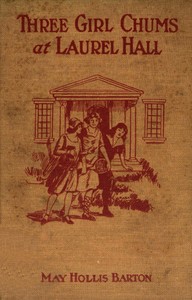
This digital edition of Three girl chums at Laurel Hall — Reading Companion is described by source-level measurements including 44,866 words, 3 hr 16 min estimated reading time, and 26 detected text sections.
The text analysis averages about 13.6 words per sentence, while the detected sections provide another way to judge how the source is divided.
Project Gutenberg metadata also associates the work with “Friendship -- Juvenile fiction,” connecting these edition facts with the source record’s subject description.
Explore this collection
These alternatives are selected using recorded categories and estimated reading time.
About 196 minutes
Childrens Adventures
44,965 recorded words. 0 minutes difference from this book's estimate.
View Gutenberg source #74082About 201 minutes
Childrens Adventures
46,229 recorded words. 5 minutes difference from this book's estimate.
View Gutenberg source #73681About 202 minutes
Childrens Adventures
46,413 recorded words. 6 minutes difference from this book's estimate.
View Gutenberg source #70697Search stored excerpts and compare books → Choose by your preferences →
Choices use stored catalog measurements. Estimates vary with reading speed. A shared category is a catalog label, not a claim that two books have the same argument or literary quality.
Search reads excerpt text stored with this catalog and links to its associated Gutenberg record. The connection is stored in the site database; this tool does not recheck that every excerpt is word-for-word identical to that external record. Excerpt search does not cover every chapter and does not verify historical publication dates.
Catalog snapshot checked: 2026-09-26. Coverage: 91 public books, 91 available source excerpts.
Calculated from edition completeness, EPUB availability, text structure and catalogue metadata. Not a user rating.
Total of 100 points, scaled to a 2.5-5.0 range. Editions with an empty description or a missing EPUB file are not scored.
Public-domain source text
The source text is kept in the dedicated reader, separate from this catalogue record and its commentary.
May Hollis Barton opens Three Girl Chums at Laurel Hall with a rapid exchange of dialogue that immediately establishes the central conflict: Jo Morley cannot afford boarding school. The author wastes no time on setting or backstory, instead relying on the girls' speech patterns and physical descriptions to convey character. Nan Harrison is introduced as “fair-haired and blue-eyed, a fine specimen of the athletic schoolgirl,” while Jo is “small, too, and as lithe and active on her feet as a little cat.” Sadie Appleby is positioned as a median, “a cross between the two.” These contrasting portraits, delivered in the first chapter, signal a deliberate authorial strategy: character is telegraphed through appearance and action rather than interior monologue.
Barton uses dialogue not only to advance plot but to define relationships. In the opening scene, the chums speak in overlapping, exclamatory sentences: “Jo! You never mean it!” and “Why, Jo, it was only yesterday we were talking over our plans!” The repetition of “Jo” and the shared dismay create a sense of unity. The author avoids attributing every line with a speaker tag, instead relying on context and occasional identifiers like “said Nan” or “said Sadie Appleby.” This technique keeps the conversation brisk and mimics the natural rhythm of distressed friends. Later, when Lottie Sparks is struck by a muddy tennis ball, the dialogue shifts to shorter, sharper lines: “Oh, my goodness!” cried Sadie, in consternation. “Now, what have I done?” The contrast between the chums' collaborative speech and the antagonists' clipped retorts underscores the social friction.
Barton consistently links physical traits to personality. Nan is “athletic,” Jo is “lithe” and “cat-like,” and Sadie is a “cross between the two.” These descriptions are not merely decorative; they foreshadow behavior. Nan's athleticism is later confirmed on the tennis court, where she plays a “smashing backhand.” Jo's agility is implied in her quick movements. The author also uses contrast to highlight conflict: Kate Speed and Lottie Sparks are introduced without such detailed physical portraits, making them less sympathetic. When Lottie is hit, the narrative notes she “wiped the mud from her ear” and “a flush of fury spread over Lottie's” face—the focus is on her reaction, not her inherent traits. This asymmetry in description privileges the chums as the reader's focal point.
Barton devotes a substantial passage to the Laurel Hall faculty, each teacher reduced to a single defining quirk. Miss Drew “thought and prayed in Latin and Greek,” Miss Blitz wore “her hair in a wild bob,” and Miss Talley “led her pupils through gymnastic performances at a stiff pace.” The descriptions are affectionate but reductive, serving both to amuse and to efficiently sketch the school environment. The author uses the teachers as foils for the girls' own interests: Miss Talley's passion for athletics mirrors Nan's, while the language teachers' eccentricities provide comic relief. This technique, common in series fiction of the period, allows Barton to populate the school without lengthy exposition. The faculty are not fully realized characters but functional types that reinforce the chums' world.
Barton reveals the school setting indirectly through the characters' activities. The lake is mentioned only when the girls consider boating; the tennis courts appear when they rush to play after rain. The author does not pause for scenic description. Instead, the environment emerges from the plot: “For three days there had been a maddening drizzle of rain, making the courts too wet for tennis practice.” The weather is a plot device, not atmosphere. Similarly, the gymnasium is referenced only as the place where rackets are stored. This economical approach keeps the narrative focused on action and dialogue. The reader learns about Laurel Hall through what the girls do—play tennis, row, attend classes—rather than through authorial narration. This choice reflects Barton's priority on incident over ambiance.
Barton's authorial choices in Three Girl Chums at Laurel Hall prioritize efficiency: dialogue carries exposition, physical description signals character, and setting is subordinated to action. Readers attentive to these patterns will notice how the author builds a world through implication rather than elaboration. The excerpts suggest a narrative driven by conflict and camaraderie, with little interest in psychological depth. For those exploring early twentieth-century girls' series fiction, this work exemplifies a formula where character is revealed through what characters do and say, not what they think.
There’s a certain comfort in watching Barton’s Laurel Hall girls navigate their small, fierce loyalties—each friendship a quiet architecture of support. It reminds me of the gentle solitude found in another shelf-mate, Robin — Reading Companion, where kinship feels less declared than simply lived, like two old books breathing the same still air.
Build a private reading journal entry for this title.