About 94 minutes
Milly's errand — Reading Notes
Childrens Adventures
21,610 recorded words. 6 minutes difference from this book's estimate.
View Gutenberg source #74703
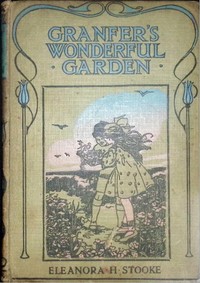
The source record for Grandfer's wonderful garden — A Closer Reading measures this digital text at 22,924 words, 1 hr 40 min estimated reading time, and 3 detected text sections.
The text analysis averages about 13.0 words per sentence, while the detected sections provide another way to judge how the source is divided.
Project Gutenberg metadata also associates the work with “Christian life -- Juvenile fiction,” connecting these edition facts with the source record’s subject description.
Explore this collection
These alternatives are selected using recorded categories and estimated reading time.
About 94 minutes
Childrens Adventures
21,610 recorded words. 6 minutes difference from this book's estimate.
View Gutenberg source #74703About 110 minutes
Childrens Adventures
25,145 recorded words. 10 minutes difference from this book's estimate.
View Gutenberg source #68584About 112 minutes
Childrens Adventures
25,587 recorded words. 12 minutes difference from this book's estimate.
View Gutenberg source #69277Search stored excerpts and compare books → Choose by your preferences →
Choices use stored catalog measurements. Estimates vary with reading speed. A shared category is a catalog label, not a claim that two books have the same argument or literary quality.
Search reads excerpt text stored with this catalog and links to its associated Gutenberg record. The connection is stored in the site database; this tool does not recheck that every excerpt is word-for-word identical to that external record. Excerpt search does not cover every chapter and does not verify historical publication dates.
Catalog snapshot checked: 2026-09-26. Coverage: 91 public books, 91 available source excerpts.
Calculated from edition completeness, EPUB availability, text structure and catalogue metadata. Not a user rating.
Total of 100 points, scaled to a 2.5-5.0 range. Editions with an empty description or a missing EPUB file are not scored.
Public-domain source text
The source text is kept in the dedicated reader, separate from this catalogue record and its commentary.
Eleanora H. Stooke's 'Grandfer's Wonderful Garden' opens with a train journey from Paddington to Exeter, immediately establishing a wartime setting through the conversation between ten-year-old Billy Brown and young soldier Tom Turpin. The dialogue reveals Billy's recent trauma—his mother killed in a Zeppelin raid—and introduces the novel's recurring concern with loss and faith. Stooke's narrative voice moves between the boy's internal distress and the soldier's measured reassurance, creating a rhythm that alternates between emotional intensity and quieter reflection.
The opening chapter relies heavily on dialogue to convey backstory and emotional states. Billy's question—'OH, do you think the train is running away?'—signals his anxiety, while Tom's calm response establishes him as a stabilizing presence. Their exchange moves from practical concerns (the train's speed) to personal history (Billy's orphan status, Tom's service in France). Stooke uses short, broken sentences for Billy ('She—she—') and fuller, reassuring phrases for Tom ('It's all right, I assure you'). This contrast in speech patterns underscores the disparity between the boy's vulnerability and the soldier's composure. Later, the Vicar's words—'come life, come death, they're safe'—are repeated verbatim, functioning as a mantra that Billy internalizes. The novel thus uses dialogue not only to advance plot but to embed theological comfort within everyday conversation.
Stooke modulates pace by juxtaposing dramatic external events with Billy's private thoughts. In Chapter VIII, a thunderstorm triggers Billy's terror of an air raid, described through sensory details: 'a great light almost blinded him,' 'low, crackling reports sounded right overhead.' The narrative accelerates with short, exclamatory sentences ('What had happened?') and physical action ('he made a rush across the room'). Yet immediately after, the pace slows as Mrs. Brown sits on the bed and speaks in longer, explanatory sentences ('I'll stay with you a little while'). Billy's internal echo of the Vicar's phrase then returns, easing the tension. This pattern—crisis followed by reflective calm—recurs throughout the excerpts, suggesting a deliberate structure that mirrors the boy's psychological processing of grief and fear.
Stooke's prose density changes with setting and mood. The train journey is rendered with sparse description ('a dull November day,' 'the mist'), focusing on dialogue. In contrast, the thunderstorm scene employs richer sensory language: 'pitch darkness,' 'flickering light of the candle,' 'the rising wind which was beginning to moan and to sob.' The personification of the wind ('moan and to sob') aligns with Billy's emotional state, blending external weather with internal feeling. Later, when the Vicar speaks of faith, the prose becomes almost liturgical in its repetition. This variation—from plain reportage to evocative imagery to rhythmic refrain—gives the novel a flexible texture that responds to the narrative's emotional demands. Readers attentive to these shifts will notice how Stooke uses language to signal changes in tension and theme.
Readers approaching 'Grandfer's Wonderful Garden' should attend to how Stooke balances the war's shadow with the domestic rhythms of gardening and village life. The novel's title promises wonder, but the excerpts suggest that wonder emerges from small acts of care and faith rather than from grand events. Pay particular attention to the way recurring phrases—like the Vicar's assurance—gain weight through repetition, and how the narrative's pace quickens or slows in response to Billy's inner world. The garden itself, though not fully described in these excerpts, likely serves as a counterpoint to the violence Billy has experienced.
Years among these shelves have taught me that wartime children, like those in Grandfer's Wonderful Garden, often carry their heaviest thoughts in quiet moments—a notion that echoes through the pages of What happened to Tad — Background and Themes. Both books seem to understand how a pause, a glance, a held breath, can speak louder than any shouted scene. There's a kinship there, a shared whisper.
Build a private reading journal entry for this title.