About 152 minutes
Four little Blossoms through the holidays — Edition Insights
Childrens Adventures
34,884 recorded words. 0 minutes difference from this book's estimate.
View Gutenberg source #69776
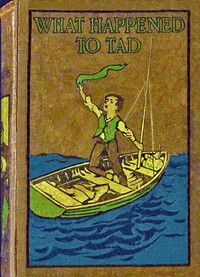
This digital edition of What happened to Tad — Background and Themes is described by source-level measurements including 34,782 words, 2 hr 32 min estimated reading time, and 4 detected text sections.
The text analysis averages about 19.2 words per sentence, while the detected sections provide another way to judge how the source is divided.
Project Gutenberg metadata also associates the work with “Boys -- Conduct of life -- Juvenile fiction,” connecting these edition facts with the source record’s subject description.
Explore this collection
These alternatives are selected using recorded categories and estimated reading time.
About 152 minutes
Childrens Adventures
34,884 recorded words. 0 minutes difference from this book's estimate.
View Gutenberg source #69776About 149 minutes
Childrens Adventures
34,154 recorded words. 3 minutes difference from this book's estimate.
View Gutenberg source #70614About 156 minutes
Childrens Adventures
35,758 recorded words. 4 minutes difference from this book's estimate.
View Gutenberg source #73101Search stored excerpts and compare books → Choose by your preferences →
Choices use stored catalog measurements. Estimates vary with reading speed. A shared category is a catalog label, not a claim that two books have the same argument or literary quality.
Search reads excerpt text stored with this catalog and links to its associated Gutenberg record. The connection is stored in the site database; this tool does not recheck that every excerpt is word-for-word identical to that external record. Excerpt search does not cover every chapter and does not verify historical publication dates.
Catalog snapshot checked: 2026-09-26. Coverage: 91 public books, 91 available source excerpts.
Calculated from edition completeness, EPUB availability, text structure and catalogue metadata. Not a user rating.
Total of 100 points, scaled to a 2.5-5.0 range. Editions with an empty description or a missing EPUB file are not scored.
Public-domain source text
The source text is kept in the dedicated reader, separate from this catalogue record and its commentary.
From its first line—'NOW look here, boy! I ain't a-goin' to have no more words about it'—Mary E. Ropes plunges the reader into a world of domestic tension rendered through working-class dialect. The opening chapter establishes Tad Poole as a boy caught between loyalty to his younger siblings and the authority of a father who dismisses his complaints with 'Tiresome spoilt brats! Serve 'em right!' Ropes uses the grocer's lad's limited income of four shillings a week to underscore his vulnerability, while the stepmother's preferential treatment of 'her own kid' sets up the inequity that drives the plot.
Ropes assigns distinct speech patterns to her characters, using dialect not merely for local color but to signal social standing and moral alignment. Tad's father, James Poole, speaks in a rough, abbreviated manner—'I've no more time to waste on tale-tellin' and grumblin''—while Tad himself uses colloquial forms like 'She ain't my mother' and 'It's wicked! It's a shame!' The stepmother is never directly quoted in the excerpts, but her harshness is conveyed through Tad's reported speech: 'she beats poor little Bert, and boxes Nell's ears.' In contrast, the French thief Paul speaks a more polished English, laced with French phrases like 'Enough, Claudine,' and his wife Claudine uses a passionate, literate register ('thou art breaking my heart'). This linguistic layering creates a world where dialect marks both origin and moral position.
Ropes filters nearly all action through Tad's consciousness, giving the reader access to his indignation and helplessness. When his father dismisses his concerns about the stepmother's abuse, Tad mutters, 'It's wicked! It's a shame! This has got to end somehow!'—a thought that foreshadows his flight. The narrator steps in to explain that 'there was a great deal of good in poor Tad,' but the boy's own words carry the emotional weight. Later, hiding in straw, Tad and his companion Phil listen to Paul's boasts about poisoning a dog and breaking into a house. The boys' silence—'Still as mice'—underscores their powerlessness. Ropes never lets the reader forget that these are children navigating a world of adult violence and deceit.
A key structural device in the excerpts is the eavesdropping scene, where Tad and Phil overhear Paul and Claudine arguing. The conversation reveals the theft ring's methods—'crape masks,' a 'smelting-pot' for gold, and the use of boys as accomplices—while also exposing Paul's cruelty and Claudine's moral qualms. Ropes builds tension by having the boys 'listen breathlessly' and by including details that only the reader can fully appreciate, such as Paul's description of Tad as 'the taller, with a big round head like one of thine own pumpkins.' This moment of recognition creates dramatic irony: the reader knows the danger before the characters fully grasp it. The scene also advances the plot by introducing the threat of Renard, the 'dirty old rascal' who holds the boys' fate.
Ropes embeds moral questions in the plot without didactic commentary. When Paul describes how the boys refused to 'enter and open to us,' he reveals that Tad and Phil have already made a choice to resist criminal coercion. Claudine's refusal to wear 'stolen goods' and her plea for 'honest labour' provide a counterpoint to her husband's greed. The author does not label actions as right or wrong; instead, she lets the consequences unfold through dialogue. Tad's earlier decision to deny himself for his siblings—'he tried to take care of his little brother and sister'—is shown through action rather than stated as a lesson. This technique gives the novel a moral texture that feels earned rather than imposed.
Readers should attend to how Ropes uses the boys' limited understanding to create suspense: Tad and Phil often grasp only fragments of the danger they face. The novel's title, What Happened to Tad, promises a resolution, but the excerpts leave the outcome uncertain. Pay attention to the recurring motif of names—'Tadpole,' 'Tad,' 'Teddie Poole'—as a marker of identity and change. The story rewards close reading of its dialogue, where threats and loyalties are revealed in what is said and what is left unsaid.
Tad’s fear in that novel, the way safety felt borrowed and temporary, lingered with me. It surfaced again while leafing through Robin — Reading Companion. I suppose it’s the same quiet ache for shelter, the soft hope that someone, somewhere, will simply pay attention. Odd, how a child’s worry can echo across different stories, settling in your chest like an old friend.
Save your reaction, strongest insight, and memorable passage.