About 208 minutes
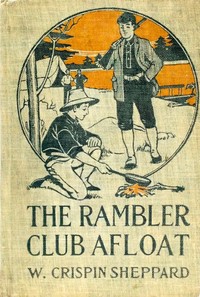
Bunny Brown and his sister Sue on the rolling ocean — Themes and Context
Childrens Adventures
47,817 recorded words. 1 minutes difference from this book's estimate.
View Gutenberg source #71175
This digital edition of Nelly — Context and Discussion is described by source-level measurements including 47,476 words, 3 hr 27 min estimated reading time, and 4 detected text sections.
The text analysis averages about 15.8 words per sentence, while the detected sections provide another way to judge how the source is divided.
Project Gutenberg metadata also associates the work with “Christian life -- Juvenile fiction,” connecting these edition facts with the source record’s subject description.
Explore this collection
These alternatives are selected using recorded categories and estimated reading time.
About 208 minutes
Childrens Adventures
47,817 recorded words. 1 minutes difference from this book's estimate.
View Gutenberg source #71175About 205 minutes
Childrens Adventures
47,043 recorded words. 2 minutes difference from this book's estimate.
View Gutenberg source #71176About 210 minutes
Childrens Adventures
48,137 recorded words. 3 minutes difference from this book's estimate.
View Gutenberg source #68624Search stored excerpts and compare books → Choose by your preferences →
Choices use stored catalog measurements. Estimates vary with reading speed. A shared category is a catalog label, not a claim that two books have the same argument or literary quality.
Search reads excerpt text stored with this catalog and links to its associated Gutenberg record. The connection is stored in the site database; this tool does not recheck that every excerpt is word-for-word identical to that external record. Excerpt search does not cover every chapter and does not verify historical publication dates.
Catalog snapshot checked: 2026-09-26. Coverage: 91 public books, 91 available source excerpts.
Calculated from edition completeness, EPUB availability, text structure and catalogue metadata. Not a user rating.
Total of 100 points, scaled to a 2.5-5.0 range. Editions with an empty description or a missing EPUB file are not scored.
Public-domain source text
The source text is kept in the dedicated reader, separate from this catalogue record and its commentary.
The novel begins with Nelly Ryan leaning against a 'rickety gate' of her grandmother's 'more rickety cottage,' watching well-dressed boarding-school girls pass by. Her bitter cry—'What's the use?'—and her self-description as 'a hopeless-looking child' establish a stark contrast between her ragged appearance and her pretty features. The author immediately signals a moral trajectory: Nelly's 'face that promised better things' hints at inner worth beneath the grime. This opening tableau, with its precise details of torn frock and 'tangled, rusty elf-locks,' roots the story in material deprivation and social envy, setting up the central theme of honesty and faithfulness as a path to improvement.
The first excerpt shows Nelly's despair turning into a series of small, concrete opportunities. After crying, she is addressed by a 'pleasant voice'—Mrs. Caswell—who offers her a milk customer and later help with her Sunday-school lesson. The narrative voice is direct, using dialogue to advance the plot: 'We never put water in the milk,' Nelly asserts, establishing her honesty. The author includes a telling detail: Nelly's Testament is 'clean and neatly covered, though bearing marks of much use,' contrasting with her own unkempt state. This juxtaposition suggests that her spiritual life is orderly even if her outward circumstances are not. The scene also introduces Kitty Brown, a friend who becomes angry, creating a subplot about interpersonal conflict and forgiveness.
The author's note at the beginning explicitly states the story's purpose: 'to illustrate the value of honesty and faithfulness in small and great matters.' It defends Nelly's earnings as plausible, citing a woman who earned 'nearly seven hundred dollars' through tatting. This meta-commentary frames the narrative as a didactic example rather than pure fiction. In the excerpts, Nelly's reliability is demonstrated through her milk delivery—she gives 'good measure' and refuses to adulterate it. The text repeatedly emphasizes practical virtues: perseverance is 'rather natural to Nelly,' and she is 'more than ever convinced that God did love and take care of her' after receiving help. The moral lessons are embedded in everyday transactions, not abstract sermons.
Settings in the excerpts carry symbolic weight. Nelly's cottage is 'rickety,' while Mrs. Caswell's kitchen is 'neater than many parlours,' with flowers and books. Nelly admires it and wonders if she could ever make her own home similar. This contrast between disorder and order mirrors the internal transformation the story promotes. The gate, the milk pail, the Testament—each object is a touchstone for character. When Nelly holds up her 'unemptied pail' to offer milk, the action is both practical and emblematic of her honesty. The author uses these domestic details to ground moral growth in tangible, repeatable actions, making the didacticism feel earned rather than forced.
The excerpts reveal a recurring structural pattern: Nelly seeks help, is initially rebuffed, then receives aid from an unexpected source. Kitty Brown refuses to hear her lesson, but Mrs. Caswell steps in. This rhythm of disappointment followed by provision creates a narrative engine that rewards perseverance. The author also introduces a secondary character, Kitty, who 'was afraid of God' and did not love him, providing a foil to Nelly's growing faith. The text does not resolve these tensions within the excerpts, leaving the reader to wonder whether Kitty will reconcile with Nelly and whether Nelly's inheritance—the 'best inheritance' of the title—will be material or spiritual. The pattern suggests that the full story will test Nelly's honesty and faith through further trials.
Readers approaching this 1867 Sunday-school novel should attend to the interplay between Nelly's external poverty and her internal resourcefulness. The excerpts offer a clear moral framework but leave key relationships—especially with Kitty—unresolved. The author's note signals that the story is designed to illustrate specific virtues, so the narrative likely rewards patient, observant reading. Pay attention to how small actions, like offering milk or learning a lesson, accumulate into a demonstration of character. The title's promise of 'the best inheritance' may be fulfilled in ways both literal and figurative, but the excerpts only hint at the outcome.
I have held Nelly often, lingering on its quiet hints about what a first reading should notice. That careful steering reminds me of another old volume’s gentle nudges. Both seem to whisper, not lecture. There is a kinship in how they guide without pushing, like a hand resting briefly on a sleeve. Incidents of childhood — Edition Insights shares that same patient, familiar tone, and I find myself thinking of them together.
Your answers remain private and are stored only in this browser.