About 39 minutes
Uncle Ben — Key Ideas to Explore
Childrens Adventures
8,789 recorded words. 3 minutes difference from this book's estimate.
View Gutenberg source #72325
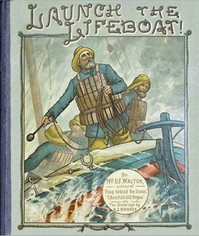
The source record for Launch the lifeboat! — Reading Notes measures this digital text at 9,546 words, 42 min estimated reading time, and 2 detected text sections.
The text analysis averages about 18.1 words per sentence, while the detected sections provide another way to judge how the source is divided.
Project Gutenberg metadata also associates the work with “Christian life -- Juvenile fiction,” connecting these edition facts with the source record’s subject description.
Explore this collection
These alternatives are selected using recorded categories and estimated reading time.
About 39 minutes
Childrens Adventures
8,789 recorded words. 3 minutes difference from this book's estimate.
View Gutenberg source #72325About 45 minutes
Childrens Adventures
10,211 recorded words. 3 minutes difference from this book's estimate.
View Gutenberg source #73659About 45 minutes
Childrens Adventures
10,187 recorded words. 3 minutes difference from this book's estimate.
View Gutenberg source #74051Search stored excerpts and compare books → Choose by your preferences →
Choices use stored catalog measurements. Estimates vary with reading speed. A shared category is a catalog label, not a claim that two books have the same argument or literary quality.
Search reads excerpt text stored with this catalog and links to its associated Gutenberg record. The connection is stored in the site database; this tool does not recheck that every excerpt is word-for-word identical to that external record. Excerpt search does not cover every chapter and does not verify historical publication dates.
Catalog snapshot checked: 2026-09-26. Coverage: 91 public books, 91 available source excerpts.
Calculated from edition completeness, EPUB availability, text structure and catalogue metadata. Not a user rating.
Total of 100 points, scaled to a 2.5-5.0 range. Editions with an empty description or a missing EPUB file are not scored.
Public-domain source text
The source text is kept in the dedicated reader, separate from this catalogue record and its commentary.
The story begins with Stanley recalling his boyhood summers at the seaside, where the sound of waves and the sight of foam sparkle in the sunshine. On a fresh, windy day, he and his sisters Hilda and Daisy meet old Jonah, a fisherman who corrects Daisy’s notion that the warning bell is a “sailors’ dinner-bell.” Jonah’s voice is immediate and colloquial—he calls Daisy “little Missy” and speaks of “a funny kind of a dinner that bell rings for.” This opening establishes a world where the sea is both playground and peril, and where an experienced sailor will become the children’s guide.
Mrs. Walton uses dialogue to reveal personality and background without lengthy description. Jonah’s speech is peppered with dialect markers: “Begging your pardon for hearing what you was saying,” and “It’s a funny kind of a dinner that bell rings for!” His yarns are told in a natural, rambling style, with interruptions from the children that keep the conversation lively. Daisy’s literal-minded question—“Is it soup?”—prompts Jonah’s laughter and a gentle correction. Hilda’s curiosity about the bell shows her observant nature. Stanley, the narrator, reports these exchanges with a boy’s directness, letting the reader infer character from what is said and how it is said.
Jonah’s long story about “my Jessie” occupies much of the excerpt, framed as a yarn he spins while mending nets. This embedded narrative serves multiple purposes: it conveys the book’s religious message through a personal anecdote, it deepens Jonah’s character by showing his past, and it gives the children (and the reader) a lesson in faith without direct preaching. The yarn is punctuated by the children’s reactions—“I don’t know, Jonah,” Stanley says—which keep it from becoming a monologue. The structure mirrors oral storytelling, with Jonah repeating Jessie’s prayer, “Lord, save me,” as a refrain that ties the tale to the lifeboat metaphor.
Throughout the excerpts, the sea is described in sensory detail: waves rolling in, sea birds crying, white foam sparkling. This vivid backdrop contrasts with the danger of shipwrecks, introduced by the bell and Jonah’s yarn. The lifeboat itself becomes a central symbol, not just a vessel but a metaphor for salvation. Jonah explicitly says, “Jesus is the Lifeboat to save you and me.” The physical details—the bell, the rocket apparatus, the breeches-buoy—ground the allegory in the real technology of Victorian maritime rescue. The illustrations listed in the contents (e.g., “Launching the Lifeboat,” “The Rocket Apparatus”) suggest that the book pairs word and image to reinforce this theme.
Stanley narrates as an adult looking back, but the story stays close to a child’s viewpoint. The children ask practical questions: “How can we get in the boat?” Daisy mistakes the bell for a dinner-bell. Jonah’s yarn includes a child, Jessie, who becomes a teacher to the adults—a reversal that empowers young readers. The religious instruction is woven into conversation, not delivered as a sermon. Jessie’s prayer and her mother’s advice about reading the Bible are presented as remembered dialogue, making the lesson feel earned rather than imposed. The book thus models how faith might be discussed naturally between generations.
Readers should attend to the way Mrs. Walton balances adventure and moral instruction through the voices of her characters. Jonah’s dialect, the children’s interruptions, and the embedded yarn all work together to create a story that feels spoken rather than written. The lifeboat is both a real vessel and a recurring figure of speech; noticing how the author shifts between literal and metaphorical uses of the term will enrich the reading experience.
I remember sitting with a little paperback, salt-damp from a beach bag, while Stanley and Jonah’s voices washed over me like tide charts of faith. It reminded me of the quiet courage in The Forest Pilot: A Story for Boy Scouts — Story, Setting & Ideas—that same unhurried trust in older hands, whether steering a lifeboat through fog or a scout through the trees. Both felt like hushed Sunday afternoons.
Your answers remain private and are stored only in this browser.