About 42 minutes
Launch the lifeboat! — Reading Notes
Childrens Adventures
9,546 recorded words. 3 minutes difference from this book's estimate.
View Gutenberg source #72363
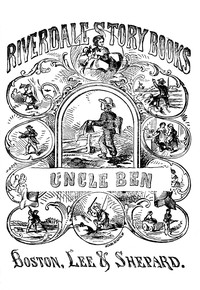
This digital edition of Uncle Ben — Key Ideas to Explore is described by source-level measurements including 8,789 words, 39 min estimated reading time, and 7 detected text sections.
The text analysis averages about 17.9 words per sentence, while the detected sections provide another way to judge how the source is divided.
Project Gutenberg metadata also associates the work with “Conduct of life -- Juvenile fiction,” connecting these edition facts with the source record’s subject description.
Explore this collection
These alternatives are selected using recorded categories and estimated reading time.
About 42 minutes
Childrens Adventures
9,546 recorded words. 3 minutes difference from this book's estimate.
View Gutenberg source #72363About 45 minutes
Childrens Adventures
10,211 recorded words. 6 minutes difference from this book's estimate.
View Gutenberg source #73659About 45 minutes
Childrens Adventures
10,187 recorded words. 6 minutes difference from this book's estimate.
View Gutenberg source #74051Search stored excerpts and compare books → Choose by your preferences →
Choices use stored catalog measurements. Estimates vary with reading speed. A shared category is a catalog label, not a claim that two books have the same argument or literary quality.
Search reads excerpt text stored with this catalog and links to its associated Gutenberg record. The connection is stored in the site database; this tool does not recheck that every excerpt is word-for-word identical to that external record. Excerpt search does not cover every chapter and does not verify historical publication dates.
Catalog snapshot checked: 2026-09-26. Coverage: 91 public books, 91 available source excerpts.
Calculated from edition completeness, EPUB availability, text structure and catalogue metadata. Not a user rating.
Total of 100 points, scaled to a 2.5-5.0 range. Editions with an empty description or a missing EPUB file are not scored.
Public-domain source text
The source text is kept in the dedicated reader, separate from this catalogue record and its commentary.
Oliver Optic’s Uncle Ben opens not with the title character but with five children—Frank, Flora, Charley, Katy, and Nellie—picking strawberries in a July pasture. The narrator immediately establishes a pattern: the children tire, rest under an oak, and eat their few berries. Only then does the story turn to Benjamin Gorham, called Uncle Ben, a poor, proud former sailor living in an old unpainted house. The catalog lists “Kindness -- Juvenile fiction” and “Conduct of life -- Juvenile fiction,” yet the excerpts show Uncle Ben as cross, driving children off his land, and angry at offers of help. The kindness theme may emerge later, but the opening chapters dwell on his pride and the children’s curiosity about his past.
The narrator describes Uncle Ben as “as proud as he was poor.” He had been a sailor, then first mate, but never captain. Now he lives alone, works his land, and refuses charity from the townspeople, who pity him. The children are afraid of him because he “drove them away” when they came onto his property. The catalog subject “Pride and vanity -- Juvenile fiction” fits this portrait, but the excerpts do not show vanity—only a fierce independence that the narrator attributes to hard treatment by the world. The story’s moral framework is introduced indirectly: the narrator speculates that Uncle Ben’s crossness stems from his poverty and pride, not from inherent malice. This sets up a contrast between the townspeople’s perception and the old man’s inner life, which the children will gradually discover.
When the children finally approach Uncle Ben, he tells a long tale about a whaling voyage. The excerpts shift to a first-person account: Uncle Ben describes rowing close to a whale, smashing the boat, and rescuing a young sailor named George. The language becomes vivid and specific: “his face was deadly pale,” “I bore him up in my arms.” The narrative dwells on George’s illness and death in a cold, dark forecastle. Uncle Ben’s grief is explicit: “I wept as I should have wept if he had been my son.” This embedded story occupies much of the excerpted text, yet the catalog subjects do not mention whaling, death, or maritime adventure. The contrast between the catalog’s moral categories and the actual content—a detailed, emotional sea yarn—is striking. Readers expecting a simple lesson in kindness will instead find a tragic tale of loss and duty.
The narrator of Uncle Ben frequently addresses the reader directly, using phrases like “I suppose” and “you can’t tell how tired and worn out he gets.” This voice shapes the moral tone: it explains Uncle Ben’s behavior, justifies his anger, and guides the reader’s sympathy. For example, the narrator says of Uncle Ben’s crossness, “I suppose this was what made him cross.” The catalog subjects imply a didactic purpose, but the excerpts show a more complex approach. The narrator does not simply preach kindness; instead, he presents a flawed, grieving old man and lets the children’s reactions—fear, then curiosity, then absorption in his story—carry the emotional weight. The moral lesson, if it comes, is embedded in the unfolding relationship, not stated outright.
Readers should note that the excerpts cover only the first few chapters and the beginning of Uncle Ben’s whaling story. The catalog subjects may reflect the book’s overall arc, but the opening material emphasizes pride, poverty, and a sailor’s tragic past more than explicit lessons in conduct. Pay attention to how the narrator’s commentary shapes your view of Uncle Ben, and consider whether the children’s initial fear gives way to understanding as the story progresses.
Flipping through Uncle Ben — Key Ideas to Explore, I found myself lingering on that old sailor's gruffness, the way his sea story slowly softens his edges. It made me think of a sunnier memory, of childhood mysteries unfolding along a sandy shore, and how unspoken pasts weave through both. Something in that quiet contrast felt familiar, like a hand reaching for The Riddle Club at Sunrise Beach — Story, Setting & Ideas without quite knowing why.
Build a private reading journal entry for this title.