About 223 minutes
A little Swiss boy — Story, Setting & Ideas
Childrens Adventures
51,138 recorded words. 2 minutes difference from this book's estimate.
View Gutenberg source #73300
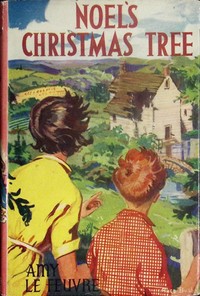
Before opening Noel's Christmas tree — Text and Context, the edition data offers a quick orientation: 51,582 words, 3 hr 45 min estimated reading time, and 5 detected text sections.
The text analysis averages about 12.6 words per sentence, while the detected sections provide another way to judge how the source is divided.
Project Gutenberg metadata also associates the work with “Christian life -- Juvenile fiction,” connecting these edition facts with the source record’s subject description.
Explore this collection
These alternatives are selected using recorded categories and estimated reading time.
About 223 minutes
Childrens Adventures
51,138 recorded words. 2 minutes difference from this book's estimate.
View Gutenberg source #73300About 221 minutes
Childrens Adventures
50,679 recorded words. 4 minutes difference from this book's estimate.
View Gutenberg source #73511About 229 minutes
Childrens Adventures
52,523 recorded words. 4 minutes difference from this book's estimate.
View Gutenberg source #77259Search stored excerpts and compare books → Choose by your preferences →
Choices use stored catalog measurements. Estimates vary with reading speed. A shared category is a catalog label, not a claim that two books have the same argument or literary quality.
Search reads excerpt text stored with this catalog and links to its associated Gutenberg record. The connection is stored in the site database; this tool does not recheck that every excerpt is word-for-word identical to that external record. Excerpt search does not cover every chapter and does not verify historical publication dates.
Catalog snapshot checked: 2026-09-26. Coverage: 91 public books, 91 available source excerpts.
Calculated from edition completeness, EPUB availability, text structure and catalogue metadata. Not a user rating.
Total of 100 points, scaled to a 2.5-5.0 range. Editions with an empty description or a missing EPUB file are not scored.
Public-domain source text
The source text is kept in the dedicated reader, separate from this catalogue record and its commentary.
The novel opens with a palpable tension: Diana and Chris, confined to the schoolroom, drum on windows and whisper about an unknown mother and brother arriving from India. Their grandmother orders them to stay upstairs, but the children's impatience is rendered through small, specific actions—Diana lying flat to write, Chris dancing and shouting about a monkey and a parrot. The arrival is heard before it is seen: a little shrill voice announces, 'I've gotted new boots with buttons.' This is Noel, the younger brother, whose ungrammatical excitement contrasts with the older children's awe. The scene establishes a household where curiosity and obedience clash, and where the children's perspective dominates the narrative.
The opening chapter filters every event through the children's senses. Diana and Chris are not passive observers; they actively try to circumvent adult control. Diana's question—'How do you spell alarming, two l's and two m's?'—reveals she is composing a story, a detail that hints at her imaginative nature. Chris's teasing claim that their mother may have drowned is met with outrage, but it also shows how children process anxiety through dark humor. The adults—Granny and Nurse—are offstage, enforcing rules the children resent. When Nurse finally sends them down, they 'went very slowly,' a small but telling reversal of their earlier eagerness. The narrative voice stays close to the children's limited knowledge, never explaining what the adults are thinking, which keeps the reader aligned with their uncertainty.
Later chapters introduce a network of errands and mishaps that draw the children into the adult world. After a lady (Miss Constance) has a car accident, Diana and Chris each take different routes to help: Diana goes to Lady Alice's house, where she is given ice and cake, while Chris hitches a ride with a baker's cart. Their separate adventures are recounted in breathless, detailed monologues—Diana's includes a rhyme Miss Constance makes up about her sprain: 'Having contracted a sprain, I won't drive again; I'll lie on my sofa and become a poor loafer.' These episodes show the children acting independently, yet their efforts are always framed as errands for others. The recurring motif of giving—Noel brings strawberries to his mother, Diana helps bandage a stranger—underscores a moral economy where small acts of service are rewarded with adult attention and affection.
Mrs. Inglefield, the mother, appears as a calming presence. When Noel returns hot and 'tarred and firsty,' she meets him at the door, gives him lemonade, and lets him sit in her lap. Their exchange—'I do feel sorry for the poor little boys who can't get on their mothers' laps'—is sentimental but also reveals the book's emotional core: the mother is a refuge from the world's demands. Yet she also acknowledges that her children 'will soon get beyond' her lap, introducing a note of transience. The Christmas tree of the title is mentioned only in the contents list and frontispiece, not in the excerpts, so its role remains a promise. The story seems to build toward a festive gathering where the children's scattered adventures will converge, but the excerpts leave that resolution untold.
Readers should note that the excerpts cover only the opening chapters and a later episode; the full novel likely develops the Christmas tree as a symbolic centerpiece. The children's voices—Noel's babyish lisp, Diana's storytelling, Chris's teasing—are distinctive and consistent. Pay attention to how the author uses small domestic details (boots with buttons, a baker's cart, a sprained ankle) to build a world where children's agency is real but bounded by adult authority. The religious framing ('Christian life') is subtle in these passages, emerging more in the children's kindness than in explicit piety.
I remember those three children waiting for their brother, the hush of unknown kinship hanging over their English hearth. It is a particular ache, that meeting of strangers bound by blood. Years later, I found the same quiet tension between truth and affection in White and black lies — Context and Discussion, where every kind word carries the shadow of a kept secret. They are old friends, those books, whispering to one another from my shelf.
Save your reaction, strongest insight, and memorable passage.