About 223 minutes
A little Swiss boy — Story, Setting & Ideas
Childrens Adventures
51,138 recorded words. 2 minutes difference from this book's estimate.
View Gutenberg source #73300
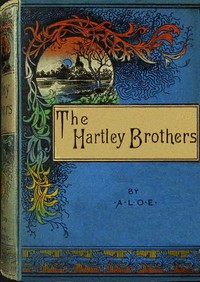
This digital edition of The Hartley brothers — A Closer Reading is described by source-level measurements including 50,679 words, 3 hr 41 min estimated reading time, and 6 detected text sections.
The text analysis averages about 18.3 words per sentence, while the detected sections provide another way to judge how the source is divided.
Project Gutenberg metadata also associates the work with “Christian life -- Juvenile fiction,” connecting these edition facts with the source record’s subject description.
Explore this collection
These alternatives are selected using recorded categories and estimated reading time.
About 223 minutes
Childrens Adventures
51,138 recorded words. 2 minutes difference from this book's estimate.
View Gutenberg source #73300About 225 minutes
Childrens Adventures
51,582 recorded words. 4 minutes difference from this book's estimate.
View Gutenberg source #71664About 215 minutes
Childrens Adventures
49,428 recorded words. 6 minutes difference from this book's estimate.
View Gutenberg source #69517Search stored excerpts and compare books → Choose by your preferences →
Choices use stored catalog measurements. Estimates vary with reading speed. A shared category is a catalog label, not a claim that two books have the same argument or literary quality.
Search reads excerpt text stored with this catalog and links to its associated Gutenberg record. The connection is stored in the site database; this tool does not recheck that every excerpt is word-for-word identical to that external record. Excerpt search does not cover every chapter and does not verify historical publication dates.
Catalog snapshot checked: 2026-09-26. Coverage: 91 public books, 91 available source excerpts.
Calculated from edition completeness, EPUB availability, text structure and catalogue metadata. Not a user rating.
Total of 100 points, scaled to a 2.5-5.0 range. Editions with an empty description or a missing EPUB file are not scored.
Public-domain source text
The source text is kept in the dedicated reader, separate from this catalogue record and its commentary.
The Hartley brothers, already known to readers of A.L.O.E.'s earlier volumes, reappear in a sequel that moves from English homes to Indian and desert settings. The preface explains the author's aim: to represent the spirit of Saint John—the apostle of love—through modern characters. The narrative voice is direct and morally earnest, often pausing for reflection. Yet the excerpts show a writer attentive to physical detail: a grave dug in sand, a silver goblet of sherbet, a Persian Amir with 'long lustrous dark eyes' and a 'habitual frown.' These concrete observations ground the story's didactic purpose.
The narrator speaks with a calm, authoritative tone, rarely ironic. Dialogue carries the moral weight: Robin Hartley explains his sacrifice for a stranger with the simple phrase 'Christian love.' The Persian Amir's voice is described as 'low and rich,' and his speech is measured, with 'tolerable correctness' but an 'Oriental accent.' A.L.O.E. uses contrast in voice to highlight character—Robin's faint, exhausted replies against Ali's controlled, curious questions. The narrative does not mock or exoticize; it presents the encounter as a serious test of faith.
The excerpt from the desert scene shows a deliberate shift in pace. Early paragraphs are slow, focused on Robin's 'patient toil' and failing strength: 'scraped and scraped' repeats the action. Then the arrival of the caravan is sudden—'a long shadow falling over the uncompleted grave.' The pace quickens with short sentences and direct speech. A.L.O.E. controls tempo by alternating physical labor with dialogue and by breaking long descriptive passages with abrupt events. The grave-digging itself becomes a rhythmic, almost ritualistic action that builds suspense before the rescue.
The desert is not just a backdrop but an active element. The 'mashale' (water-skin) is 'utterly dry'; the sun rises behind Robin's back. Objects carry meaning: the silver goblet, the white handkerchief laid over the corpse's face, the 'silver-hilted sword' of the Amir. These details are noted without commentary, yet they accumulate into a pattern of care and rank. A.L.O.E. uses setting to mirror spiritual states—the barren waste contrasts with the 'cool, copious, delicious draught' that revives Robin. The grave, dug by a stranger, becomes a site of cross-cultural encounter.
Readers familiar with the earlier Hartley books will find this sequel extends the same moral framework into more perilous geography. Those new to A.L.O.E.'s work might note how she balances adventure with explicit Christian teaching. The excerpts suggest a narrative that rewards attention to small gestures—a hand lifted, a shadow falling—as much as to dramatic rescues. The author's own preface frames the book as a labour of love, and the prose bears that out in its patient, observant style.
The Hartley brothers stayed with me because their desert felt vast and honest, not just scenery. It made me think of the quieter, warmer days in Four little Blossoms through the holidays — Edition Insights—a different kind of lingering, where home itself is the journey. Both, in their own way, ask what it means to find your footing when the ground keeps shifting.
Build a private reading journal entry for this title.