About 264 minutes
The Rambler Club Afloat — Inside the Classic
Childrens Adventures
60,653 recorded words. 0 minutes difference from this book's estimate.
View Gutenberg source #67989
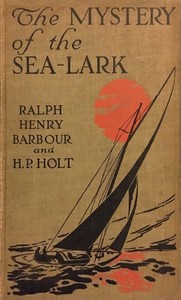
This digital edition of The mystery of the Sea-Lark — Themes and Context is described by source-level measurements including 60,620 words, 4 hr 24 min estimated reading time, and 21 detected text sections.
The text analysis averages about 14.8 words per sentence, while the detected sections provide another way to judge how the source is divided.
Project Gutenberg metadata also associates the work with “Adventure stories,” connecting these edition facts with the source record’s subject description.
Explore this collection
These alternatives are selected using recorded categories and estimated reading time.
About 264 minutes
Childrens Adventures
60,653 recorded words. 0 minutes difference from this book's estimate.
View Gutenberg source #67989About 264 minutes
Childrens Adventures
60,590 recorded words. 0 minutes difference from this book's estimate.
View Gutenberg source #71506About 261 minutes
Childrens Adventures
59,863 recorded words. 3 minutes difference from this book's estimate.
View Gutenberg source #70640Search stored excerpts and compare books → Choose by your preferences →
Choices use stored catalog measurements. Estimates vary with reading speed. A shared category is a catalog label, not a claim that two books have the same argument or literary quality.
Search reads excerpt text stored with this catalog and links to its associated Gutenberg record. The connection is stored in the site database; this tool does not recheck that every excerpt is word-for-word identical to that external record. Excerpt search does not cover every chapter and does not verify historical publication dates.
Catalog snapshot checked: 2026-09-26. Coverage: 91 public books, 91 available source excerpts.
Calculated from edition completeness, EPUB availability, text structure and catalogue metadata. Not a user rating.
Total of 100 points, scaled to a 2.5-5.0 range. Editions with an empty description or a missing EPUB file are not scored.
Public-domain source text
The source text is kept in the dedicated reader, separate from this catalogue record and its commentary.
From its first page, The Mystery of the Sea-Lark establishes a world of weathered seamen and sharp dialogue. Cap'n Crumbie's prediction of a gale and his grim pronouncement that Bob Sennet lies "fathoms deep" set a tone of practical danger. Jack Holden, the young protagonist, listens with a "suppressed disrespectful grin," hinting at a capable, unflappable character. The storm has passed, leaving a serene harbor—a contrast that underscores the sudden violence of the sea. This opening scene, with its focus on local knowledge and loss, primes readers for a story where the ocean is both adversary and opportunity.
The first chapter introduces Cap'n Crumbie, a self-assured old sailor who takes credit for warning others about the storm. His claim that only one boat is missing—Bob Sennet's Ellen E. Hanks—immediately creates a mystery. The dialogue reveals Crumbie's belief that Sennet's obstinacy cost him his life: "If he hadn't been so obstinate he'd ha' been here to-day." Jack's quiet skepticism and the serene aftermath of the gale suggest that not all is as it seems. The chapter's title, "Cap'n Crumbie Is Surprised," promises that the old man's certainty will be challenged. Readers should note the emphasis on character voices—Crumbie's dialect and Jack's measured responses—as a key to understanding the community dynamics.
By Chapter X, Jack and his friend Rodney are towing the disabled schooner Grace and Ella with their sloop Sea-Lark. The excerpt shows Jack's practical skill: he makes fast a hawser, heads east to clear a breakwater, and manages the strain as the sloop "tugged and fretted like a greyhound puppy." The negotiation with the schooner's captain over salvage—a promised five hundred dollars—introduces a financial stake. Jack's worry about a rival tug from Barker, the schooner's owner, adds tension. The dialogue between Jack and Rod reveals their differing views on risk and reward. Rod thinks the money is "an awful lot" for "a little bit of a thing," while Jack is more concerned with completing the job. This section highlights the boys' resourcefulness and the precarious nature of their enterprise.
Throughout the excerpts, the sea's power is a constant presence. In the salvage scene, a "particularly strong gust" and a "following sea" threaten to overwhelm the Sea-Lark. Jack notes that the sloop's mast strains "more than [he] cared to contemplate" with the dead weight astern. Earlier, the narrative mentions that Barker's schooner lost its mast because of "niggardliness"—a detail that ties character flaws to physical consequences. The storm in Chapter I is described with sensory precision: the "leaden skies," the "shrieking" gale, and the "creamy foam" around Gull Island. These details ground the adventure in a tangible, dangerous environment. Readers should watch for how the weather and sea conditions dictate the plot's pace and the characters' decisions.
The excerpts rely heavily on dialogue to reveal personality and advance the story. Cap'n Crumbie's speech is full of self-importance and dialect: "'Tain't that I'm wanting to blow my own trumpet, as the saying is, but facts is facts." Jack's responses are terse and respectful but undercut by his internal amusement. In the salvage chapter, the exchange between Jack and Rod shows their camaraderie and differing temperaments—Jack is cautious and strategic, Rod more impulsive and money-focused. The captain of the Grace and Ella offers to send a man, but Jack refuses with a wave, asserting his independence. These conversations are not just filler; they build the boys' characters and the stakes of their mission. The absence of adult authority figures (aside from Crumbie and the schooner captain) places responsibility squarely on Jack and Rod.
The chapter list includes "The Canvas Bag" (Chapter XVIII), which suggests a key object or clue. The excerpts do not reveal its contents, but the title implies it is central to the mystery. Earlier, the missing boat of Bob Sennet and the salvage of the Grace and Ella may connect to this bag. The story's structure—alternating between sea adventure and mystery—keeps readers guessing. The final chapters, such as "Trapped!" and "Cast Adrift," promise further peril. Readers should note that the excerpts end before the resolution, so the bag's significance and the fate of the Ellen E. Hanks remain open. The narrative's pacing, with action set pieces like the gale and the tow, suggests a climax that ties these threads together.
As you read, pay attention to how the authors balance technical sailing details with character-driven dialogue. The Sea-Lark itself—a small sloop—becomes a character, tested by storms and towing loads. The mystery of the missing boat and the canvas bag may unfold slowly, but the excerpts show that the journey is as important as the destination. Trust the boys' competence and watch for clues in seemingly casual remarks.
This morning, reading about Jack and Rodney wrestling their canvas bag from the sea, I thought of my own father’s old fishing tackle box—the way we’d pry it open after years, never knowing what salt-soaked secret we’d find. The dinky ducklings gave me that same hush, a quiet patience for small, waterlogged mysteries. The dinky ducklings — A Closer Reading lingers like a warm stone in my pocket, long after the page turns.
Save your reaction, strongest insight, and memorable passage.