About 264 minutes
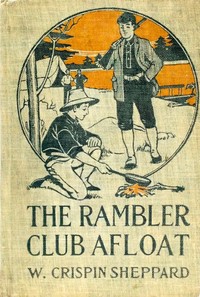
The Rambler Club Afloat — Inside the Classic
Childrens Adventures
60,653 recorded words. 3 minutes difference from this book's estimate.
View Gutenberg source #67989
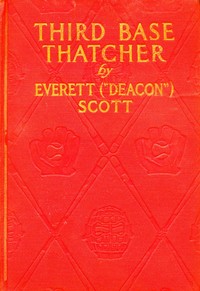
The source record for Third Base Thatcher — Edition Insights measures this digital text at 59,863 words, 4 hr 21 min estimated reading time, and 28 detected text sections.
The text analysis averages about 18.9 words per sentence, while the detected sections provide another way to judge how the source is divided.
Project Gutenberg metadata also associates the work with “Schools -- Juvenile fiction,” connecting these edition facts with the source record’s subject description.
Explore this collection
These alternatives are selected using recorded categories and estimated reading time.
About 264 minutes
Childrens Adventures
60,653 recorded words. 3 minutes difference from this book's estimate.
View Gutenberg source #67989About 264 minutes
Childrens Adventures
60,590 recorded words. 3 minutes difference from this book's estimate.
View Gutenberg source #71506About 264 minutes
Childrens Adventures
60,620 recorded words. 3 minutes difference from this book's estimate.
View Gutenberg source #72751Search stored excerpts and compare books → Choose by your preferences →
Choices use stored catalog measurements. Estimates vary with reading speed. A shared category is a catalog label, not a claim that two books have the same argument or literary quality.
Search reads excerpt text stored with this catalog and links to its associated Gutenberg record. The connection is stored in the site database; this tool does not recheck that every excerpt is word-for-word identical to that external record. Excerpt search does not cover every chapter and does not verify historical publication dates.
Catalog snapshot checked: 2026-09-26. Coverage: 91 public books, 91 available source excerpts.
Calculated from edition completeness, EPUB availability, text structure and catalogue metadata. Not a user rating.
Total of 100 points, scaled to a 2.5-5.0 range. Editions with an empty description or a missing EPUB file are not scored.
Public-domain source text
The source text is kept in the dedicated reader, separate from this catalogue record and its commentary.
Everett Scott, a shortstop for the 1922 American League champion Yankees, wrote Third Base Thatcher as a school sports story set at Pennington Institute. The excerpts open not on a baseball diamond but on a basketball court, where a championship game between the Freshman and Sophomore classes ends in controversy when Gould, a Sophomore guard, accuses Thatcher of fouling him. This early scene establishes a pattern of conflict between the two boys that carries into the baseball season.
The catalog subjects list both baseball and schools as primary topics, but the opening chapter is entirely about basketball. The game is described as a 'mad scramble' with a score of 14 to 14, and the action centers on Thatcher's shot and Gould's foul claim. This suggests the novel uses multiple sports to build character and rivalry before shifting to baseball. Later excerpts confirm the transition: by mid-May, the Pennington team is in full baseball practice, with Thatcher and Rabbit Warren earning temporary spots on the first team. The basketball opening may serve to introduce the competitive atmosphere and the Gould-Thatcher dynamic before the main sport takes over.
Gould appears in both the basketball and baseball excerpts as a persistent opponent. In the basketball game, he is described with 'an unpleasant expression of anger' and a 'determination to win whether by fair means or foul.' During a baseball practice game, Gould plays in Thatcher's place on the scrub team and 'accepting his reversal with very bad grace.' He later coaches from third base with a 'mean voice.' These details, drawn directly from the text, indicate that Gould functions as a foil to Thatcher, embodying unsportsmanlike conduct. The excerpts do not reveal the full arc of their conflict, but the pattern suggests it is a central thread in the story.
Jeff Thatcher is portrayed as a composed athlete. In the basketball scene, he is 'clean-limbed, black-haired' and executes a shot under pressure. In the baseball excerpt, when he comes to bat with two outs and a man on second, he 'weighed two bats methodically' and appeared calm outwardly, though inwardly nervous. The text notes that 'the moment he squared away to face Honey Wiggins the nervousness left him.' This contrast between internal anxiety and external poise is a specific character trait. The excerpts do not confirm whether he succeeds in that at-bat, but they establish a pattern of focus in critical moments.
Readers should note that the excerpts cover only the early and middle portions of the novel, ending before the climactic game against Lawrencetown. The rivalry with Gould and Thatcher's development as a third baseman are likely to be resolved in the later chapters. Pay attention to how the author, a professional baseball player, handles the technical details of the sport versus the interpersonal drama.
There’s something about Jeff Thatcher’s stubborn grip on the ball—the way he keeps his chin up through Gould’s barbs—that reminds me of the quiet dignity in The royal banner — Edition Insights. Both feel like Sunday afternoons when the game doesn’t matter so much as who we chose to be afterward. Old books, still warm.
Capture what you thought, learned, and would like to remember.