About 152 minutes
Four little Blossoms through the holidays — Edition Insights
Childrens Adventures
34,884 recorded words. 3 minutes difference from this book's estimate.
View Gutenberg source #69776
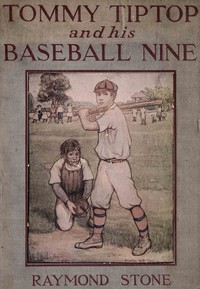
Before opening Tommy Tiptop and his baseball nine — Key Ideas to Explore, the edition data offers a quick orientation: 34,154 words, 2 hr 29 min estimated reading time, and 22 detected text sections.
The text analysis averages about 13.0 words per sentence, while the detected sections provide another way to judge how the source is divided.
Project Gutenberg metadata also associates the work with “Friendship -- Juvenile fiction,” connecting these edition facts with the source record’s subject description.
Explore this collection
These alternatives are selected using recorded categories and estimated reading time.
About 152 minutes
Childrens Adventures
34,884 recorded words. 3 minutes difference from this book's estimate.
View Gutenberg source #69776About 152 minutes
Childrens Adventures
34,782 recorded words. 3 minutes difference from this book's estimate.
View Gutenberg source #74793About 156 minutes
Childrens Adventures
35,758 recorded words. 7 minutes difference from this book's estimate.
View Gutenberg source #73101Search stored excerpts and compare books → Choose by your preferences →
Choices use stored catalog measurements. Estimates vary with reading speed. A shared category is a catalog label, not a claim that two books have the same argument or literary quality.
Search reads excerpt text stored with this catalog and links to its associated Gutenberg record. The connection is stored in the site database; this tool does not recheck that every excerpt is word-for-word identical to that external record. Excerpt search does not cover every chapter and does not verify historical publication dates.
Catalog snapshot checked: 2026-09-26. Coverage: 91 public books, 91 available source excerpts.
Calculated from edition completeness, EPUB availability, text structure and catalogue metadata. Not a user rating.
Total of 100 points, scaled to a 2.5-5.0 range. Editions with an empty description or a missing EPUB file are not scored.
Public-domain source text
The source text is kept in the dedicated reader, separate from this catalogue record and its commentary.
From the opening page, Raymond Stone establishes a narrative voice that moves at the pace of a schoolyard argument. The first chapter begins mid-dispute over batting order, with Tommy Tiptop, Sammie Small, and Horace Wright volleying short, exclamatory lines. The dialogue is not merely functional; it reveals character through rhythm. Tommy’s speech is marked by quick concessions—"Well, come on then, if we’re going to play!"—and a tendency to redirect energy toward action. Stone rarely lingers on description; instead, he lets the boys’ exchanges carry the scene. This technique creates a sense of immediacy, but it also means that setting and physical detail are sparse, left to the reader’s imagination.
Stone’s reliance on dialogue is the most distinctive feature of the prose. In the first chapter alone, nearly every paragraph contains quoted speech. The boys interrupt each other, finish one another’s thoughts, and shift topics abruptly. This mimics the way children actually talk, but it also serves a structural purpose: it keeps the story moving without lengthy exposition. When Tommy learns about the Freeport team from the florist, the information comes through a rapid exchange of questions and answers. The narrative rarely steps back to summarize; instead, it lets the characters inform the reader naturally. However, this technique has a cost. Physical descriptions of the boys are almost nonexistent—Tommy is called "sturdy" and "stout" once, but we learn little else. The reader must infer appearance from action and dialogue alone.
The story is structured as a series of discrete episodes, each centered on a problem Tommy must solve. The chapter titles reveal this pattern: "Tommy Plays Ball," "Tommy Moves Away," "Tommy Has an Accident," "Tommy Starts His Nine." Within this framework, Stone uses the errand as a recurring device. Tommy’s attempt to earn money for a back-stop leads him from store to store, and each interaction is a miniature scene with its own arc. The florist episode, for example, begins with a refusal, moves to a test of trust, and ends with a new lead. This episodic rhythm gives the book a cumulative feel, but it also means that tension rarely builds across chapters. Each problem is introduced and resolved within a few pages, creating a steady, predictable pace that suits a young audience but may feel repetitive to an adult reader.
Despite the heavy use of dialogue, the narrative voice remains firmly third-person and omniscient. Stone occasionally inserts phrases like "our hero" or "decided Tommy" that remind the reader of a narrator’s presence. This distance prevents full immersion in Tommy’s perspective. We are told what Tommy thinks—"I am having luck to-day!"—but we rarely feel his emotions directly. The prose is functional rather than sensory; there are few metaphors or vivid descriptions of how a baseball feels or how the grass smells. The effect is that of a report rather than an experience. This may be a deliberate choice for a series book aimed at young readers who prioritize action over atmosphere, but it limits the text’s ability to create a lasting mood. The voice is consistent, but it lacks the texture that would make the world of Riverdale feel fully realized.
Readers approaching Tommy Tiptop and His Baseball Nine should pay attention to how Stone uses repetition—of sentence structure, of conversational patterns, of problem-solving routines—to build a recognizable rhythm. The book rewards those who notice small variations in Tommy’s responses to setbacks. It is less a novel of character development than a catalog of resourcefulness, and its value lies in the cumulative portrait of a boy who talks his way through every obstacle. For a fuller sense of Stone’s method, compare the opening dispute with later negotiation scenes; the voice remains steady, but the stakes shift subtly from playground hierarchy to team leadership.
Reading Tommy Tiptop, I kept thinking how those quick negotiations and errands felt like the quiet glue of boyhood—less about the game than the getting there. That same unhurried rhythm of duty and small adventures seems to echo in The ocean wireless boys of the iceberg patrol — Story, Setting & Ideas, though I haven’t opened it in years. Sometimes a single remembered scene is enough.
Create a short personal record of your experience with this book.