About 70 minutes
The tale of Mistah Mule — A Closer Reading
Childrens Adventures
16,000 recorded words. 0 minutes difference from this book's estimate.
View Gutenberg source #74069
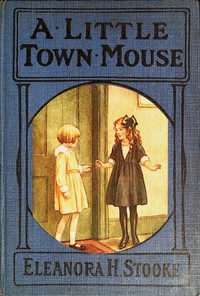
The source record for A little town mouse — Story, Setting & Ideas measures this digital text at 16,019 words, 1 hr 10 min estimated reading time, and 2 detected text sections.
The text analysis averages about 15.3 words per sentence, while the detected sections provide another way to judge how the source is divided.
Project Gutenberg metadata also associates the work with “Christian life -- Juvenile fiction,” connecting these edition facts with the source record’s subject description.
Explore this collection
These alternatives are selected using recorded categories and estimated reading time.
About 70 minutes
Childrens Adventures
16,000 recorded words. 0 minutes difference from this book's estimate.
View Gutenberg source #74069About 74 minutes
Childrens Adventures
16,854 recorded words. 4 minutes difference from this book's estimate.
View Gutenberg source #74582About 76 minutes
Childrens Adventures
17,402 recorded words. 6 minutes difference from this book's estimate.
View Gutenberg source #70920Search stored excerpts and compare books → Choose by your preferences →
Choices use stored catalog measurements. Estimates vary with reading speed. A shared category is a catalog label, not a claim that two books have the same argument or literary quality.
Search reads excerpt text stored with this catalog and links to its associated Gutenberg record. The connection is stored in the site database; this tool does not recheck that every excerpt is word-for-word identical to that external record. Excerpt search does not cover every chapter and does not verify historical publication dates.
Catalog snapshot checked: 2026-09-26. Coverage: 91 public books, 91 available source excerpts.
Calculated from edition completeness, EPUB availability, text structure and catalogue metadata. Not a user rating.
Total of 100 points, scaled to a 2.5-5.0 range. Editions with an empty description or a missing EPUB file are not scored.
Public-domain source text
The source text is kept in the dedicated reader, separate from this catalogue record and its commentary.
The story opens on a fine October morning in the country town of Raymouth, where Dr. Knight and his four children—twins George and David, Dora, and Nellie—are at breakfast. The doctor is described as a tall, muscular man with kind grey eyes, whose presence cheers patients. His wife is an invalid, and he has no private means. The children's governess, Miss Clarke, is young and sympathetic. The twins, aged ten, are mischievous but kind-hearted. This domestic scene establishes a lively, disciplined household that will soon be disrupted by the arrival of a London cousin.
The title A Little Town Mouse signals the central contrast: Stella, a girl from London, is thrust into a country family. The excerpts do not reveal her backstory fully, but the catalog lists her as an orphan. Her arrival is anticipated with curiosity by the Knight children, who have heard she is a town mouse—a phrase they use mockingly. Stella is ten, the same age as the twins, but she has been brought up alone, without siblings. Her anxiety is evident in her first words: “Am I tidy? Do I look nice?” she asks anxiously. This question, placed early, hints at her insecurity and desire to please, a trait that will be tested by her robust cousins.
The middle excerpt captures a private conversation between George and David. They discuss Stella’s timidity: “How she shrieked when the cat let the mouse go in the dining-room! One would have thought the house was on fire.” George proposes dressing up as a ghost to frighten her, despite David’s objections that their father hates practical jokes and calls them cowardly. David warns that Stella will be more frightened than Dora or Nellie, but George insists. The dialogue reveals George’s dominance and David’s reluctant compliance. The scene ends with George slamming the door, leaving David by the fire, unsure whether to tell Miss Clarke. This moment of moral tension—loyalty to a brother versus protecting a vulnerable cousin—drives the plot.
The consequences unfold rapidly. David hears the girls’ voices on the landing, then a scuffle and Nellie’s cry, “Oh, George, don't!” followed by George’s laugh. But moments later, Dora rushes in, sobbing, “Stella's dead!” David’s face turns pale. The excerpt cuts off before the resolution, but the shock is clear: a prank intended as a lark has caused serious harm. The narrative withholds the outcome, leaving readers to wonder whether Stella has fainted, suffered a heart attack, or worse. This cliffhanger underscores the danger of thoughtless cruelty and the fragility of a child who has been “brought up alone.” The twins’ earlier teasing—calling Stella a coward—now seems ominous.
Stooke’s narration is omniscient but focalized through the children. The opening chapter describes Dr. Knight’s appearance and character in a single paragraph, then shifts to the children’s chatter. Dialogue carries much of the story: the twins’ colloquial speech (“Rather! She hasn't an ounce of pluck!”) contrasts with Stella’s anxious question. The prose is plain, with occasional moral commentary—the doctor’s “sympathetic heart” is noted, and David reflects that his father would disapprove of the joke. The chapters are short, and the pacing is brisk. The excerpts suggest a clear arc: from domestic harmony, to disruption, to crisis. The title’s metaphor (town mouse vs. country mouse) is not explained but is used by the children as a taunt.
Readers should pay attention to how Stooke balances the twins’ mischief with their underlying kindness—George is daring, David more cautious. The joke’s aftermath is not shown in the excerpts, but the title and catalog subjects (Christian life, family) suggest a resolution involving forgiveness and growth. The story is short, ideal for a single sitting, and its moral weight is carried by small, telling details: Stella’s anxious question, the twins’ whispered plotting, and Dora’s terrified cry.
Re-reading Stella’s quiet unease among the Knight children, I found myself thinking of another household’s rhythm—the boys in The Hartley brothers have that same rough, affectionate chaos, but with a softer ache beneath it. Both books carry that feeling of a child trying to find their footing in someone else’s laughter. Perhaps that’s why The Hartley brothers — A Closer Reading lingered with me long after. I wonder if every story about belonging is, at heart, about the spaces between jokes.
A brief reflection can help important ideas stay with you longer.