About 213 minutes
Air Service boys flying for France — Story, Setting & Ideas
Childrens Adventures
48,923 recorded words. 2 minutes difference from this book's estimate.
View Gutenberg source #73976
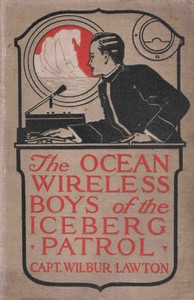
The ocean wireless boys of the iceberg patrol — Story, Setting & Ideas can be approached with a clearer sense of reading commitment from its source measurements: 49,428 words, 3 hr 35 min estimated reading time, and 36 detected text sections.
The text analysis averages about 14.1 words per sentence, while the detected sections provide another way to judge how the source is divided.
Project Gutenberg metadata also associates the work with “Sea stories,” connecting these edition facts with the source record’s subject description.
Explore this collection
These alternatives are selected using recorded categories and estimated reading time.
About 213 minutes
Childrens Adventures
48,923 recorded words. 2 minutes difference from this book's estimate.
View Gutenberg source #73976About 210 minutes
Childrens Adventures
48,137 recorded words. 5 minutes difference from this book's estimate.
View Gutenberg source #68624About 221 minutes
Childrens Adventures
50,679 recorded words. 6 minutes difference from this book's estimate.
View Gutenberg source #73511Search stored excerpts and compare books → Choose by your preferences →
Choices use stored catalog measurements. Estimates vary with reading speed. A shared category is a catalog label, not a claim that two books have the same argument or literary quality.
Search reads excerpt text stored with this catalog and links to its associated Gutenberg record. The connection is stored in the site database; this tool does not recheck that every excerpt is word-for-word identical to that external record. Excerpt search does not cover every chapter and does not verify historical publication dates.
Catalog snapshot checked: 2026-09-26. Coverage: 91 public books, 91 available source excerpts.
Calculated from edition completeness, EPUB availability, text structure and catalogue metadata. Not a user rating.
Total of 100 points, scaled to a 2.5-5.0 range. Editions with an empty description or a missing EPUB file are not scored.
Public-domain source text
The source text is kept in the dedicated reader, separate from this catalogue record and its commentary.
John Henry Goldfrap, writing as Captain Wilbur Lawton, opens The Ocean Wireless Boys of the Iceberg Patrol with a striking contrast between the mundane technicalities of wireless operation and the dramatic potential of the sea. The first chapter introduces Jack Ready adjusting a "refractory detector" in his cramped wireless room, a scene grounded in the practical details of early radio—detectors, tuning, and the hierarchy of seniority that denies him a berth on the Empire State. Yet this quiet technical labor is immediately set against the larger, more perilous world of icebergs, rescues, and treasure hunts that the title promises. Goldfrap’s prose oscillates between these registers: precise descriptions of apparatus and navigation share space with lurid action, as when the young operator staggers "amidst a glare of red flame and lurid smoke" on the very first page. This editorial note examines how the author’s choices in diction, dialogue, and description shape the novel’s identity as both a boys’ adventure and a period piece of early wireless technology.
Goldfrap invests considerable effort in rendering the technical language of wireless telegraphy with apparent accuracy. Jack’s work involves a "refractory detector," tuning apparatus, and sending warnings with "latitude and longitude" to ships on the Atlantic track. The narrative pauses to explain that the Cambodian is "in ballast, that is, carrying no cargo," suggesting an audience unfamiliar with maritime terms but expected to learn them. This technical diction serves a dual purpose: it authenticates Jack’s expertise and educates the reader in the workings of a then-modern technology. However, the author does not sustain this precision uniformly. When Jack proposes to "blow that berg up by wireless," the technical plausibility is left vague—the captain reacts with disbelief, and the invention is presented as a daring idea rather than a fully explained mechanism. The excerpts show that Goldfrap uses technical language to establish credibility but subordinates it to adventure when convenient.
The dialogue in the excerpts reveals character through speech patterns and command. Terror Carson, the antagonist, speaks in short, sharp orders: "Easy on your main sheet," "Blocks and tackles forward," "Let go the anchor." His language is clipped, authoritative, and devoid of explanation, matching his reputation as a ruthless sealer. In contrast, Jack Ready addresses Captain Simms with respectful formality: "I’ve been thinking the same thing, sir," and "I mean it, sir." The captain’s response—"Explain yourself, Ready. I must confess that your statement set me aback"—uses a more measured, slightly formal register that befits his rank. The exchanges between Raynor and Carson on Skull Island show a similar dynamic: Raynor asks polite questions ("Why is it called Skull Island?"), while Carson gives terse, grim answers about "skulls of their enemies on poles." This contrast in dialogue heightens the tension between the civilized, curious boys and the hardened, dangerous adults they encounter.
Goldfrap’s descriptions of icebergs rely on vivid visual and tactile imagery. A berg is described as glittering "like polished steel" and rising "into two huge points like the steeples of a cathedral." The comparison to steel emphasizes hardness and coldness, while the cathedral simile lends an eerie grandeur. Elsewhere, the ice is "steely blue," and the sea is depicted with "clouds of white spray" and "gnarled heads of black rocks" that threaten the Polly Ann. These descriptions are functional: they create atmosphere and signal danger. The author also uses sensory details to establish mood on Skull Island, where the "dismal-looking place" is inhabited only by "a few sea-birds" and a "perennial spring." The repetition of "skulls" and "sinister name" reinforces the gothic tone. Goldfrap’s setting descriptions are economical but effective, grounding the adventure in a tangible, often threatening environment.
The excerpts span the opening and later chapters, revealing a narrative that moves from a single protagonist (Jack Ready) to a broader ensemble including Raynor and Terror Carson. The first chapter establishes Jack’s technical competence and his desire for a better berth, but the later excerpts shift focus to Raynor’s perspective and the island adventure. This suggests a multi-threaded plot typical of series fiction, where multiple young heroes share the spotlight. The chapter titles—"Marooned on an Iceberg," "A Fiendish Plot," "The Wreck of the Polly Ann"—promise a series of discrete perils rather than a single sustained narrative. The excerpts do not reveal how these threads connect, but the recurring presence of wireless technology (Jack’s invention, the warning system) implies it serves as a unifying device. Readers should expect episodic adventures linked by the boys’ resourcefulness and the period’s fascination with radio.
Readers approaching The Ocean Wireless Boys of the Iceberg Patrol should attend to how Goldfrap balances technical exposition with melodramatic action. The novel rewards attention to its period-specific details—the workings of early wireless, the dangers of iceberg navigation—while also delivering the thrills promised by its chapter titles. The excerpts suggest that the author’s primary interest lies in creating a series of vivid, self-contained crises rather than a tightly plotted whole. For those interested in early twentieth-century boys’ adventure fiction or the cultural fascination with wireless technology, this book offers a representative example of how popular literature integrated new science into familiar formulas.
The rain kept up its steady drumming on the window, and I found myself lingering over Terror Carson’s clipped commands, so different from the boys’ scrambling enthusiasm. It made me think of gentler seas, of another kind of voyage entirely. I set down the iceberg patrol and picked up instead Bunny Brown and his sister Sue on the rolling ocean — Themes and Context, drawn by a quieter curiosity about how children simply trust the water to carry them.
Use these questions to collect your thoughts before moving on.