About 257 minutes
Poppy Ott and the galloping snail — A Closer Reading
Childrens Adventures
58,893 recorded words. 4 minutes difference from this book's estimate.
View Gutenberg source #71367
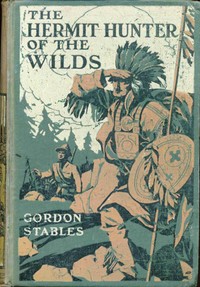
The catalog record for The hermit hunter of the wilds — Reading Notes provides practical reading context through 58,137 words, 4 hr 13 min estimated reading time, and 7 detected text sections.
The text analysis averages about 17.2 words per sentence, while the detected sections provide another way to judge how the source is divided.
Project Gutenberg metadata also associates the work with “Conduct of life -- Juvenile fiction,” connecting these edition facts with the source record’s subject description.
Explore this collection
These alternatives are selected using recorded categories and estimated reading time.
About 257 minutes
Childrens Adventures
58,893 recorded words. 4 minutes difference from this book's estimate.
View Gutenberg source #71367About 261 minutes
Childrens Adventures
59,863 recorded words. 8 minutes difference from this book's estimate.
View Gutenberg source #70640About 264 minutes
Childrens Adventures
60,653 recorded words. 11 minutes difference from this book's estimate.
View Gutenberg source #67989Search stored excerpts and compare books → Choose by your preferences →
Choices use stored catalog measurements. Estimates vary with reading speed. A shared category is a catalog label, not a claim that two books have the same argument or literary quality.
Search reads excerpt text stored with this catalog and links to its associated Gutenberg record. The connection is stored in the site database; this tool does not recheck that every excerpt is word-for-word identical to that external record. Excerpt search does not cover every chapter and does not verify historical publication dates.
Catalog snapshot checked: 2026-09-26. Coverage: 91 public books, 91 available source excerpts.
Calculated from edition completeness, EPUB availability, text structure and catalogue metadata. Not a user rating.
Total of 100 points, scaled to a 2.5-5.0 range. Editions with an empty description or a missing EPUB file are not scored.
Public-domain source text
The source text is kept in the dedicated reader, separate from this catalogue record and its commentary.
The first chapter, 'By the Firelight,' establishes a frame narrative: a sister asks her brother to tell a story, and the tale begins with 'It was on just such a night as this.' This device signals that the adventures to come are being recounted from a safe, domestic setting, creating a contrast between the cozy fireside and the wild events that follow. The early chapters move quickly from this quiet opening into a shipwreck and a desperate situation, as the chapter title 'The fearfulness of our situation can hardly be realized' suggests.
The excerpts show a pattern of chapter titles that are direct quotations from the text, often exclamations or warnings. This technique gives each chapter a focal point of tension or revelation, guiding the reader's attention to key moments of danger or discovery.
The opening chapter introduces a brother and sister by the fire, with the sister asking for a story. The brother’s reply—'It was on just such a night as this'—launches the main narrative. This framing device is not revisited in the provided excerpts, but it establishes a storytelling voice that is both intimate and retrospective. The narrator often addresses the reader directly, using phrases like 'you may imagine' and 'it is only a wonder.' This creates a conversational tone that invites the reader into the adventure.
The voice also carries a moral weight, as seen in the catalog subjects: 'Conduct of life' and 'Youth—Conduct of life.' The narrator occasionally comments on the characters' actions, such as when Tom prays during the flood: 'He was trying hard, too, to yield himself to the will of heaven.' These moments suggest that the story is not only about survival but also about character development.
The excerpts are rich with descriptions of South American wilderness, particularly storms and floods. One passage describes a 'river bore'—a wall of water twenty feet high—that turns the valley into an inland sea. The language is dramatic: 'The roar of this immense wall of water could be heard for long minutes.' The forest trees 'went down before it like hay before the mower’s scythe.' Such similes ground the fantastic events in familiar imagery.
Animals are a constant threat. A jaguar attacks a man during a storm, dragging him into the forest. The narrator notes that jaguars 'will hardly ever go out of their way to attack' during storms, implying that this attack was unusual. The natural world is both beautiful and indifferent; the hill where Tom and his men take refuge becomes an island, and they watch the rising water 'like men waiting for death.' The suspense is built through careful pacing: the storm ceases, the rain continues, and the flood rises 'slowly but as surely as fate itself.'
The protagonist, Tom, is accompanied by Samaro, a local guide or companion. Samaro is the one who warns Tom of the approaching flood, crying 'It is coming! It is coming!' Their relationship is one of mutual reliance; Samaro’s knowledge of the land is crucial. The catalog also lists 'Cats' as a subject, and a cat appears in the excerpts, though its role is not fully detailed. The cat may serve as a companion or a symbol of domesticity in the wild.
Other characters are mentioned in chapter titles: 'The dying Ayah tells of Bernard' and 'Filled with gold doubloons—Sirr, are ye listening?' These hints suggest a treasure plot and a lost character named Bernard. The excerpts do not reveal Bernard’s fate, but the chapter titles create anticipation. The cast includes enslaved persons and Indians of South America, though the excerpts do not show their treatment; the catalog subjects indicate their presence.
The chapter titles are often direct quotes that heighten drama: 'Run, run!' cried Tom; 'the man must not die yet!' and 'Here hangs his brother’s scalp.' These titles act as hooks, promising action or revelation. The narrative alternates between moments of calm—such as the fireside opening—and intense peril, like the flood scene. The flood passage is particularly effective: it builds tension through repetition ('It rose, and rose, and rose'), then releases it with Samaro’s cry.
The excerpts also show a use of cliffhangers. The flood chapter ends with Tom and his men watching the clouds, and the next chapter begins with a new threat. This episodic structure is typical of serialized adventure fiction. The reader is left wondering whether the 'bore' will return, and whether Tom’s prayer will be answered. The story does not resolve quickly; the rain continues for three days, and the suspense is drawn out.
As you read, pay attention to how the frame narrative returns—if it does—and how the cat companion fits into the adventure. The treasure plot hinted at in chapter titles like 'Filled with gold doubloons' may drive the later action, but the excerpts focus more on survival than on treasure. The moral lessons are woven into the action, not preached separately. This is a story that rewards attention to its natural descriptions and its careful building of suspense.
That rainy afternoon, Gordon Stables' jungle felt almost cozy, the boy and his cat tucked against the flood’s roar. Later, restless, I picked up another old volume, and found the same patient watchfulness — not of jaguars, but of the sea’s horizon. The mystery of the Sea-Lark — Themes and Context held a quieter sort of peril, yet the loneliness of waiting felt oddly familiar.
Answer a few questions and save a private reflection on this device.